
Samsung Galaxy S26 Ultra Verdict – When a Smartphone Stops Wanting to Be Just a Smartphone
- An Ultra that once again has to justify its name technically
- Build quality and chassis – large remains large, but no longer unnecessarily heavy
- The display – 6.9 inches of AMOLED alone would no longer be news
- Privacy Display – finally an innovation that needs no presentation
- The S Pen – a relic that has aged remarkably well
- Snapdragon 8 Elite Gen 5 for Galaxy – performance is no longer the problem
- One UI 8.5 and Android 16 – a huge amount of software, surprisingly well organised
- Galaxy AI – between useful tool and a new way of thinking about operating systems
- The camera – four focal lengths instead of digital acrobatics
- Image character – Samsung remains Samsung, only a little more mature
- Video – long past being a secondary feature
- Battery – 5,000 mAh is conservative, 60 watts is finally more reasonable
- Connectivity – the Ultra as a mobile computer
- Speakers, phone calls, and all the unspectacular things
- What gets in the way – because Ultra does not mean flawless
- Verdict – mature rather than revolutionary, and stronger because of it
- Notice pursuant to EU transparency requirements:
An Ultra that once again has to justify its name technically
The word “Ultra” has reached roughly the same level of meaning in the smartphone world as “Pro,” “Max,” or “Ultimate” elsewhere in consumer electronics. It looks excellent on packaging, fits nicely into oversized product-page typography, and theoretically obliges a manufacturer to make as few compromises as possible within its own portfolio. That is exactly where the Samsung Galaxy S26 Ultra becomes interesting. A smartphone in this class has long needed to offer more than a fast processor, a bright OLED panel, and several cameras bolted onto the back. Those ingredients have already spread far further down the price range.
The Galaxy S26 Ultra therefore tries something different. It feels less like a collection of impressive numbers and more like a mobile system built around its display, input pen, cameras, desktop functions, powerful hardware, and software that increasingly tries to put tasks rather than individual apps at the centre of the experience. At first, that sounds dangerously close to the kind of manufacturer presentation where the word “experience” appears three times before the first technical specification. In daily use, however, the idea makes surprisingly good sense.
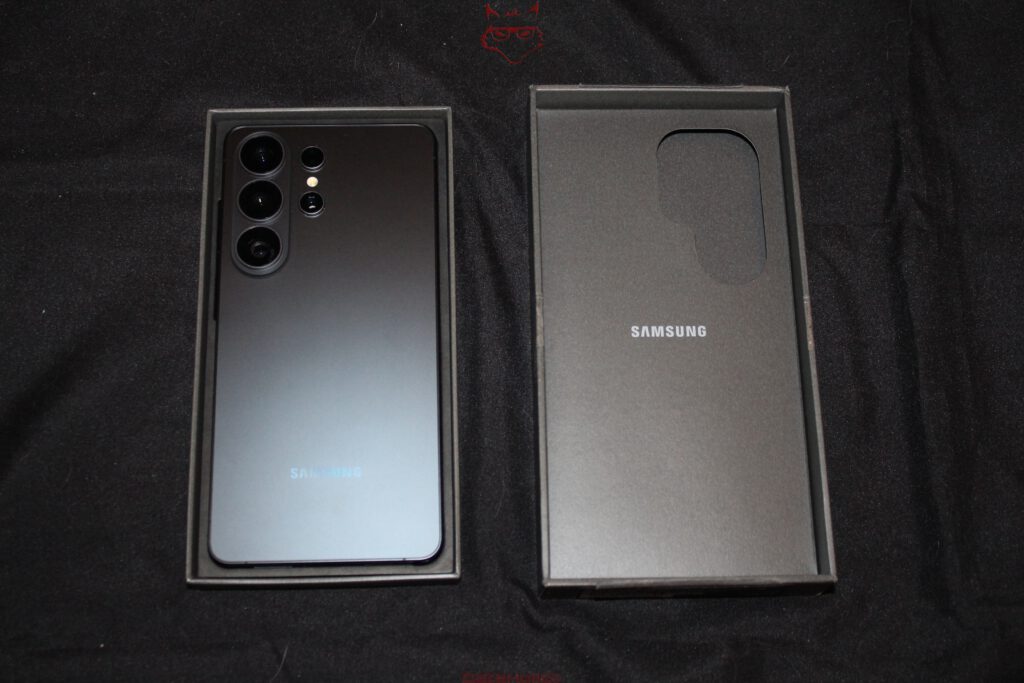
The chassis already shows that Samsung has changed direction. At 163.6 × 78.1 × 7.9 millimetres, the S26 Ultra remains anything but compact, yet its 214 grams feel slightly less intimidating than its dimensions suggest. The former titanium frame has given way to Advanced Armor Aluminum. On paper, that may look like a downgrade. In the hand, it feels more like a long-overdue optimisation of weight and construction. Material prestige is not an end in itself. A smartphone does not automatically become better just because its specification sheet contains a metal otherwise associated with aircraft, implants, or motorsport.
Dieter Rams once reduced design to the concise principle of “Less, but better.” The S26 Ultra is certainly not minimalist in the classic Rams sense. Four cameras, an S Pen, 6.9 inches of display, numerous sensors, and an entire catalogue of software functions make sure of that. What is interesting instead is how Samsung tries to push all that complexity further into the background. The result feels less like a technical experiment kit and more like a mature tool.
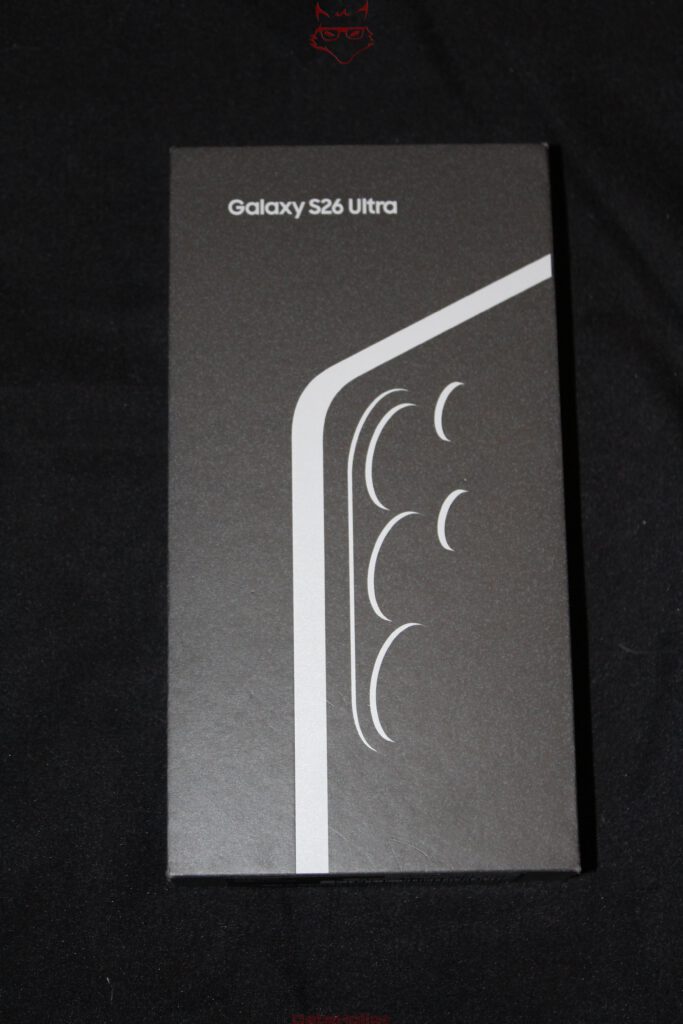
Build quality and chassis – large remains large, but no longer unnecessarily heavy
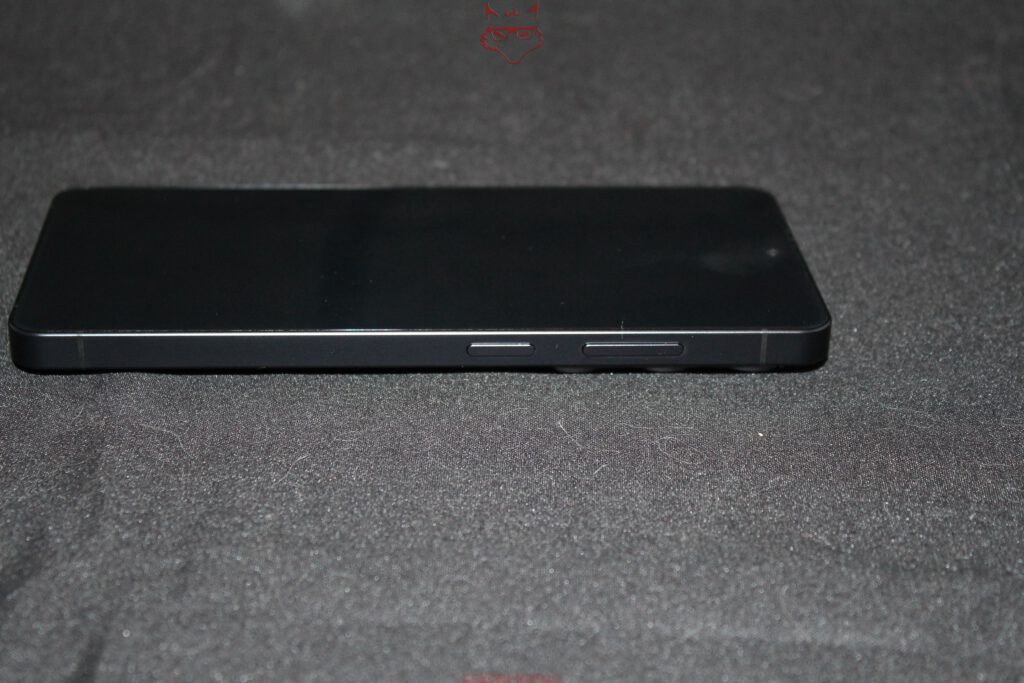
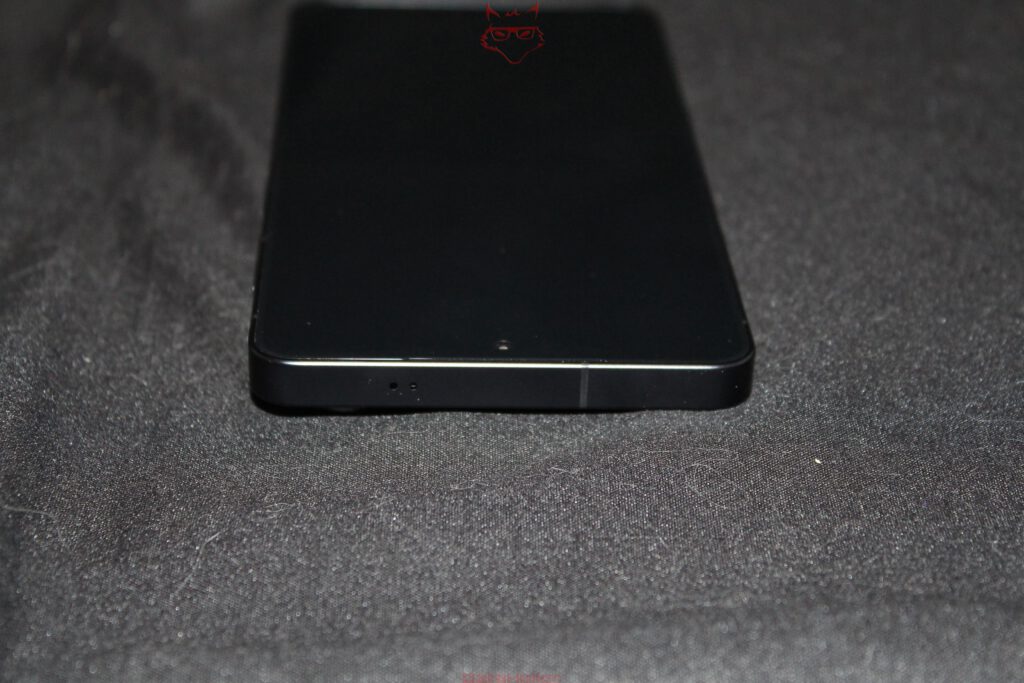
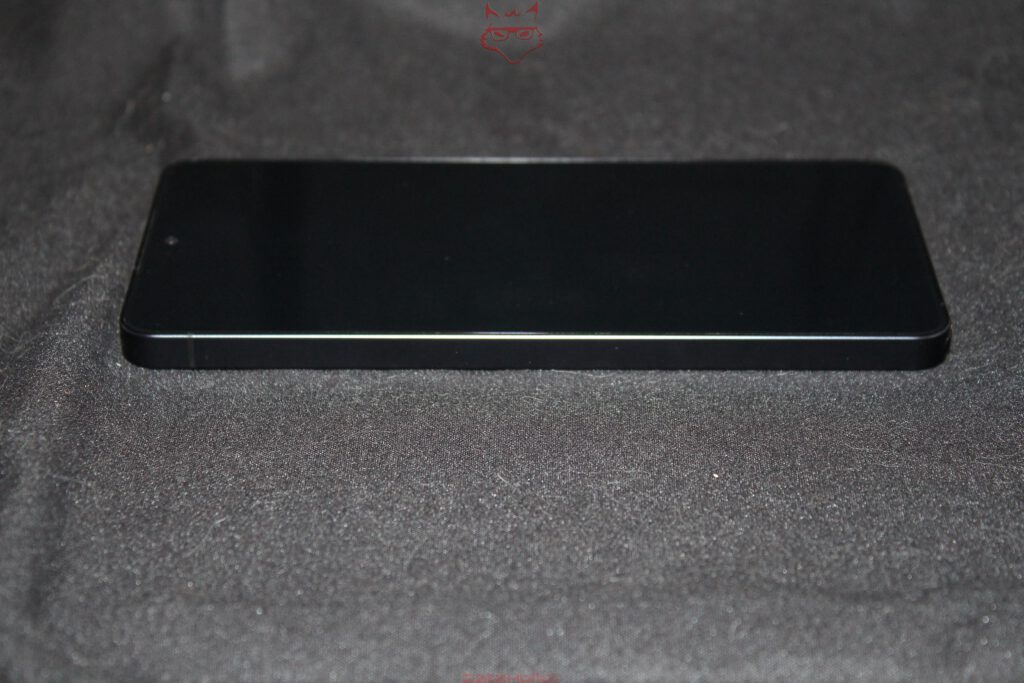
A 6.9-inch smartphone does not suddenly qualify as “compact” simply because the specification sheet lists a thickness of 7.9 millimetres. The Galaxy S26 Ultra remains a large device. Its 78.1-millimetre width matters more in everyday use than the display diagonal itself, because that width determines grip span, one-handed usability, and how naturally the device can be pulled out of a pocket.
Samsung has softened the shape considerably. The transitions feel less severe than on older Ultra generations without turning the phone into an oversized version of a generic mainstream model. The S26 Ultra still carries a certain technical strictness. Front and back sit almost completely flat, the frame remains clearly defined, and the cameras visibly demand their share of space. The rear in particular shows how strongly modern camera technology now dictates smartphone construction. Large sensors, brighter optics, and several focal lengths do not simply disappear into a 7.9-millimetre body because an industrial designer looks particularly determined at a CAD workstation.
The camera system therefore protrudes noticeably. On a flat surface, that remains physically obvious. A smartphone in this class effectively has two thickness values: the nominal chassis depth and the actual depth including the camera hardware. It is neither elegant nor uniquely Samsung’s problem. The entire industry decided that large cameras were worth having and has been living with the physics ever since.
The material choice still works well. Advanced Armor Aluminum instead of titanium may sound less exotic, but it creates a sensible balance between rigidity, weight, and everyday durability. Gorilla Armor 2 protects the front, while Gorilla Glass Victus 2 covers the rear. IP68 resistance against dust and water completes the package. None of these features are particularly useful for spectacular launch videos. Together, however, they contribute more to the long-term quality of the device than almost any animated software feature.
At 214 grams, the S26 Ultra is still substantial. Yet it no longer reaches the almost absurd density of earlier oversized phones that could make extended reading sessions feel like an impromptu forearm exercise. That sounds trivial, but in daily use it matters.
The display – 6.9 inches of AMOLED alone would no longer be news
Samsung and OLED have been associated so closely for so long that an excellent AMOLED panel in a Galaxy Ultra is almost taken for granted. That is exactly why a 6.9-inch Dynamic AMOLED 2X with 3,120 × 1,440 pixels, an adaptive 1 to 120 Hz refresh rate, and peak brightness of up to 2,600 nits is no longer enough on its own to make the display interesting.
The panel is predictably excellent. Blacks remain properly black, contrast has the immediacy expected from high-end OLED, text looks extremely clean thanks to the high pixel density, and the adaptive refresh system keeps motion fluid without forcing 120 Hz continuously. Colours can appear vivid, although the display settings allow a considerably more restrained presentation.
The surface treatment is more interesting. Gorilla Armor 2 reduces reflections far more effectively than conventional glossy smartphone displays. This point is easy to underestimate. A brighter display fights sunlight with raw luminance. A less reflective display prevents part of that fight from happening in the first place. That saves energy while also improving perceived contrast.
A small everyday scenario explains the difference better than any nit figure. Place a black display under bright ceiling lights and many smartphones first show lamps, windows, and a reflection of the face above them. Only after that does the actual content become visible. On the S26 Ultra, that mirrored world steps noticeably further into the background. The display therefore does not simply look brighter. It looks calmer.
And then there is a feature unusual enough to feel genuinely new rather than like annual maintenance.
Privacy Display – finally an innovation that needs no presentation
The integrated Privacy Display is one of the most unusual features of the Galaxy S26 Ultra. Not because lateral privacy protection is new in principle. Privacy filters have existed for years and have been particularly popular in corporate environments, where laptops on trains have occasionally displayed entire budget spreadsheets to half a carriage. What is new is the integration directly into the display.
Samsung uses Flex Magic Pixel, also referred to as Magic Flex Pixel. In simplified terms, the panel can operate with different light emission characteristics. During normal use, the viewing angle remains broad. Once Privacy Display is enabled, the light output becomes more strongly concentrated toward the front. Viewed from the side, content becomes significantly darker and, depending on angle and ambient lighting, can become almost unreadable.
The decisive point is not merely the technology but the ability to switch it off. A traditional privacy filter is always a privacy filter. It permanently reduces side visibility and, depending on quality, can affect brightness, clarity, or surface feel. On the S26 Ultra, the effect can be used only when needed.
Selective use makes even more sense. Protection can apply to specific applications, notifications, or sensitive input. That turns a technical demonstration into a practical tool. Banking on public transport, work-related messages in a café, or entering a PIN in a crowded environment are exactly the situations where physical screen privacy suddenly becomes very tangible.
The display does not become perfectly invisible from every possible angle. Physics still cannot be disabled through a settings menu, even in 2026. Under certain lighting conditions, residual information may remain visible from the side. The underlying concept nevertheless works convincingly.
Arthur C. Clarke once wrote that sufficiently advanced technology is indistinguishable from magic. Privacy Display is one of those rare smartphone functions where the comparison almost fits. Press a button, the screen remains normal from the front, and much of its content effectively disappears from the side. No film, no accessory, no restart. This is how technical innovation should behave in daily use: effect first, explanation optional.
The S Pen – a relic that has aged remarkably well
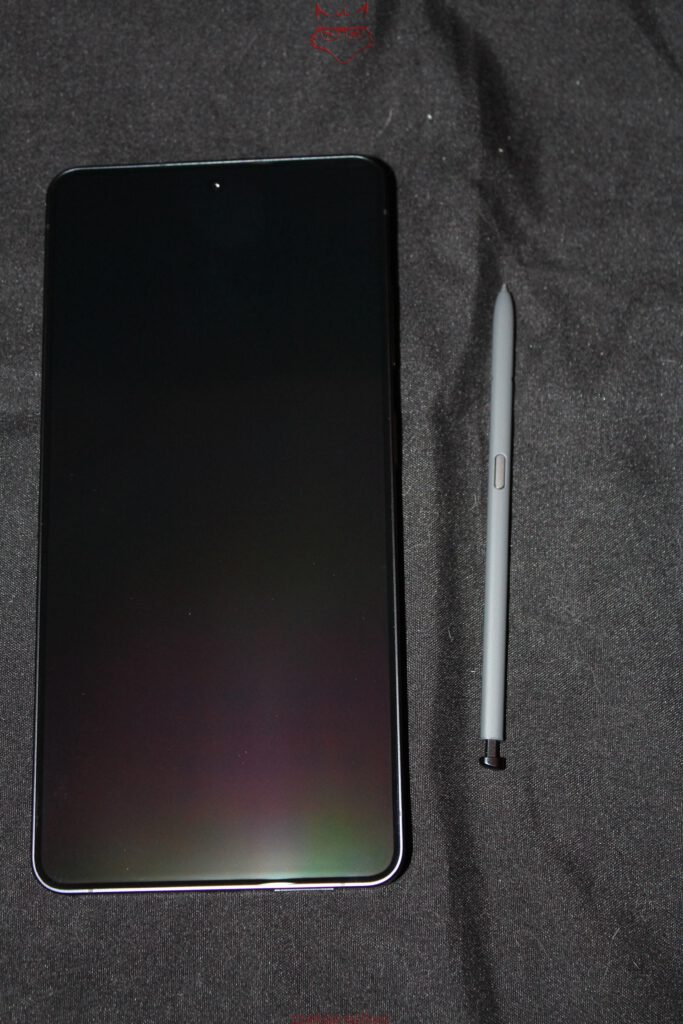
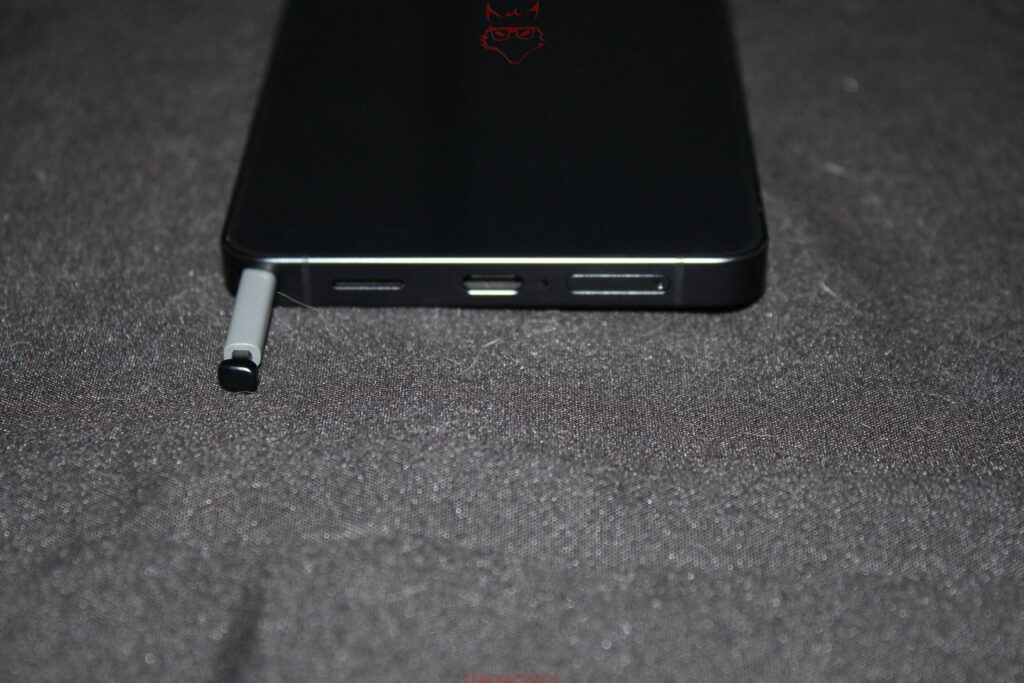
The S Pen feels almost anachronistic inside a modern smartphone. While manufacturers discuss touchless gestures, voice control, and autonomous software agents, Samsung still hides a small plastic pen inside the bottom edge of its most expensive conventional smartphone. And strangely enough, this supposedly outdated idea remains one of the Ultra’s strongest distinguishing features.
The reason is simple: a pen solves real problems.
Signatures, document annotations, handwritten notes, precise image editing, sketches, and fine selection areas all work with more control using a pen tip than a fingertip. On a 6.9-inch display, this creates a small digital writing surface that sits somewhere between smartphone and notepad.
The fact that the S Pen disappears directly into the chassis is crucial. Accessories that need to be transported separately have an impressive tendency to remain exactly where they were last used. The integrated stylus has a fixed place and is therefore available before the spontaneous thought that required it has disappeared.
Samsung continues to omit Bluetooth and Air Actions. That may disappoint long-time Note users, since functions such as using the pen as a remote camera shutter had genuine practical value. The core writing experience suffers very little. If anything, the S Pen is once again more focused on what it was originally meant to be: an input tool rather than a remote control with wand-like ambitions.
The small side button enables contextual functions, the tip works precisely, and the low input latency prevents handwriting from feeling like a digital line chasing after the hand. Glass still feels like glass. The S Pen does not turn the display into paper. It nevertheless provides enough control to make handwriting genuinely useful.
There is a certain irony here. At a time when almost every new smartphone feature seems to require some form of artificial intelligence, a simple pen remains one of the most productive functions in the entire device.
Snapdragon 8 Elite Gen 5 for Galaxy – performance is no longer the problem
The Galaxy S26 Ultra uses the Snapdragon 8 Elite Gen 5 for Galaxy. The customised platform reaches clock speeds of up to 4.74 GHz and, unsurprisingly, belongs to the top tier of mobile SoCs. Depending on configuration, it is paired with 12 or 16 GB of RAM and 256 GB, 512 GB, or 1 TB of internal storage.
In daily use, raw CPU performance has become almost boring. Apps launch quickly, multitasking remains smooth, complex websites cause no difficulty, and even demanding image editing has performance reserves that would once have looked absurd on a desktop computer.
Thermal stability and efficiency are more interesting. A smartphone processor can theoretically offer enormous peak performance. If that performance turns into heat within a few minutes and clock speeds collapse, the result is an impressive benchmark for approximately as long as an espresso takes to cool.
The S26 Ultra benefits from its large chassis and appropriately dimensioned heat distribution. Under sustained load, the device naturally becomes warm. Several watts of thermal energy do not simply vanish. The design nevertheless appears intended to keep performance usable for longer rather than producing a single spectacular peak.
For gaming, that means high frame rates and short loading times. For image and video editing, it means fast processing. For the growing number of local AI functions, however, the NPU increasingly becomes the more important component. That is where the definition of performance begins to shift. A fast smartphone chip once mainly answered the question: “How many frames per second can this game run?” A second question now matters just as much: “Which processing tasks can happen locally without constantly sending data to a remote data centre?”
That development is likely to matter more in the long term than another ten percent of CPU performance.
One UI 8.5 and Android 16 – a huge amount of software, surprisingly well organised
The Galaxy S26 Ultra launches with Android 16 and One UI 8.5. Samsung now belongs to the small group of manufacturers whose software scope can barely be covered fully in a single review. A modern Galaxy is no longer simply Android with different icons. One UI has become an ecosystem in its own right, combining multitasking, DeX, Knox, device integration, stylus functions, automation, security tools, and AI services.
That can sound overwhelming. Samsung has also become much better at placing many functions deep enough in the interface that they do not constantly demand attention. This is exactly where the difference between a large feature set and feature overload becomes important.
The interface feels fast, animations run smoothly, and the 120-Hz display makes transitions between applications feel immediate. Integration with Windows PCs and other Galaxy hardware is particularly strong. Quick Share, Link to Windows, DeX, Smart View, Multi Control, and compatible Galaxy Buds together form a system that increasingly behaves less like a collection of individual devices.
Samsung DeX remains an underrated feature. A smartphone with USB-C 3.2, a powerful SoC, and sufficient memory already has more than enough performance for typical office work. Connect an external display, keyboard, and mouse, and the result is not a complete notebook replacement for every task, but it is a surprisingly capable workstation for browser-based work, communication, documents, and remote access.
That matters on an Ultra. A device in this price category should be capable of more than opening Instagram particularly quickly.
Galaxy AI – between useful tool and a new way of thinking about operating systems
AI functions have become mandatory in modern smartphone launches. The real problem is less the technology itself than the language surrounding it. The moment a manufacturer claims that a device “understands everyday life,” a product presentation starts sounding like a mixture of science fiction and management consulting.
That makes it less important to count how many features carry an AI label. The more relevant question is whether they reduce work.
Image editing, summaries, translation, contextual suggestions, and the increasingly agent-like elements of One UI all move in that direction. Instead of opening a specific application for every task, the system is intended to understand context more broadly and connect information across different services.
It does not work perfectly in every situation. Language models can misunderstand context, image editing can produce artefacts, and automated suggestions occasionally identify with impressive precision the one option that is not needed. Critical content still requires verification.
Even so, a larger shift is becoming visible. Smartphone interfaces have been organised around applications for almost two decades. An icon launches an app, and the task happens inside that app. Agentic systems partly reverse that logic. The task comes first, while applications become tools operating further in the background.
The S26 Ultra is not yet a device built entirely around that concept. It does, however, show clearly where the direction is heading.
The camera – four focal lengths instead of digital acrobatics
The rear camera system consists of four modules. The main camera uses 200 megapixels and a significantly brighter f/1.4 aperture. It is joined by a 50-megapixel ultra-wide camera at f/1.9, a 10-megapixel telephoto camera with 3x optical zoom at f/2.4, and a 50-megapixel telephoto camera with 5x optical zoom at f/2.9. The front camera uses a 12-megapixel sensor with autofocus.
This arrangement is more meaningful than any three-digit digital zoom claim. Several genuine focal lengths give the camera flexibility before software even begins to intervene.
The main camera benefits particularly from the f/1.4 aperture. Compared with the predecessor’s f/1.7 lens, more light reaches the sensor, allowing shorter shutter speeds in poor lighting. That matters more than brightness alone. Moving subjects at night often suffer less from noise than from motion blur. More light helps with both.
Two hundred megapixels do not mean every photograph should sensibly be captured at full resolution. Pixel binning combines photosites to improve light collection and produces more manageable file sizes. The high native resolution also creates additional room for cropping and 2x zoom at optical-quality output.
The 5x telephoto with 50 megapixels is the most interesting counterpoint. Five-times optical magnification reaches significantly further than a typical portrait focal length while remaining more versatile than the very long periscope concepts used in earlier designs. At 10x, Samsung relies on sensor cropping and computational processing. The results can look very good, but this should not be confused technically with a true 10x optical lens.
The 100x Space Zoom remains. It is fascinating, occasionally useful, and still not a substitute for a genuinely long telephoto lens. At that level of magnification, photography increasingly becomes a mixture of stabilisation, reconstruction, and interpretation. It is perfectly adequate for distant signs, remote details, or curious technical experimentation. A wildlife photographer is unlikely to sell a 600-mm lens because of it.
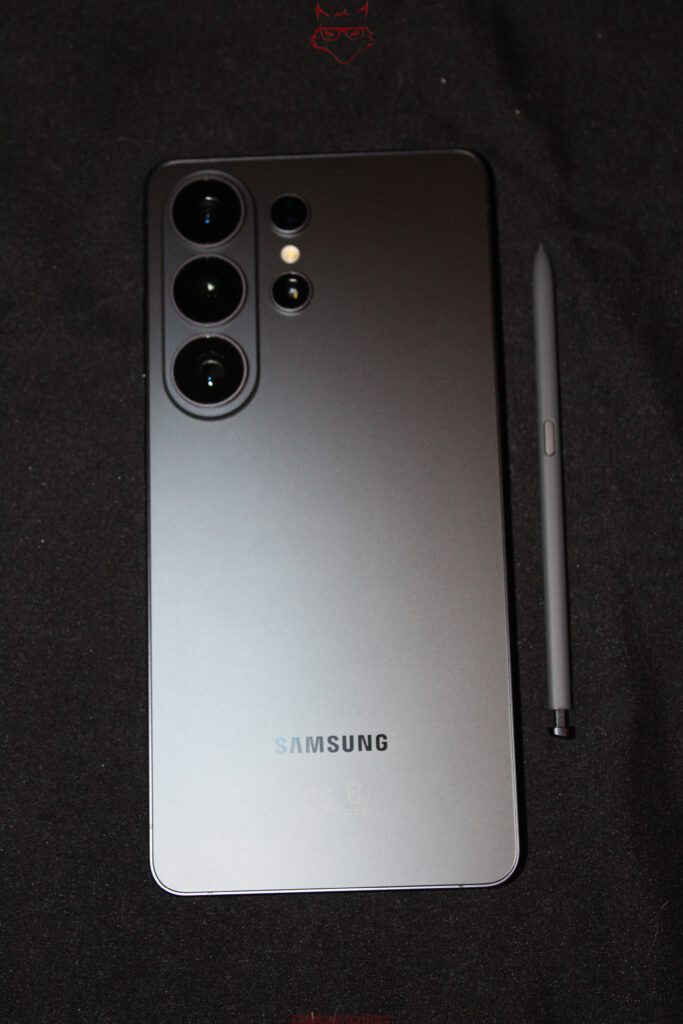
Image character – Samsung remains Samsung, only a little more mature
Samsung cameras spent years developing an easily recognisable style: strong colours, high local contrast, visible sharpening, and processing that preferred slightly too much visual impact over too little. The S26 Ultra feels more controlled.
Daylight images contain a large amount of detail, dynamic range is broad, and colour consistency between the different cameras has improved. That matters more than it may sound. A four-camera system is much harder to tune than a single good sensor. Switching between ultra-wide, main camera, and telephoto should not feel like switching between four different smartphones.
The ProVisual Engine intervenes heavily. Skin tones, sky, vegetation, and fine textures are analysed and processed. At times, it remains obvious that an image is not simply read from the sensor but algorithmically developed. That process has become as integral to smartphone photography as chemical development once was to film.
“The best camera is the one that’s with you” has become one of the most familiar ideas in modern photography. With the S26 Ultra, the concept gains another layer. The camera is not merely present. It brings several focal lengths, 8K video, high-frame-rate 4K, stabilisation, and night processing with it. That does not replace a specialised camera system in every situation. For something with a base thickness of 7.9 millimetres, the technical density remains remarkable.
Video – long past being a secondary feature
Video is one of those areas where smartphone cameras have made enormous progress without every generation producing dramatic headlines. The S26 Ultra supports 8K at up to 30 frames per second and 4K at high frame rates of up to 120 fps depending on mode.
More important than resolution are stabilisation, dynamic range, autofocus behaviour, and exposure control. This is where the system feels mature. Movement is compensated reliably, focus changes happen quickly, and the brighter main lens is especially helpful in darker scenes.
8K remains a specialist tool. File sizes are large, editing and storage become more demanding, and the practical advantage over high-quality 4K is limited on typical displays. For most productions, 4K therefore remains the more sensible choice.
The Ultra’s advantage lies less in one record-setting number and more in flexibility. Different focal lengths, capable stabilisation, and extensive recording options make the smartphone a serious mobile video tool.
Battery – 5,000 mAh is conservative, 60 watts is finally more reasonable
The battery still offers 5,000 mAh. At a time when some manufacturers are using silicon-carbon cells to fit significantly larger capacities into comparable bodies, that number almost feels conservative.
Samsung is clearly prioritising controlled energy density, longevity, safety, and efficiency. That is technically understandable, but it also prevents the Ultra from making a more obvious step forward in battery capacity.
The Snapdragon platform, LTPO display, and software optimisation nevertheless keep the battery from feeling automatically insufficient. As always, the decisive factor is workload. Camera use, navigation, high display brightness, 5G, and gaming place far greater strain on any 5,000-mAh cell than messaging and web browsing.
Wired charging at up to 60 watts is considerably more welcome. Samsung finally moves away from the particularly cautious 45-watt ceiling of earlier Ultra generations. Under suitable conditions, roughly three quarters of the battery can be restored in around half an hour, with a full charge taking longer accordingly.
Wireless charging reaches up to 25 watts. Samsung remains far behind some Chinese fast-charging systems here, but the speed is more than sufficient for overnight charging or occasional desk use.
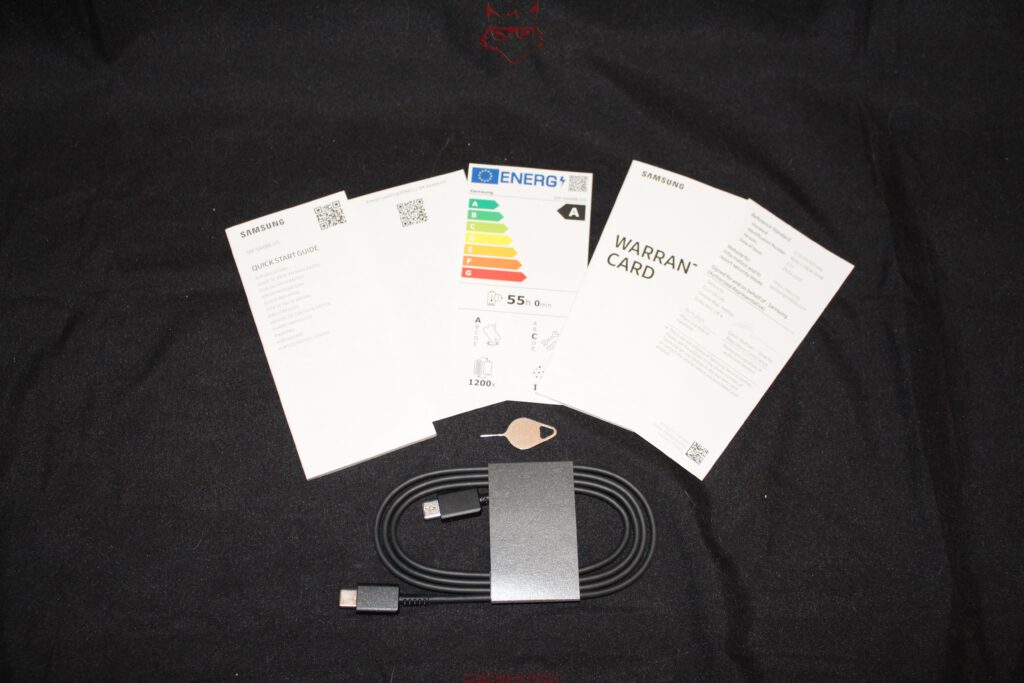
A charger is still not included in the box. The environmental argument is understandable as long as a compatible USB-C PD power adapter is already available. On a device in this price category, the omission nevertheless feels at least partly like cost optimisation rather than an act of planetary rescue. Both things can be true at the same time.
Connectivity – the Ultra as a mobile computer
Wi-Fi 7, Bluetooth 5.4, 5G, NFC, dual SIM with nano-SIM and eSIM, and USB 3.2 form a connectivity package with very few obvious gaps. The fast USB port deserves particular mention because it is still far from universal on smartphones.
Anyone moving large video recordings, RAW files, or local backups quickly notices the difference between a modern USB implementation and a connector that may look like USB-C externally while behaving like a snail internally.
Samsung DeX adds another layer. Together with USB-C display output, the S26 Ultra genuinely becomes a small computer. The sentence has sounded like a future promise for years, yet technically it has been reality for some time. A monitor, keyboard, and mouse are enough to turn the phone into a usable desktop workspace.
It does not replace a workstation, nor does it need to. The important part is the option. A device already carried everywhere can take on substantially more responsibility in a hotel room, meeting room, or improvised workspace than simple communication.
Speakers, phone calls, and all the unspectacular things
Flagship reviews spend a great deal of time discussing cameras and processors. Smartphones nevertheless remain communication devices first and foremost. Call quality, microphones, reception, speakers, and haptics determine the quality of the device every single day.
The stereo speakers produce a broad, clear sound with sufficient volume. Physical deep bass remains limited by the small internal acoustic volume, as expected. Voices, podcasts, and videos sound clean, while music is surprisingly full as long as no miracles are expected from a few cubic centimetres of speaker chamber.
The vibration motor works precisely and supports the interface with short, clearly defined feedback. This is one of those details that barely attracts attention when it works well. Poor haptics, by contrast, can make every tap feel like an electric shaver trapped inside a plastic box.
Call quality and radio performance operate at the level expected from a flagship device. That is precisely how it should be. An Ultra should not create stories around unusually poor reception or inconsistent voice quality. If a smartphone fails at those fundamentals, something has already gone wrong at the most basic level.
What gets in the way – because Ultra does not mean flawless
Despite its technical maturity, the Galaxy S26 Ultra is not a perfect smartphone. The most obvious limitation is size. A 6.9-inch display provides an excellent working area, but there is no way to argue around the dimensions. A large screen requires a large body. Anyone who prefers compact devices will not find a hidden physics setting here.
The second issue is the battery. Five thousand milliamp-hours are solid, but increasingly conservative in 2026. A higher capacity would have been attractive, especially in a 214-gram premium device.
The lack of Bluetooth functionality in the S Pen also remains debatable. The core stylus experience matters more, but remote shutter control and Air Actions were useful in certain situations.
Then there is the enormous software scope. One UI is far better organised than it used to be, but it still contains functions that may only be discovered accidentally after months of use. A less technically inclined user could easily use perhaps ten percent of what is available. That is not a fundamental flaw, but it illustrates how far the Ultra has moved beyond the concept of a simple smartphone.
Finally, price remains the elephant in the room. A device in this class competes with more than just other phones. Depending on storage configuration, it enters financial territory occupied by capable notebooks, tablets, or cameras. Its value therefore has to come from the complete system rather than any single feature.
Verdict – mature rather than revolutionary, and stronger because of it
The Samsung Galaxy S26 Ultra feels less like an attempt to reinvent the smartphone every year and more like the consistent refinement of a concept that now knows exactly what it wants to be.
The chassis is large but comparatively slim. The switch to Advanced Armor Aluminum reduces some of the material prestige marketing in favour of a more sensible construction. The 6.9-inch AMOLED belongs among the best displays available, yet the anti-reflective surface and especially the integrated Privacy Display give it a distinctive character. The S Pen remains an oddly analogue tool inside an increasingly automated device and proves its value precisely because of that contrast.
The Snapdragon 8 Elite Gen 5 for Galaxy offers more performance than typical smartphone workloads require. The more interesting question is how those reserves are used for local processing, camera algorithms, and new software models. One UI 8.5 has become one of the most comprehensive mobile platforms available and manages surprisingly often to keep that complexity from spilling permanently onto the surface.
The camera is one of the strongest arguments for the device. Four sensibly spaced focal lengths, a brighter 200-megapixel main camera, two telephoto ranges, and powerful image processing create a system that impresses less through one spectacular number and more through flexibility. Low-light performance in particular benefits from Samsung changing not only the software but also the optics themselves.
The battery leaves a trace of conservative Samsung DNA behind. Five thousand milliamp-hours are solid rather than ambitious. Sixty-watt wired charging improves the situation significantly, but it does not answer why such a large premium device has not taken greater advantage of newer battery technologies.
Even so, extended use creates an unusually coherent overall impression. The Galaxy S26 Ultra does not win because every individual component is unmatched. Other phones charge faster. Some offer larger batteries. Others use even more aggressive camera hardware or cost considerably less. Samsung’s strength lies in integration.
Camera, display, S Pen, DeX, Knox, One UI, Windows integration, high-end hardware, and Privacy Display feel like parts of the same system. That is the difference between a smartphone with many features and a device whose features actually work together.
The new Privacy Display symbolises that approach particularly well. On a presentation slide, the technology almost looks unspectacular. In daily use, it immediately makes sense. No gigantic camera sensor, no further three-digit zoom claim, and no abstract AI feature. Just a screen that becomes difficult to read from the side when needed. Done. Innovation can be remarkably pleasant when it does not require a twenty-minute explanation video.
The S26 Ultra is therefore not a radical restart. The Galaxy Ultra line is far too mature for that. Instead, it is a device that feels unusually complete in many of the small places where products often remain unfinished. The stylus has a fixed place. The USB port is fast enough for real data work. The display can alter its viewing characteristics. The cameras cover useful focal lengths. DeX gives all that processing power a practical purpose. Security ranges from hardware-backed protection to physical viewing privacy.
That gives the word “Ultra” some substance again. Not because of one record, but because remarkably few parts of the device feel obviously neglected.
Perhaps that is the harder form of modern product development. A revolution is easy to explain. It has a new hinge, an unusual form factor, or some technical effect that fits perfectly on a billboard. Maturity is less spectacular. It shows itself when buttons sit where they should, the stylus is there when a signature is required, the display remains readable outdoors, zoom levels correspond to genuinely useful focal lengths, and an external monitor turns the phone into a compact workstation without drama.
The Galaxy S26 Ultra is not a perfect smartphone. It is large, expensive, almost absurdly comprehensive in software, and less adventurous with battery capacity than some of its competitors. At the same time, it is one of the most complete conventional smartphones of its generation.
Or, in slightly less ceremonial terms: if a phone is expected to replace a camera, notebook, scanner, translator, navigation device, desktop computer, games console, communication hub, and half a photo studio at the same time, a certain tendency toward technical excess may not be such a bad quality after all.
With the Galaxy S26 Ultra, that excess feels surprisingly controlled.
Notice pursuant to EU transparency requirements:
The Samsung Galaxy S26 Ultra featured in this review was provided to us by Samsung as a non-binding loan unit for testing purposes. This does not constitute paid advertising.
Samsung had no influence on the content, evaluation, or editorial independence of this article. All opinions expressed are based exclusively on our own practical experience.
We would like to thank Samsung for providing the smartphone and for the trust placed in dataholic.de.