
Samsung Galaxy Z Fold8 Verdict – when a foldable smartphone suddenly becomes a digital notebook for the pocket
- A form factor that finally follows its own idea
- The hinge: the invisible main character
- Two displays, but for the first time two genuinely different jobs
- Multitasking is no longer a trade-show demonstration
- Snapdragon 8 Elite Gen 5 for Galaxy: performance as a means to an end
- 4,800 mAh: a larger battery despite the more compact concept
- The cameras: capable, practical and deliberately less ambitious
- Two front cameras instead of an unnecessary engineering exercise
- Build quality: 4.5 millimetres require more engineering, not less
- The fingerprint sensor solves a foldable-specific problem with a simple answer
- Connectivity designed for the years ahead
- Seven years of software support only matter if the hardware survives them
- The missing S Pen hurts precisely because the display would be perfect for it
- The Fold8 is not a small tablet, and treating it as one misses the point
- Galaxy AI works better as supporting software than as the reason to buy the Fold8
- 201 grams matter more after four hours than another benchmark record
- Four days reveal the character, not the ageing process
- Its weaknesses are no longer uniquely foldable weaknesses
- Verdict: the fold has finally become part of the device, not the attraction
- Notice in accordance with EU transparency requirements:
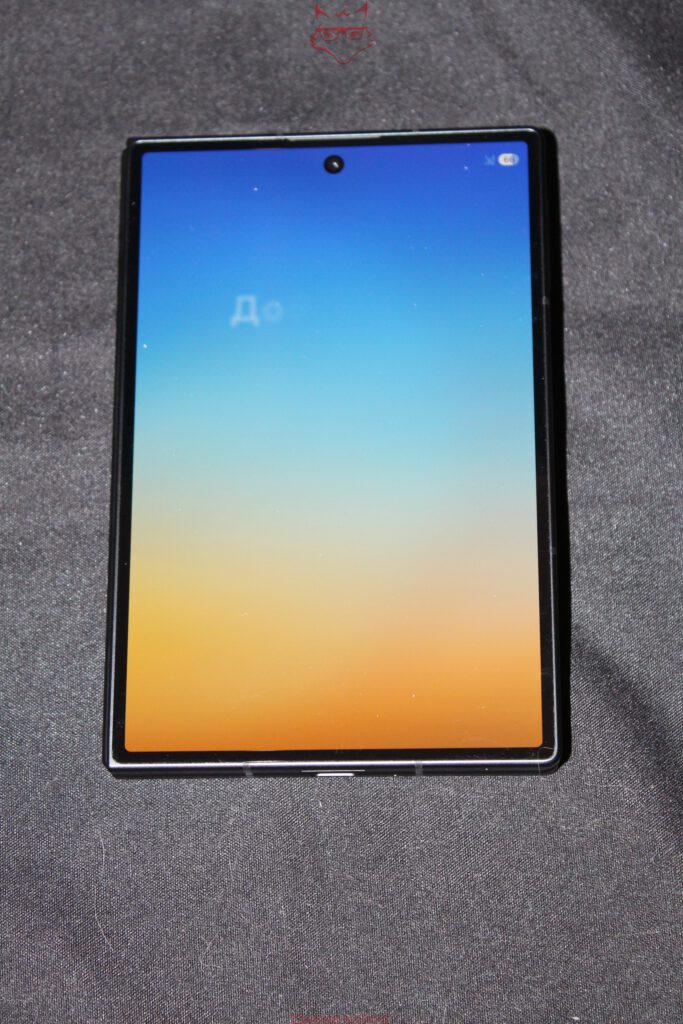
There are technological developments whose significance can be explained perfectly well through numbers. More processing power, larger batteries, higher refresh rates or additional cameras all belong in that category. And then there are devices such as the Samsung Galaxy Z Fold8. The specification sheet naturally contains plenty of numbers, yet none of them really describes what Samsung has changed with this model. The Fold8 is not simply the next evolutionary step of a familiar foldable. Samsung has split its Fold family and given the regular Fold8 a fundamentally different character. The traditional smartphone format with a large folding display has effectively moved towards the Galaxy Z Fold8 Ultra. The Fold8, by contrast, becomes shorter, wider and almost square. When closed, it resembles a small digital notebook more than an unusually narrow smartphone. Open it up and a 7.6-inch display in a 4:3 format appears. At first, that sounds like an unusual design decision. After several days with the device, the question almost turns itself around: why did a foldable have to look like a conventional smartphone for so long, only with the added ability to bend in the middle?
That is precisely where the Fold8 finds its strength. Samsung is no longer trying to disguise the existence of the hinge. Instead, the entire construction is designed around it. The result is a device weighing 201 grams, measuring just 9.7 millimetres thick when closed and 4.5 millimetres per half when opened flat on a desk. That is remarkable because Samsung still has to accommodate two display halves, the hinge, battery, cameras, cellular hardware, speakers and a Snapdragon 8 Elite Gen 5 for Galaxy. A foldable remains mechanically far more complex than a conventional smartphone. With the Fold8, however, that complexity no longer automatically feels like additional baggage.
Arthur C. Clarke once wrote, in essence, that sufficiently advanced technology is indistinguishable from magic. With the Fold8, the magic lies less in the fact that an OLED panel can bend. That has been possible for years. What is more interesting now is just how ordinary the process has become. Open the device, move an application, place two programs side by side, close it again. After a short while, the technically absurdly complicated overall system becomes surprisingly mundane. And that is probably one of the greatest compliments a foldable can receive.
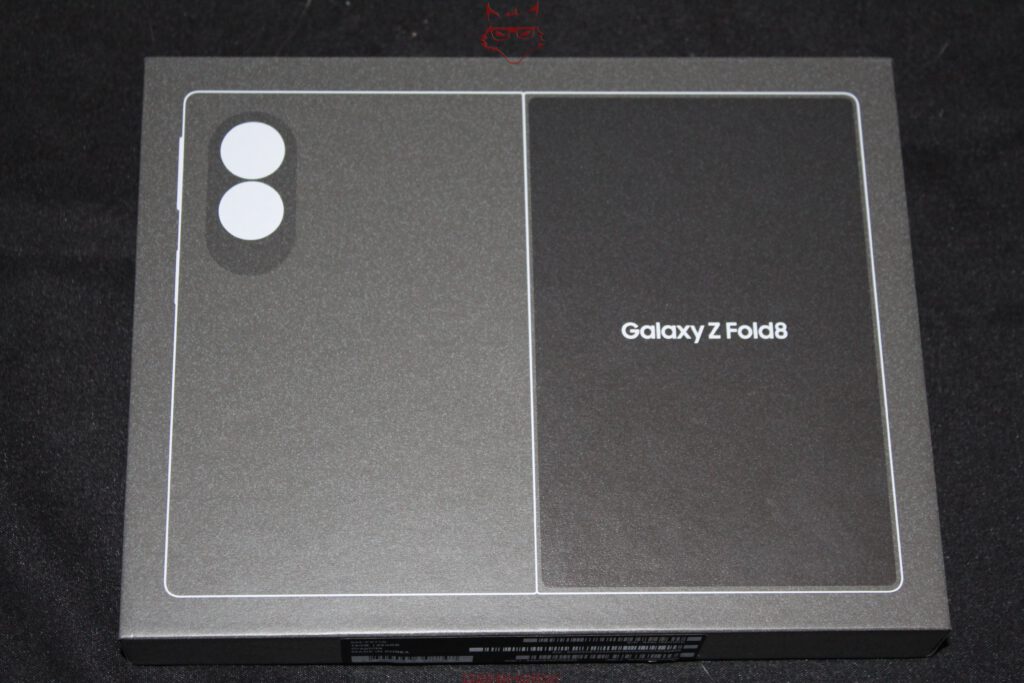
A form factor that finally follows its own idea
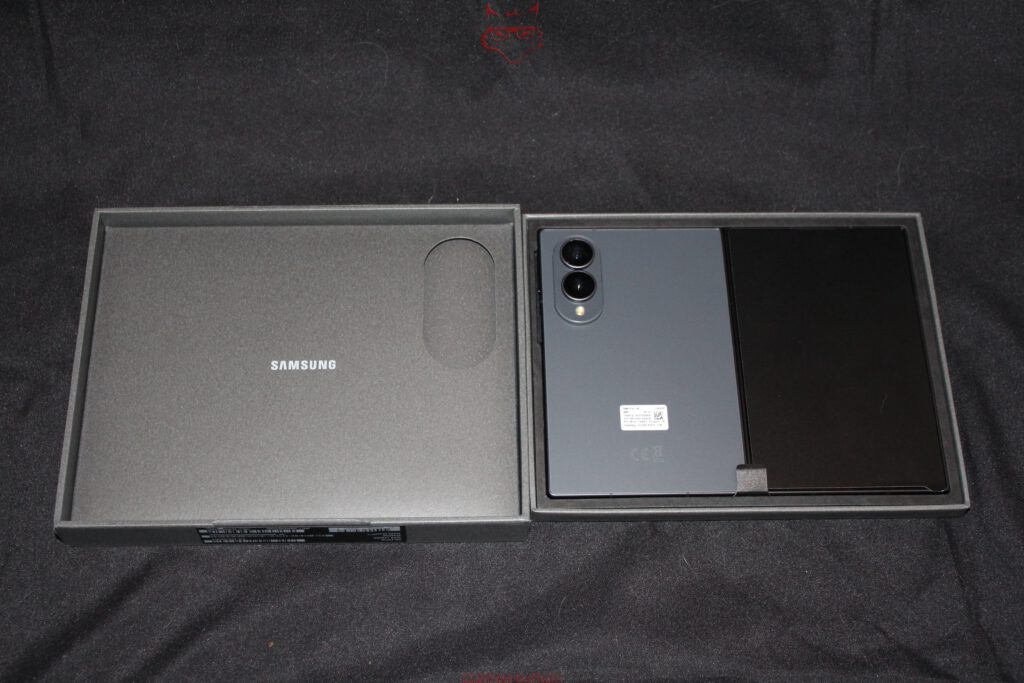
The most important feature of the Galaxy Z Fold8 is neither its processor nor Galaxy AI, nor even its camera system. It is its geometry. With the regular Fold8, Samsung has abandoned the idea that a foldable must behave almost exactly like a conventional smartphone when closed. The result is a device measuring 123.9 millimetres tall and 81.9 millimetres wide. The proportions initially feel unusual, especially next to current smartphones whose bodies have become increasingly elongated. An S26 Ultra or similar devices almost look like remote controls beside it.
Yet the reduced height changes surprisingly much. The Fold8 disappears more easily into a jacket pocket, feels more secure to hold when closed and, despite its width, has a noticeably lower vertical centre of gravity. A weight of 201 grams still sounds substantial on paper, but in practice that mass is distributed across an unusually compact surface. The device therefore feels dense rather than heavy.
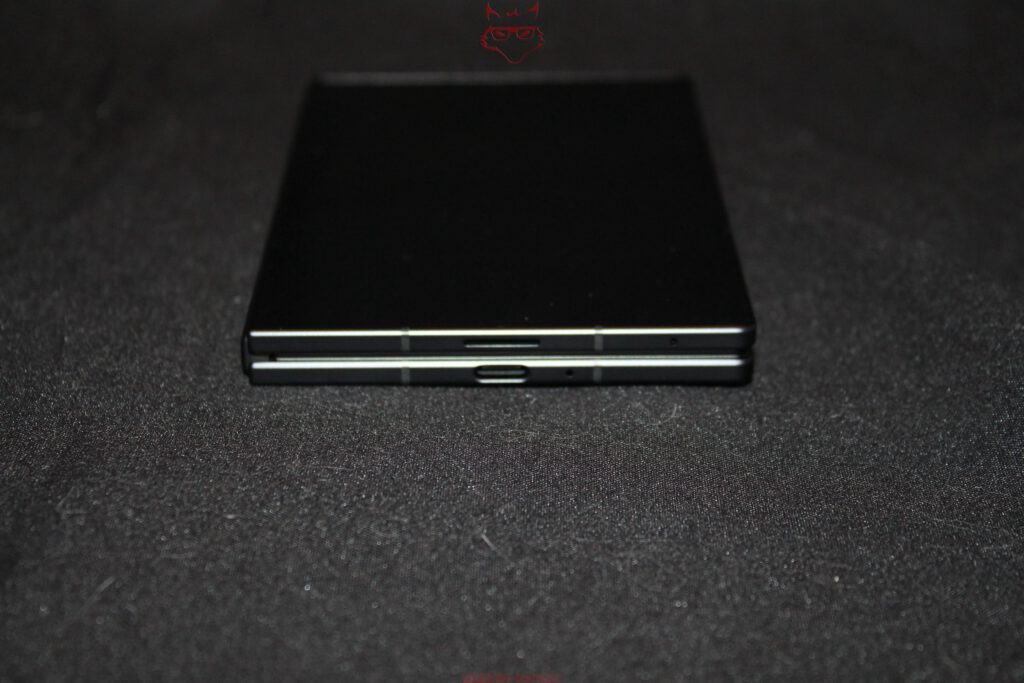
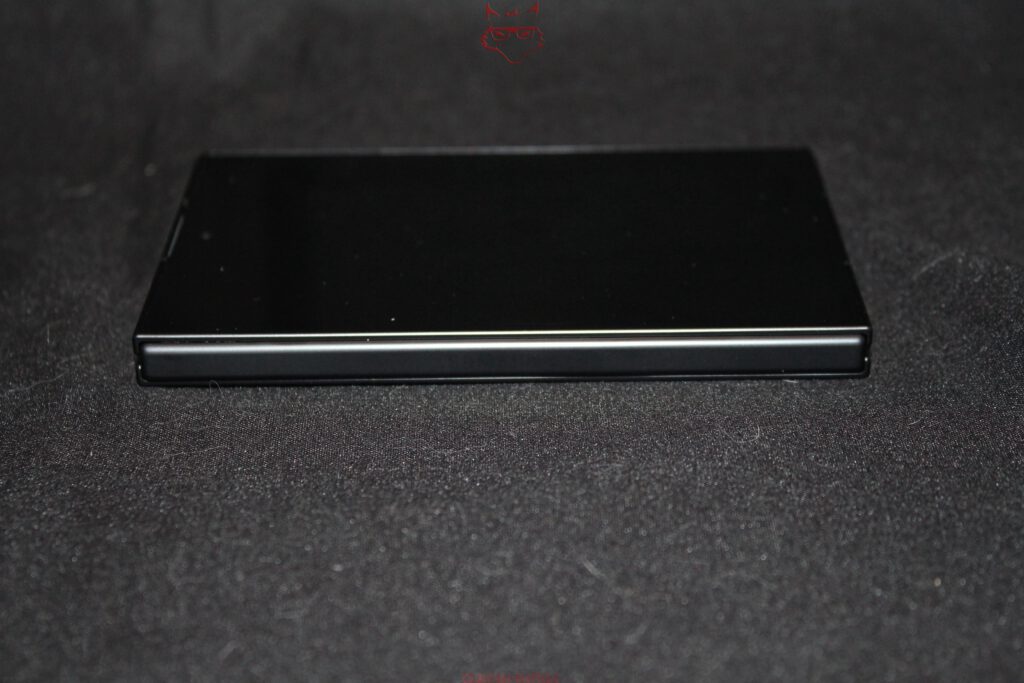
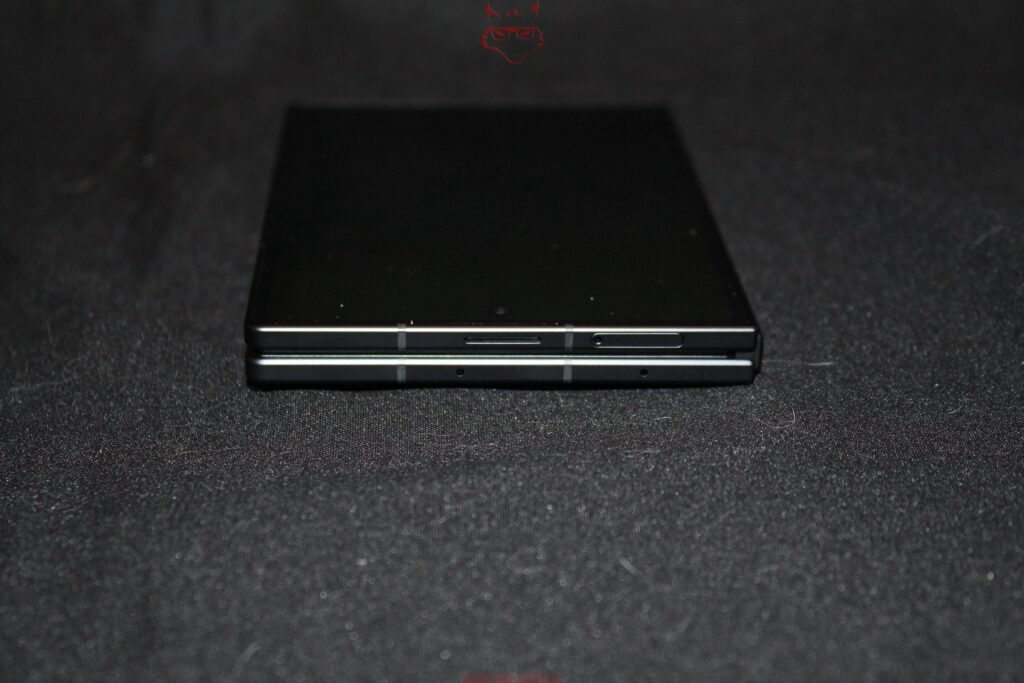
That distinction matters. A heavy smartphone pulls downwards and constantly works against the hand. A densely constructed device gives more of an impression of holding a compact block of engineering. That is exactly the sensation the Fold8 creates. The two halves sit neatly on top of each other when closed, the hinge introduces no unnecessary gap, and the outer surfaces form a remarkably cohesive unit.
The technical progress becomes even clearer when compared with earlier foldables. A few generations ago, a closed Fold almost inevitably belonged to that category of devices that constantly reminded a trouser pocket that two smartphone halves were currently stacked on top of each other. The Fold8 measures just 9.7 millimetres thick when closed. That is now getting dangerously close to conventional smartphones fitted with protective cases. Samsung’s earlier Fold devices occasionally felt like two very thin smartphones that had collectively decided never to separate again. The Fold8, by contrast, feels like a single device.
The clear separation from the Galaxy Z Fold8 Ultra is also interesting. The Ultra adopts the larger, more traditional Fold concept with a 6.5-inch outer display and an 8-inch inner screen. The regular Fold8 instead offers 5.5 inches on the outside and 7.6 inches inside. It is therefore not simply cheaper or smaller. The two devices fulfil different roles. The Ultra wants to combine smartphone and compact tablet. The Fold8 feels much more like a digital pocketbook, calendar or small notebook.
That is a welcome development. A product family becomes more interesting when different models represent genuinely different concepts rather than merely offering the same idea in three screen sizes.
The hinge: the invisible main character
With a conventional smartphone, discussion can revolve around frame materials, cameras or display glass. With a foldable, another component decides whether the whole concept succeeds or fails, and ideally it should barely be noticed during everyday use: the hinge.
A good hinge should be a small mechanical masterpiece and completely boring in practice.
Samsung now achieves that state surprisingly well. Opening the Fold8 produces an even resistance without awkward transitions. Both halves move in a controlled way, without giving the impression that the device is fighting against its own construction. At the same time, there is enough resistance to hold a variety of opening angles.
That sounds unspectacular. In reality, it represents a considerable engineering challenge. A foldable has to absorb mechanical forces without transferring them locally into the flexible OLED panel. At the same time, the mechanism must occupy almost no additional internal space because every millimetre around the hinge immediately affects the thickness and weight of the entire device.
Then there is protection for the internal display. Samsung refers to titanium protection within the Fold8’s display structure. That shows how far the technology has progressed. Flexible displays are no longer protected merely by improved polymer layers; the entire mechanical structure beneath them has become part of the reinforcement system. The display itself is only the visible surface of an arrangement involving support structures, protective layers, adhesives and moving sections.
The result feels considerably less fragile than the construction would suggest. Even so, a foldable remains a foldable in physical terms. A flexible display cannot use exactly the same outer glass layer as a rigid smartphone panel. Sand, hard particles or concentrated pressure therefore remain unwelcome guests. No processor running close to five gigahertz can help here. Physics cannot be removed with a firmware update.
Two displays, but for the first time two genuinely different jobs
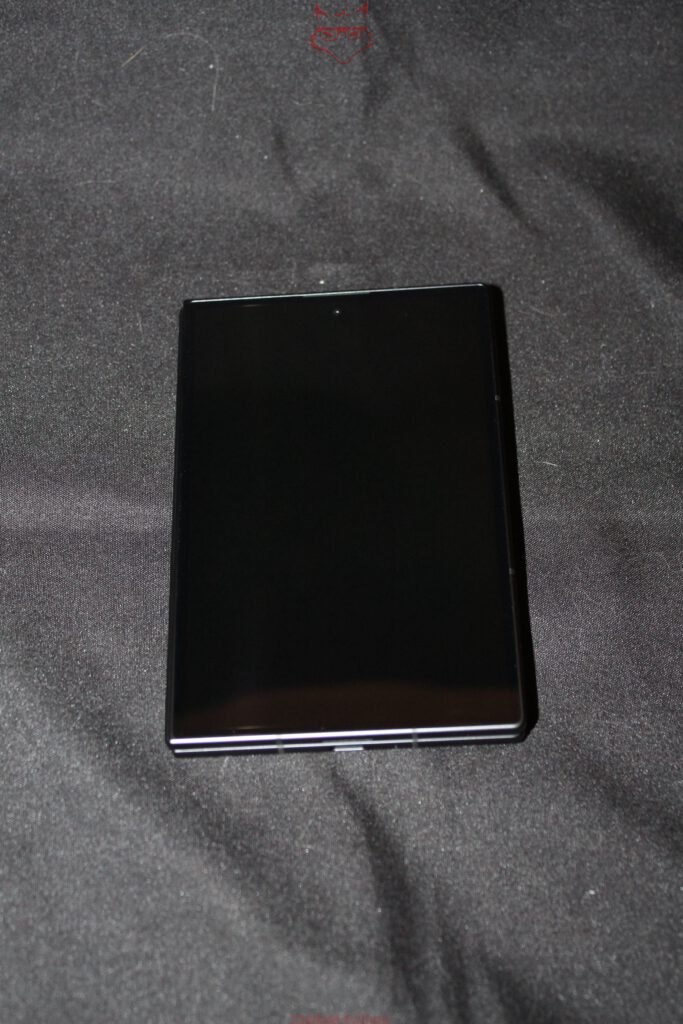
The external Dynamic AMOLED 2X display measures 5.5 inches and offers a resolution of 1,972 × 1,248 pixels. More interesting than the resolution itself is the 16:10 format. Instead of creating a typical tall smartphone screen, it produces a compact surface that almost recalls earlier PDAs. The display runs adaptively at up to 120 Hz and, with 428 ppi, is exceptionally sharp.
The outer display works extremely well for short tasks. Reading messages, controlling music, checking navigation, taking a call, looking at the calendar or quickly finding a piece of information all fit naturally. Longer texts, however, reveal that the screen is deliberately compact. The Fold8 therefore introduces an almost subconscious decision: complete the task quickly or open the device.
That is exactly what makes the form factor more interesting than a foldable with an almost fully fledged smartphone display on the outside. With those devices, an absurd situation can develop where the large inner screen has been paid for and carried around all day, yet a substantial part of daily usage still happens on the external display.
The Fold8 creates a much clearer contrast between its two states. Closed, it is a tool. Open, it becomes a workspace.
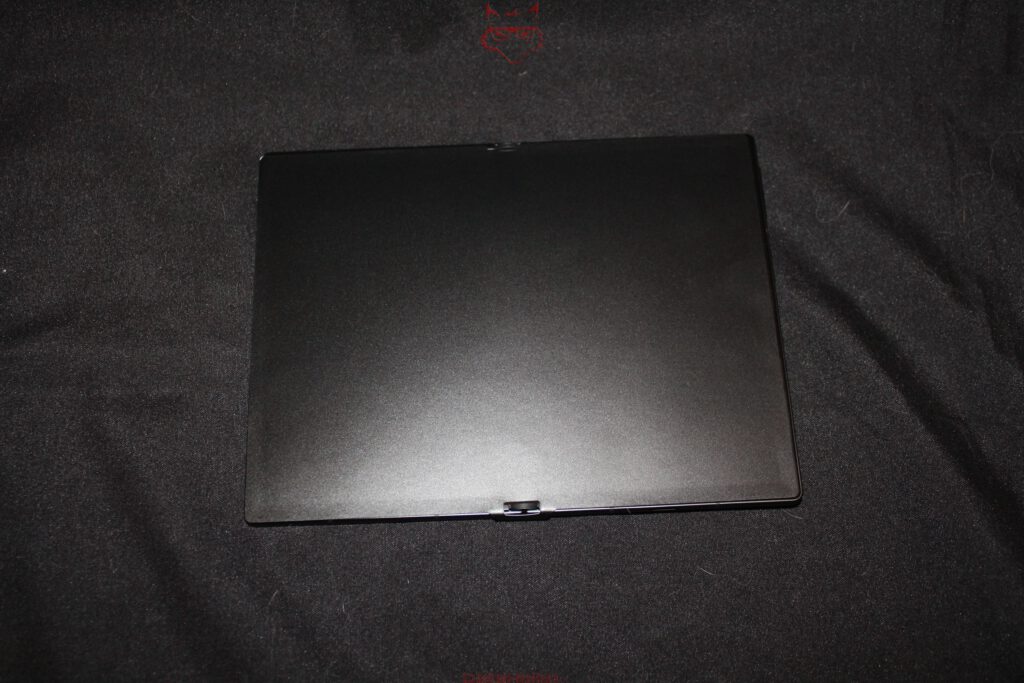
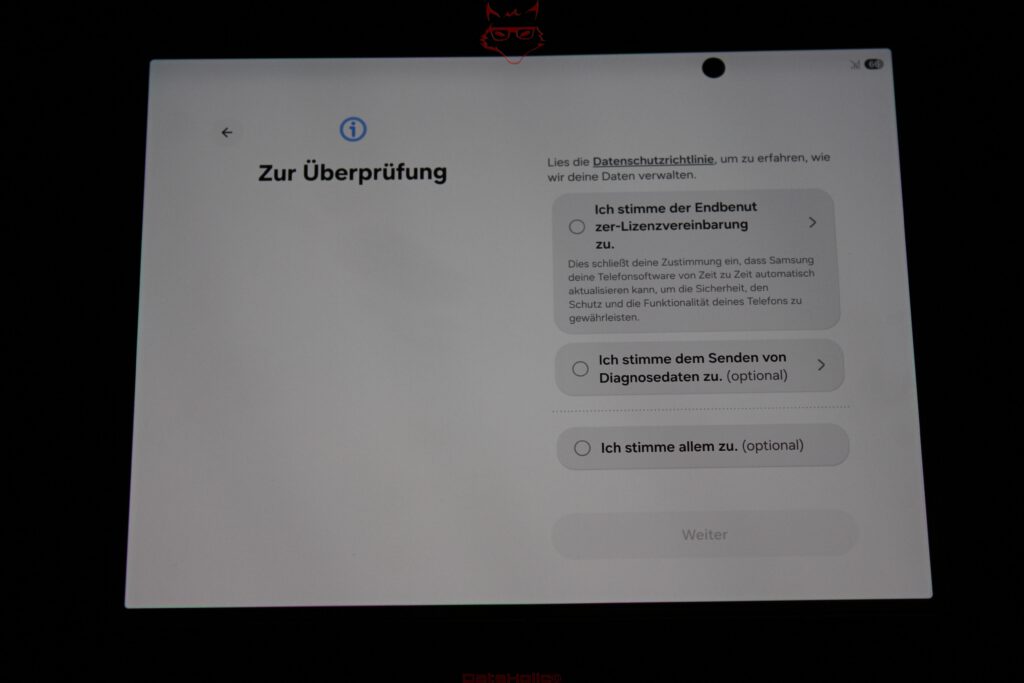
Once unfolded, 7.6 inches with 2,448 × 1,848 pixels are available. The 4:3 aspect ratio is particularly well chosen. Websites, documents, photographs, emails and two applications arranged alongside each other benefit more from additional width than from an excessively tall screen. The panel also runs at up to 120 Hz, while Samsung specifies a peak brightness of up to 3,000 nits.
The aspect ratio also prevents the Fold8 from feeling merely like an oversized smartphone. A conventional phone often just displays more content vertically. The Fold8 instead changes the arrangement itself. Websites suddenly have space for wider columns. A calendar can show several pieces of information at the same time. Photos reach a size where fine details are genuinely visible. Spreadsheets stop being exercises in patience.
The effect is surprisingly similar to moving from a single monitor to a larger desktop workspace. More screen area does not automatically create greater productivity. What matters is whether the software can organise that area sensibly. This is exactly where Samsung’s many years of experience with foldables becomes important.
Multitasking is no longer a trade-show demonstration
Split-screen functions have existed on Android for years. On a conventional smartphone, they offer roughly the same practical appeal as placing two A4 pages on a postage stamp. Technically everything works, yet voluntary use remains rare.
On the Fold8, the concept suddenly makes sense.
Email on the left, browser on the right. Calendar beside Teams. Document at the top, calculator below. YouTube next to notes. The exact combination is almost irrelevant. The important point is that both applications retain enough space to remain genuinely usable.
One UI 9 builds on years of Fold experience. Applications transition between external and internal displays, windows can be arranged flexibly and content remains intact when the screen configuration changes. Samsung lists Android 17 and One UI 9 as the shipping software.
This software integration may be Samsung’s greatest competitive advantage in the foldable market. Purchasing or developing a flexible OLED panel is only part of the challenge. The operating system then has to understand that its available screen area can fundamentally change within a single second.
During everyday use, it becomes noticeable how quickly habits adapt. After a few hours, a longer email is no longer answered on the small external display. The Fold8 gets opened instead. For checking an address, however, the outside screen is enough. That creates its own working rhythm.
A small anecdote from testing describes the effect better than any benchmark table. An appointment, an email containing information about it and a website needed at the same time usually lead to the familiar finger gymnastics on a conventional smartphone: switch app, remember text, jump back, switch again and then discover that the required number was, of course, slightly different after all. On the Fold8, the information simply remained visible at the same time. No spectacular moment, no fireworks, no artificial intelligence throwing digital confetti. Just less friction.
Good technology often works exactly like that.
Snapdragon 8 Elite Gen 5 for Galaxy: performance as a means to an end
Inside sits Qualcomm’s Snapdragon 8 Elite Gen 5 for Galaxy. Samsung specifies clock speeds of up to 4.74 GHz and combines the SoC, depending on configuration, with 12 or 16 GB of RAM. Storage options range from 256 GB through 512 GB to 1 TB.
There is consequently little reason to discuss a lack of processing performance. Applications launch quickly, animations remain fluid and several programs running in parallel do not unsettle the Fold8 during normal use.
Something else matters more here: a large screen almost invites heavier multitasking. That increases the demands placed on memory management, GPU performance and thermal design. In this device, a powerful SoC is not primarily benchmark decoration but part of what makes the form factor practical.
That applies particularly to desktop-like scenarios and Samsung DeX. Samsung continues to support DeX, allowing the Fold8 to function as a compact workstation when connected to an external display. USB 3.2 Gen 1 is also supported.
This creates an interesting hierarchy: closed information device, opened mini-tablet and, through DeX, even a desktop environment. The same hardware serves three very different usage scenarios.
A smartphone still does not become a complete notebook replacement. Development environments, professional media production or complex local workflows have different requirements. For browsers, remote access, office applications, communication and numerous administrative tasks, however, the boundaries continue to blur.
4,800 mAh: a larger battery despite the more compact concept
Foldables have long faced an obvious problem. Two large displays require energy, while the hinge occupies valuable internal volume that could otherwise be used for battery cells in a conventional smartphone.
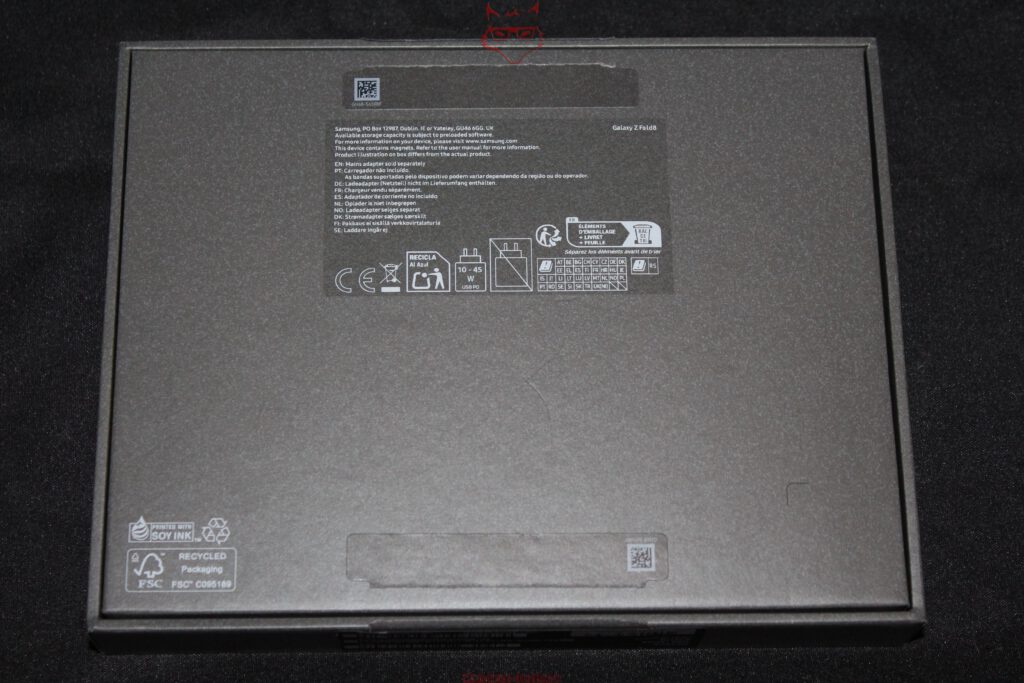
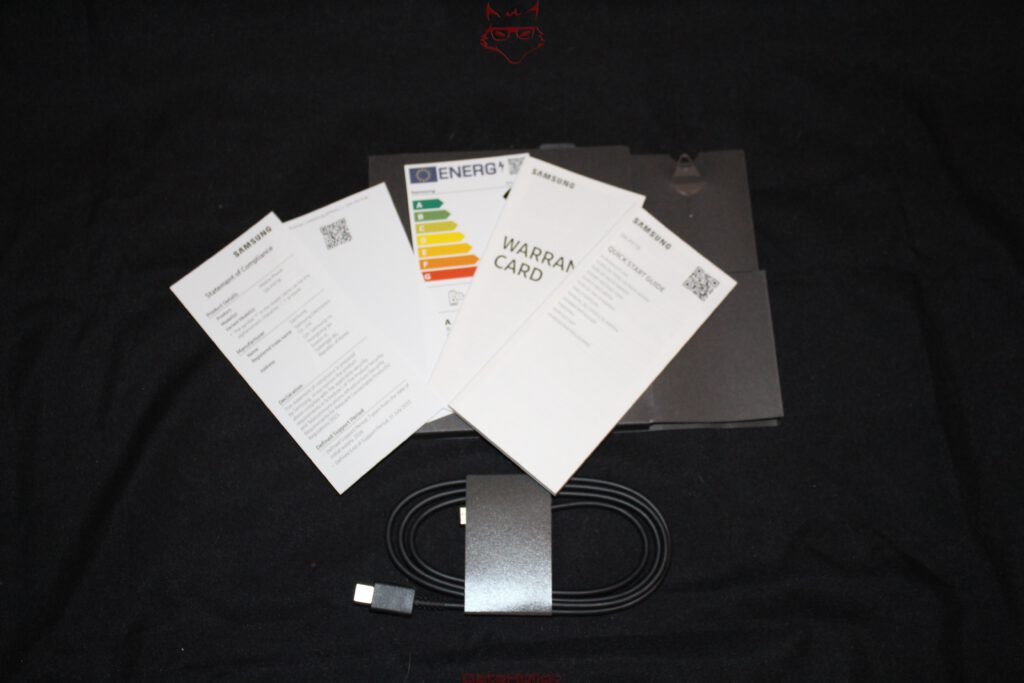
Samsung equips the Fold8 with 4,800 mAh. That is 400 mAh more than the Fold7, despite the new device weighing less at 201 grams. Samsung specifies up to 26 hours of video playback. Wired charging reaches up to 45 watts; accordingly, the packaging states a required USB-PD output between 10 and 45 watts. A charger is not included. (samsung.com)
In everyday use, the higher capacity matters more than any theoretical runtime figure. A foldable encourages longer usage sessions simply because of its larger main display. Websites, videos, documents or several applications remain open for longer. Such a device should therefore not be equipped with a battery that starts looking for a wall socket by early evening.
Forty-five watts, however, is not a leading figure. Other manufacturers have long moved towards triple-digit charging outputs. Samsung remains more conservative. There is at least a plausible technical reason for that strategy: high charging rates generate additional heat and place greater stress on electrochemical cells. Samsung specifies a minimum battery lifespan of 1,200 charging cycles. For a smartphone in this price category, long-term cell health is not a trivial consideration.
Even so, a 45-watt charger would be a welcome part of the package for a device in this class. A foldable costing several thousand euros without a charger has something of a sports car whose fuel cap is fitted, while the matching filler nozzle is sold separately.
The cameras: capable, practical and deliberately less ambitious
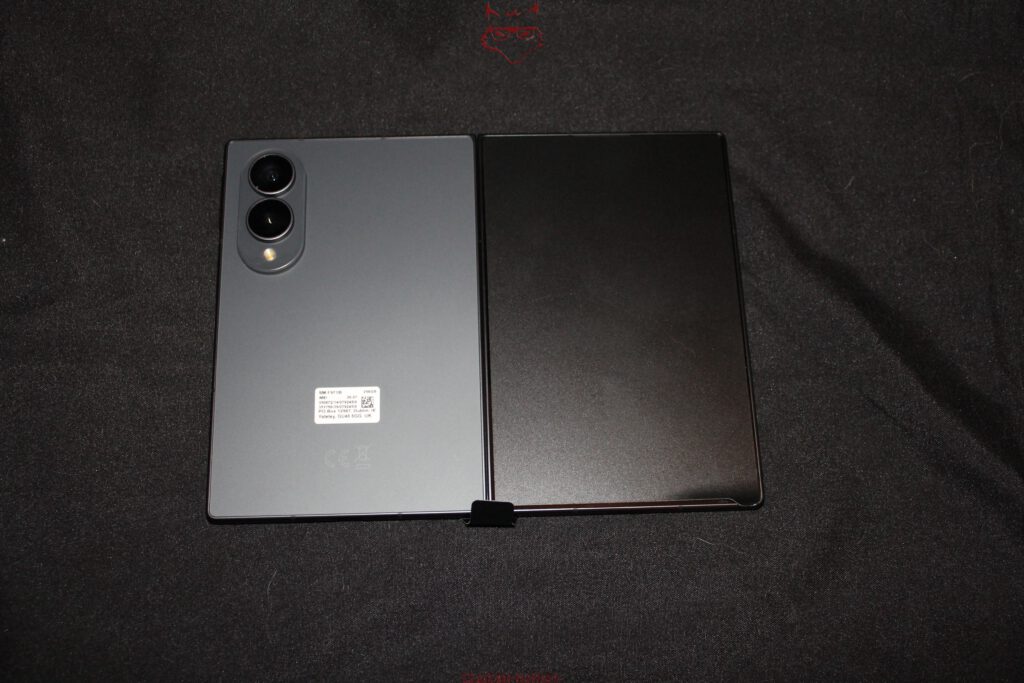
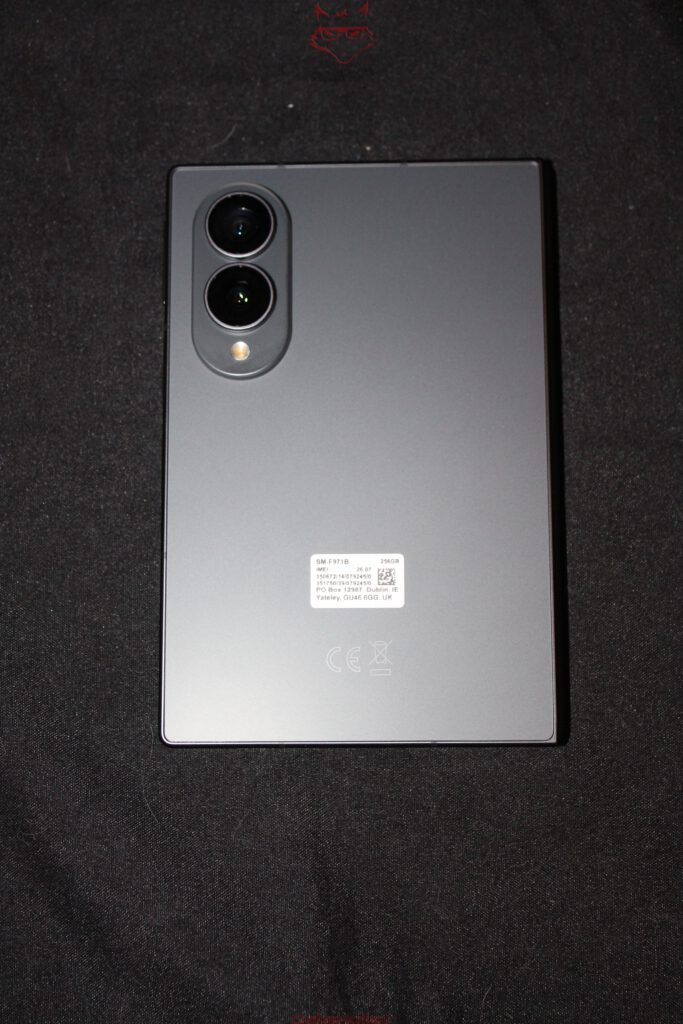
Two rear cameras are an unusually restrained choice for a flagship-class smartphone in 2026. The Galaxy Z Fold8 combines a 50 MP wide-angle camera with an f/1.8 aperture and optical image stabilisation with a 50 MP ultra-wide camera at f/1.9. There is no dedicated telephoto lens, which immediately establishes where Samsung has drawn the line between the compact Fold8 and devices built around maximum photographic flexibility. The main sensor also provides a 2x crop in optical quality, while greater magnification relies increasingly on computational processing and digital enlargement. That works reasonably well for occasional use, but it does not turn the main camera into a telephoto lens.
The decision makes more sense when considered alongside the rest of the construction. Every camera module occupies valuable internal volume, and that matters considerably more in a foldable measuring only a few millimetres per half than in a conventional flagship. Samsung has already divided the interior between batteries, hinge mechanics, display electronics, cooling, antennas and the mainboard. A large periscope assembly or another optically stabilised camera would not simply add another lens to the specification sheet; it would influence weight distribution, internal packaging and potentially the thickness of the camera section. The Fold8 therefore accepts a photographic compromise in favour of the characteristics that define the device more strongly: low weight and a remarkably thin body.
That compromise is easier to accept because the main camera performs well in the situations likely to account for most photographs. Detail reproduction is strong, dynamic range is broad and Samsung’s image processing produces pictures that look finished without requiring immediate editing. Colours retain the slightly vivid character associated with Galaxy devices, although the processing generally stops before blue skies and green vegetation begin to resemble a demonstration mode on a television. Difficult lighting also reveals how much modern smartphone photography depends on processing rather than the sensor alone. Several exposures are combined, highlights are controlled and darker areas are lifted without making the result look completely detached from the original scene.
The ultra-wide camera adds the focal length that is arguably more useful on a device designed around everyday mobility. Architecture, landscapes, interiors and larger groups benefit immediately from the wider field of view. Edge correction cannot completely eliminate the physical characteristics of an ultra-wide lens, particularly with straight lines and subjects positioned close to the frame boundaries, but the results remain useful rather than merely filling the second position on the camera specification.
More interestingly, the Fold8’s best camera feature is not part of either camera module. It is the hinge. Opening the device partially and placing it on a table creates a stable shooting position without an additional tripod. Video calls, group photographs, self-timer shots and longer recordings become easier simply because half of the smartphone acts as a stand for the other half. The external display can also provide a preview in suitable shooting modes, allowing the rear cameras to be used in situations that would normally depend on the front camera. This is where the Fold8 demonstrates one of the more convincing aspects of foldable hardware: a mechanical component originally required for the display ends up providing useful functions elsewhere in the system.
The missing telephoto camera remains noticeable. A 2x sensor crop is perfectly adequate for portraits and modest reframing, but concerts, distant architecture or smaller details quickly expose the limits of digital magnification. Computational photography can recover contrast, combine information from several frames and make an enlarged image look cleaner, yet it cannot reproduce the perspective and genuine optical resolution of a longer focal length. That is not necessarily a serious weakness for the Fold8, but it is a conscious limitation and one worth considering before treating the device as both foldable and complete camera flagship.
Two front cameras instead of an unnecessary engineering exercise
Samsung uses a 10 MP front camera in both displays and, more importantly, leaves them visible. That sounds almost disappointingly conventional for a foldable, but it is the more sensible solution. Earlier attempts to hide cameras beneath OLED panels demonstrated how quickly aesthetic cleanliness can turn into an optical problem. A sensor needs light; placing an active display matrix above it inevitably makes that task harder.
The small punch-hole in the Fold8’s internal display is visible when deliberately looking for it, but it quickly disappears during normal use. In return, the camera does not have to photograph through an additional layer of pixels and compensate for reduced light transmission afterwards. That becomes especially relevant during video calls in offices, hotel rooms or evening environments, where front cameras already operate with comparatively small sensors and limited light.
There is also a practical redundancy to the two-camera arrangement. The outer camera covers normal smartphone use while the inner camera remains correctly positioned for calls and conferences when the Fold8 is opened. Neither solution is particularly exotic, and that is precisely why it works. The foldable itself already contains enough engineering complexity; hiding a camera merely to remove a few millimetres of visible cut-out would solve a cosmetic problem while introducing an optical one.
Build quality: 4.5 millimetres require more engineering, not less
Photographs do the Fold8 a slight disservice. At only 4.5 millimetres per half when opened, the device looks almost uncomfortably thin, as though a firm grip might accidentally become a durability test. In the hand, that impression changes quickly. Both halves feel rigid, the frame does not exhibit obvious flex during normal handling and the hinge joins them without making the centre of the device feel like a weak point.
Achieving that impression at this thickness is more interesting than the number itself. A foldable cannot simply be made thinner by shaving material from the frame. Batteries still require physical volume, the USB-C connector establishes a practical minimum thickness in one area, antennas need space around conductive structures and the hinge has to absorb thousands of opening and closing movements without transferring excessive local stress into the flexible display. Cooling becomes more difficult as well because a powerful SoC still has to distribute its waste heat across an extremely shallow chassis.
The internal components consequently become part of a tightly integrated structural package. Display supports, hinge mounts, frame sections and component placement all influence rigidity. That is why the Fold8 feels less like two impossibly thin plates loosely connected in the middle and more like a single mechanical system that happens to change geometry.
The Graphite finish complements that approach. Its matte surface is relatively forgiving of fingerprints and gives the Fold8 a restrained appearance that suits the engineering better than an excessively decorative finish would. Even the rear camera section remains comparatively modest. Closed, the device does not immediately advertise how complicated its construction actually is. There is something almost British about the understatement, although Samsung has wisely omitted the tea.
The fingerprint sensor solves a foldable-specific problem with a simple answer
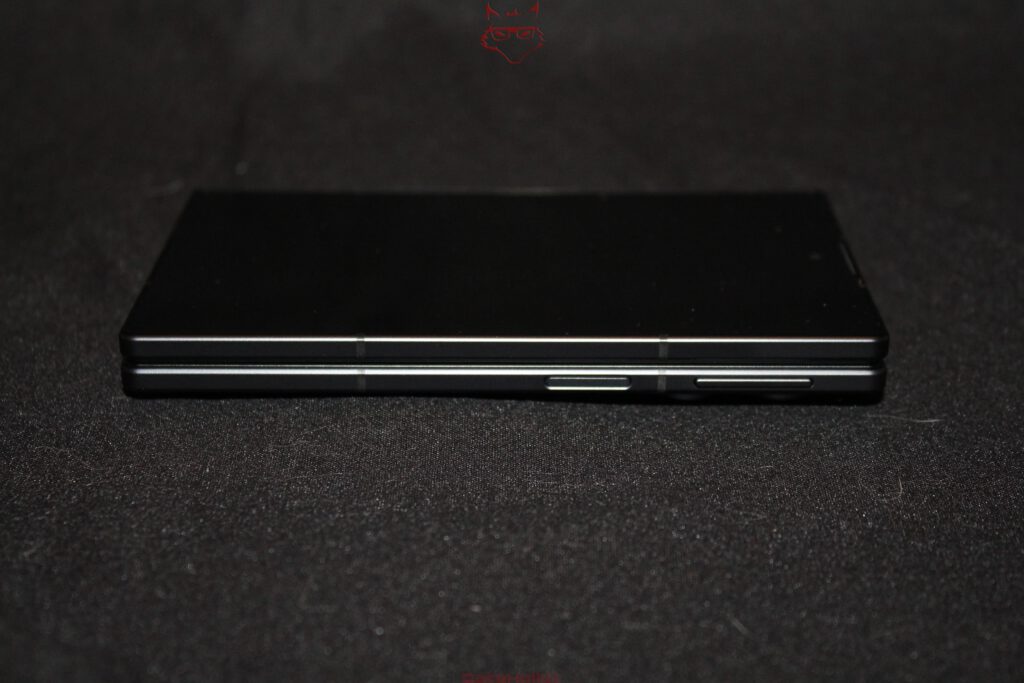
Integrating the fingerprint sensor into the power button sounds like a minor detail until the alternative is considered. A conventional smartphone has one display and therefore one obvious location for an under-screen sensor. The Fold8 has two displays and spends significant amounts of time in both states. Placing biometric hardware underneath either panel would inevitably favour one configuration.
The side-mounted sensor avoids that problem completely. The same button remains accessible when the Fold8 is closed, opened or resting at an intermediate angle, and authentication does not depend on which display happens to be active. Recognition proved fast and reliable during the test period, which is exactly the behaviour required from something used dozens of times per day.
Face recognition remains available, but the fingerprint sensor is the more consistent method because neither ambient lighting nor the current orientation of the displays changes its basic operation. It is a small example of the wider Fold8 philosophy: some of the best solutions are not the technically most elaborate ones, but those that continue working regardless of what shape the device currently has.
Connectivity designed for the years ahead
There are few surprises in the Fold8’s wireless equipment, which is positive in this price class. Wi-Fi 7 with access to the 6 GHz spectrum, Bluetooth 6.0, NFC, Ultra-Wideband and 5G provide the expected foundation, while nano-SIM and eSIM options cover modern dual-SIM configurations. Satellite positioning is similarly comprehensive and does not reveal any obvious attempt to save a few euros in an area that would only become irritating later.
Wi-Fi 7 is still ahead of the networking equipment found in many homes and offices, but that is exactly why its inclusion matters. A smartphone in this category should remain relevant for several years, during which routers and corporate wireless infrastructure will continue to change. Buying a premium device with yesterday’s radio hardware would be an odd economy when the rest of the system is designed around longevity.
UWB follows a similar logic. Its usefulness is less obvious than NFC because the benefits depend on compatible devices around it, yet precise spatial location is increasingly relevant for trackers, digital vehicle keys and connected hardware. It is the kind of feature that may remain unnoticed for months and suddenly become useful once another device in the ecosystem supports it. None of this transforms the Fold8 on its own, but together it prevents the connectivity package from becoming the first part of the phone to feel old.
Seven years of software support only matter if the hardware survives them
Samsung’s long update commitment is particularly significant on a foldable. A conventional mid-range smartphone can sometimes be replaced economically after a few years without turning the original purchase into a questionable investment. A Fold8 occupies an entirely different price category. Its economics improve considerably if the device remains useful for a long time, making extended operating-system and security support more than another line on the specification sheet.
Software, however, is only one side of longevity. The Fold8 contains a battery that will chemically age, a hinge that experiences a mechanical cycle every time the device is opened and a flexible display whose centre section repeatedly changes radius. None of those processes can be stopped by another Android update. This makes Samsung’s support period almost an invitation for the hardware to prove that modern foldables have matured beyond their earlier reputation for fragility.
That distinction matters. Seven years of updates do not guarantee seven years without repair, just as a long warranty on a conventional notebook does not prevent its battery from losing capacity. What the commitment does achieve is removing software obsolescence as an unnecessary additional limitation. If the Fold8 remains mechanically healthy, there is no obvious reason for outdated security software to force its retirement.
DeX, SmartThings and the wider Galaxy ecosystem add another dimension to that longevity. A smartphone capable of serving as a mobile device, a larger foldable workspace and a desktop-like system when connected to an external screen has more opportunities to remain useful as individual habits change. Long support therefore fits this particular device better than it would a smartphone designed primarily around an annual camera upgrade.
The missing S Pen hurts precisely because the display would be perfect for it
Few omissions feel as contradictory as the lack of S Pen support. Opened up, the Fold8 presents a 4:3 display that looks almost purpose-built for handwriting. The proportions suit documents, notebooks, sketches and PDF annotations far better than the narrow screens of conventional smartphones, yet the one input method capable of exploiting that surface properly is absent.
There are credible engineering reasons behind the decision. Active pen input requires additional hardware in the display stack, and additional layers are particularly unwelcome when Samsung is trying to reduce both thickness and weight. A flexible panel also complicates pressure handling. Supporting precise pen input is not simply a matter of enabling a software option; the display assembly has to detect the stylus accurately while remaining mechanically suitable for repeated folding.
The result is nevertheless frustrating because the rest of the Fold8 comes so close to being an excellent digital notebook. A document could occupy one side while notes sit beside it. PDFs could be annotated during meetings, diagrams sketched directly into Samsung Notes and signatures added without reaching for another device. None of these scenarios requires a full-size tablet, and the Fold8 already provides enough surface area to make them practical.
Samsung has therefore improved the physical portability of the Fold at the expense of one feature that would have made particularly good use of its inner display. The trade-off is understandable from an engineering perspective, but understanding a compromise does not make it disappear. The Fold8 remains an excellent viewing and multitasking device; with proper pen input, it could have occupied a much more interesting position between smartphone and digital notebook.
The Fold8 is not a small tablet, and treating it as one misses the point
A 7.6-inch foldable display cannot replace an 11- or 13-inch tablet for every task. Long writing sessions, detailed drawing, complex spreadsheets and extended media work still benefit from a genuinely larger panel and, usually, a physical keyboard. The Fold8 becomes more convincing once that comparison is abandoned.
Its advantage is not maximum display size but immediate availability. A large tablet sitting at home offers no benefit while standing on a railway platform, walking through an airport or trying to check a document between appointments. The Fold8 is already there because it is also the phone.
That changes the usefulness of every additional centimetre of screen. A PDF becomes large enough to read without constant zooming. A map can show both the route and enough surrounding streets to provide context. A website begins to resemble its desktop structure rather than a narrow column. Two applications can share the screen without becoming almost comically thin.
The difference sounds modest on paper, but it is exactly the sort of improvement that becomes valuable through repetition. The Fold8 does not need to replace a tablet every day. It only needs to remove enough situations in which carrying a tablet would otherwise have been necessary.
In that respect, its closest conceptual relative may not even be the modern tablet. The combination of communication device, organiser, document viewer and pocket computer has more in common with the old PDA philosophy, only without the plastic stylus, resistive touchscreen and heroic optimism required to browse the web over mobile connections of the time.
Galaxy AI works better as supporting software than as the reason to buy the Fold8
Galaxy AI is deeply integrated into Samsung’s current software environment, and the Fold8 provides enough processing power to make its editing, summarisation, search and media functions feel like part of the operating system rather than separate demonstrations. The Snapdragon 8 Elite Gen 5 provides substantial local processing resources, while the larger display gives several of these functions more room to present their results.
The important point is that none of this has to carry the Fold8.
The hardware already has a reason to exist. Opening the device physically changes the amount and shape of the available workspace, something that cannot later be distributed to a conventional smartphone through a software update. Galaxy AI can improve how information is handled on that workspace, but it does not create the workspace itself.
That distinction makes the software features easier to appreciate. Summaries can sit beside the original material, search results have enough room to remain visible alongside another application and image editing benefits from a larger canvas. The functions complement a hardware characteristic instead of trying to become a substitute for one.
The Fold8 would still be an interesting device if every AI function disappeared tomorrow. That may sound like faint praise for Galaxy AI, but it is actually a compliment to the hardware.
201 grams matter more after four hours than another benchmark record
The Fold8’s 201-gram weight deserves attention because it influences almost every interaction with the device. It is not exceptionally light compared with all smartphones, but the comparison changes once two displays, two chassis halves, a hinge and a 4,800 mAh battery enter the equation. Foldables once carried their additional mechanical complexity quite literally in the pocket. The Fold8 no longer feels obliged to do so.
Weight is also one of those specifications that cannot be hidden by fast software. A slightly quicker application launch becomes normal after a few hours. Twenty or thirty additional grams remain twenty or thirty additional grams every time the phone is picked up, held while reading or carried through an entire day.
The relatively compact dimensions help distribute those 201 grams well, so the Fold8 feels dense rather than cumbersome. That difference becomes particularly noticeable when the device is opened for longer reading sessions. There is still more hardware in the hand than with an extremely light conventional smartphone, but not enough to make the folding mechanism feel like a permanent ergonomic penalty.
This may be one of the more important signs that the category is maturing. Earlier foldables required acceptance of extra bulk in exchange for the larger display. The Fold8 shifts the discussion away from whether the additional hardware is tolerable and towards whether the unusual proportions are preferable. That is a much more interesting question.
Four days reveal the character, not the ageing process
The unusually short review period places a necessary limit on the conclusions that can be drawn from the Fold8. Several current Samsung devices shared the same loan window, leaving four intensive days for each model. That is enough time to evaluate the construction, software behaviour, displays, cameras, multitasking and general battery characteristics under real use. It is not enough to make serious claims about long-term durability.
This distinction matters particularly with a foldable. A rigid smartphone changes relatively little mechanically throughout the day. The Fold8 deliberately moves. Its hinge experiences another cycle every time the inner display is needed, while the flexible panel repeatedly transitions between folded and flat states. Any meaningful assessment of how the hinge resistance develops, how the crease changes or how the internal display surface ages would require months rather than days.
What four days can establish is whether the basic interaction model becomes comfortable once the novelty wears off. That happened remarkably quickly. Short tasks naturally migrated to the external screen, while longer emails, documents and parallel applications increasingly triggered the same simple response: open the device. There was no need to consciously decide which mode represented the “proper” way to use the Fold8. The task determined the shape.
That behaviour says more about the maturity of the concept than another hundred opening cycles performed solely for a review. The mechanism is still technically fascinating, but during normal use it increasingly becomes just the part between two displays that allows the device to become larger.
Its weaknesses are no longer uniquely foldable weaknesses
The most interesting criticism of the Fold8 is how conventional many of its shortcomings have become. Charging tops out at 45 watts and the charger itself is absent from the box. The rear camera system lacks a genuine telephoto lens. The S Pen is no longer supported. The compact outer display is excellent for short interactions but less comfortable for longer typing, while the purchase price remains substantial.
These are meaningful compromises, yet very few of them amount to the old warning that inevitably accompanied foldables: “because it folds.”
The camera limitation results partly from Samsung’s priorities, but plenty of conventional smartphones make similar compromises. The absence of a charger has become an industry habit rather than a foldable-specific problem. Charging speed is conservative by current standards, although hardly unusable. Even the unusual display proportions are better understood as a design choice than an inherent weakness. Widescreen video leaves unused space, while documents, websites and multitasking benefit considerably from the broader 4:3 workspace.
The S Pen remains the exception because its absence directly limits what could otherwise be one of the Fold8’s strongest use cases. Beyond that, the compromises increasingly resemble those encountered when choosing between any two flagship smartphones: camera versatility against weight, battery capacity against thickness, screen size against portability.
That change is significant. The Fold8 no longer needs to be judged generously simply because folding hardware is difficult to build. It can be criticised like a normal smartphone, which is perhaps a stronger endorsement of the engineering than another paragraph praising the hinge.
Verdict: the fold has finally become part of the device, not the attraction
The Galaxy Z Fold8 works because Samsung has stopped treating the folding display as something that needs to justify every compromise around it. The processor is fast, the displays are excellent, the cameras are capable and the battery is large enough to make the concept practical. None of that comes as a surprise in this price class. What matters far more is that these components now sit inside a device that feels coherent rather than experimental. The Fold8 no longer gives the impression that an ordinary smartphone was divided into two halves simply to accommodate a flexible OLED panel.
Closed, its unusual proportions initially require some adjustment. The 5.5-inch outer display is noticeably different from the long screens that dominate current smartphones, and extended typing is not its strongest discipline. After a few days, however, its purpose becomes increasingly obvious. Checking a message, changing music, looking at a calendar entry or quickly searching for an address does not require 7.6 inches of display. The Fold8 remains closed and behaves like the compact device it is supposed to be. As soon as a task becomes more involved, opening it feels less like activating a special feature and more like making additional desk space available.
That distinction is important because earlier Fold generations often asked for patience in return for their engineering. The reward was a large internal display, but getting there meant accepting a thick body, considerable weight and an outer screen whose proportions occasionally made typing feel like writing through a letterbox. The appeal of the large panel was obvious; so were the compromises required to carry it around all day.
At 201 grams and 9.7 millimetres when closed, the Fold8 changes that equation considerably. Those numbers are not interesting because they win a specification contest. They matter because the device finally stops reminding the hand and the pocket that a hinge, two displays and two chassis halves are travelling along. Opened to just 4.5 millimetres per side, it becomes even harder to reconcile the physical dimensions with the amount of hardware inside. Samsung has not eliminated the engineering problem behind a foldable; it has simply become much better at hiding its consequences.
Not every decision benefits from that pursuit of thinness. The absence of S Pen support remains particularly unfortunate. A 7.6-inch 4:3 display is almost an invitation to write on it, and the Fold8 could have occupied an unusually convincing position between smartphone and digital notebook. The missing telephoto camera is easier to accept but still limits photographic flexibility, while 45-watt charging feels conservative rather than ambitious. A charger disappearing from the box does not become more charming because the smartphone attached to it can fold either.
There is also no escaping the fact that the Fold8 remains a compromise in the literal sense of the word. A conventional flagship offers a larger outer display in a thinner single-piece body. A proper tablet provides substantially more working space. A camera-focused Ultra smartphone offers more focal lengths, while a dedicated digital notebook provides better pen input. The Fold8 does not beat each of those devices at its own speciality, and attempting to judge it by that standard misses what Samsung has actually built.
Its advantage is that all of those categories become slightly less necessary in certain situations. A tablet can remain at home when the task is reading a document rather than editing a complex spreadsheet. A short email stays on the outer display; a longer one moves inside. A browser and calendar can remain visible together instead of forcing a constant sequence of app switching. None of these examples sounds revolutionary, which is precisely why the Fold8 feels more mature than the foldables that came before it. The benefits have moved away from demonstrations and into small everyday situations.
The hinge is perhaps the best example. Technically, it remains one of the most complicated parts of the entire device. It has to guide both halves precisely, protect the flexible display, maintain resistance across different angles and survive thousands of movements while occupying as little internal volume as possible. Yet after several hours of use, very little thought is given to any of that. It opens when more space is needed and closes when that space is no longer useful. For a mechanism that once defined the entire novelty of the product category, becoming boring is quite an achievement.
The short review period cannot answer how that mechanism, the flexible display or the battery will behave after a year or several years. Four days are enough to understand the Fold8, not to age it. Long-term durability therefore remains one of the questions that cannot be settled responsibly within this test. What those four days did reveal, however, is how little time the basic operating concept needs to become familiar.
A message arrives and stays on the outer screen. An email requires information from the browser, the Fold8 opens and both applications sit next to each other. A PDF appears later and the larger display makes reading it considerably less tedious. Once finished, the device folds shut and returns to a pocket without feeling like a small tablet has just been packed away.
There is no dramatic moment in any of this, and that may be the strongest argument in favour of the Fold8. Years ago, simply watching an OLED panel bend without breaking was enough to make a foldable fascinating. Samsung no longer has that novelty to rely on, nor should it need it.
The Galaxy Z Fold8 is at its best when the folding display stops being the reason to use it. It opens because more room is useful, closes because a smaller device is easier to carry, and spends surprisingly little time reminding anyone how technically difficult either of those things actually is.
That is a far more convincing achievement than simply proving, once again, that a smartphone can fold.
Notice in accordance with EU transparency requirements:
The Samsung Galaxy Z Fold8 featured in this review was provided to us by Samsung as a non-binding loan unit for testing purposes. This is not paid advertising.
Samsung had no influence whatsoever on the content, assessment or editorial independence of this article. All opinions expressed are based exclusively on our own practical experience.
We would like to sincerely thank Samsung for providing the Galaxy Z Fold8 and for the trust placed in dataholic.de.