
Razer Wolverine V3 Pro 8K PC Review
- The First Impression of the Packaging: Large, Dark, Uncompromising
- Rear Side with a Statement: Technical Arguments Instead of Mere Show
- Opening It: No Spectacle, but a Cleanly Executed Transition
- The Hard Case as the First Star of the Interior
- Accessories with Substance: Cable, Dongle, Stick Caps, Documentation, Stickers
- The First Look at the Controller: Less Show, More Seriousness
- Haptics and Material Feel: Grippy, Sober, Clearly Built for Use
- The Controls: Immediate Interest in the Details
- Back Side and Shoulders: This Is Where the Actual Esports Character Lives
- Portability and Order: A Product Clearly Intended to Move Around
- Conclusion: An Unboxing That Gets Almost Everything Right – and a Product That Has to Know Exactly What It Wants to Be in the Premium Segment
- The Advantages of the Overall Package
- The Actual Core of the Verdict
There are products that arrive in a box. And then there are products that march in as part of a full-blown presentation. The Razer Wolverine V3 Pro 8K PC unmistakably belongs to the latter category. Even the name does not sound like a cozy after-work gaming session, but rather like a clenched jaw, fast fingers, and the firm determination to win one more round instead of going to bed at a reasonable hour. Razer positions the model very clearly as a wireless PC esports controller with an 8,000 Hz polling rate, TMR thumbsticks, six additional input elements, Hall Effect triggers including trigger-stop functionality, and a weight of around 220 grams. On top of that come wireless operation via USB dongle, wired use, and an included hard case. This exact spec sheet is the backdrop against which every detail of the unboxing has to be understood.
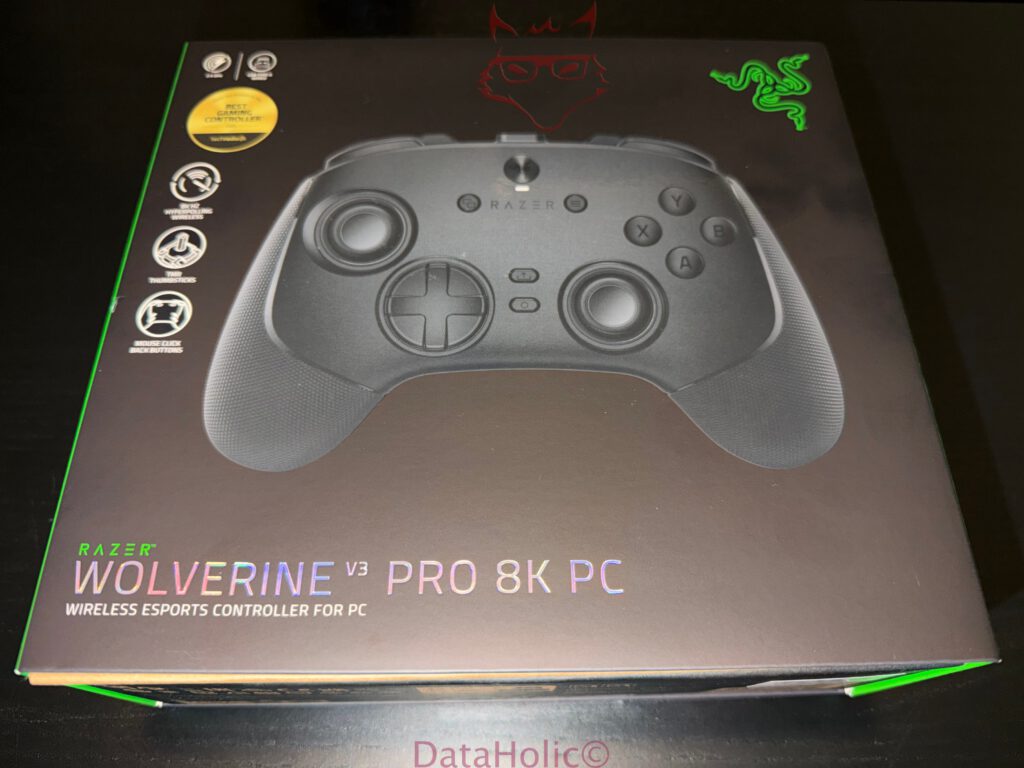
The front of the packaging already wastes no time. The controller itself is displayed prominently against a dark background, flanked by typical Razer signals: deep black, green accents, confident typography, and several feature callouts. Already at this point, it becomes clear which direction the manufacturer is aiming for. Not living room. Not couch romance. Not “also quite nice for racing games on a Sunday.” What is being sold here is speed. Precision. Competition. A piece of hardware that does not want to decorate the desk, but dominate it. The box presents this attitude with a certain degree of arrogance, though in a charming way. Like a suit that looks very expensive and feels absolutely no need to discuss it.
The First Impression of the Packaging: Large, Dark, Uncompromising
The packaging does not stand out through playful elements, but through sheer presence. The format feels tidy, almost luxurious, without slipping into kitschy exaggeration. The box is large enough to convey value, but not so overdone that it immediately creates the impression that emptiness is being dressed up as premium. That is a very fine line in high-end peripherals. Anything signaling the 200-euro class has to create the feeling, even before opening, that something special is sitting on the table. Outwardly, this succeeds very convincingly. According to Razer, the Wolverine V3 Pro 8K PC sits at the absolute top end of the brand’s controller portfolio and is explicitly tailored to PC players. The packaging leaves no doubt about that.
On the front, not only the name and product image take center stage, but also the selling points that Razer considers especially important. Visible among them are references to HyperPolling, TMR thumbsticks, trigger stops, and additional rear buttons. That is smart, because it establishes an expectation before the first physical contact: this controller is not supposed to merely feel good, but feel technically superior. That difference is crucial. Good handling alone sells many products today. Promising technical superiority is a bolder claim and, at the same time, the true core of this model. Razer describes the device as its lightest wireless esports controller and promotes the 8,000 Hz polling rate in both wired and wireless operation. (Razer)
That is precisely why the packaging is not merely a shell, but a kind of opening sequence. Film critics sometimes say that the first three minutes reveal whether a work knows what it wants to be. Something similar applies to hardware. Here, the presentation knows exactly what it wants to be: strict, performance-oriented, mature, almost ascetic. No RGB fireworks, no over-the-top color carousel, no childish loudness. More like “business class for people with a very short time-to-kill.”
Rear Side with a Statement: Technical Arguments Instead of Mere Show
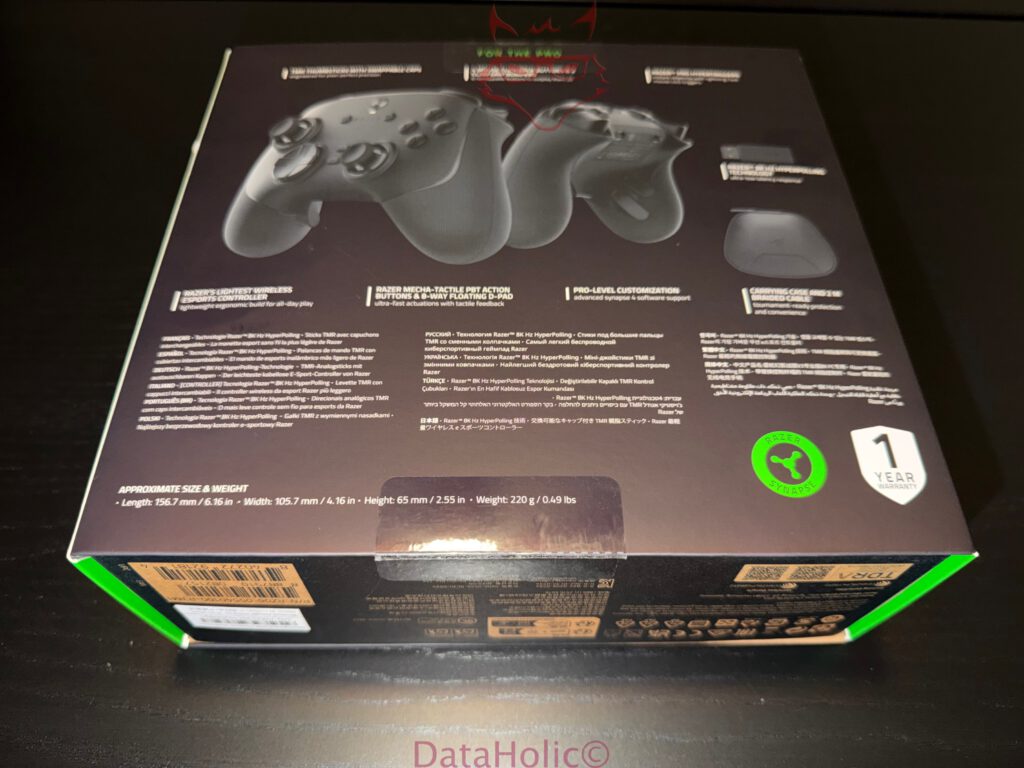
The back of the box reinforces this direction. The product is not simply shown in an attractive way, but explained functionally. Images of the controller highlight key features, including the rear buttons, trigger solutions, interchangeable stick caps, and the hard case. Backs of boxes like this are often a strange mix of advertising copy and obligatory fulfillment. Here, it is refreshing to see that the overall picture remains coherent. The product is not overloaded with marketing poetry at all costs, but explained through its intended use: light, fast, precise, portable, competitive.
Razer’s product information shows that the Wolverine V3 Pro 8K PC comes with four mouse-click rear buttons and two claw-grip bumpers, along with TMR thumbsticks with interchangeable caps and Hall Effect analog triggers with mouse-click trigger stops. These are not just numbers for a spec sheet, but real promises aimed at different playstyles. For shooter fans, this means short, defined inputs and extra remapping options. For competitive players, it sounds like opportunity. For skeptics, it initially sounds like a package full of good ideas that still need to prove themselves. And that exact tension is what makes the unboxing of such hardware interesting in the first place.
At this point, an old design principle fits surprisingly well: “The devil is in the details.” That phrase gets used often, sometimes too often. Here, though, it hits the mark. Because the Wolverine V3 Pro 8K PC is not a product built around one giant single sensation, but around the sum of many small decisions tuned for competition. A gram less here, a more defined click there, an extra button in exactly the right place, a storage solution without cheap sloppiness. Those are exactly the decisions that separate premium hardware from simply expensive hardware.
Opening It: No Spectacle, but a Cleanly Executed Transition
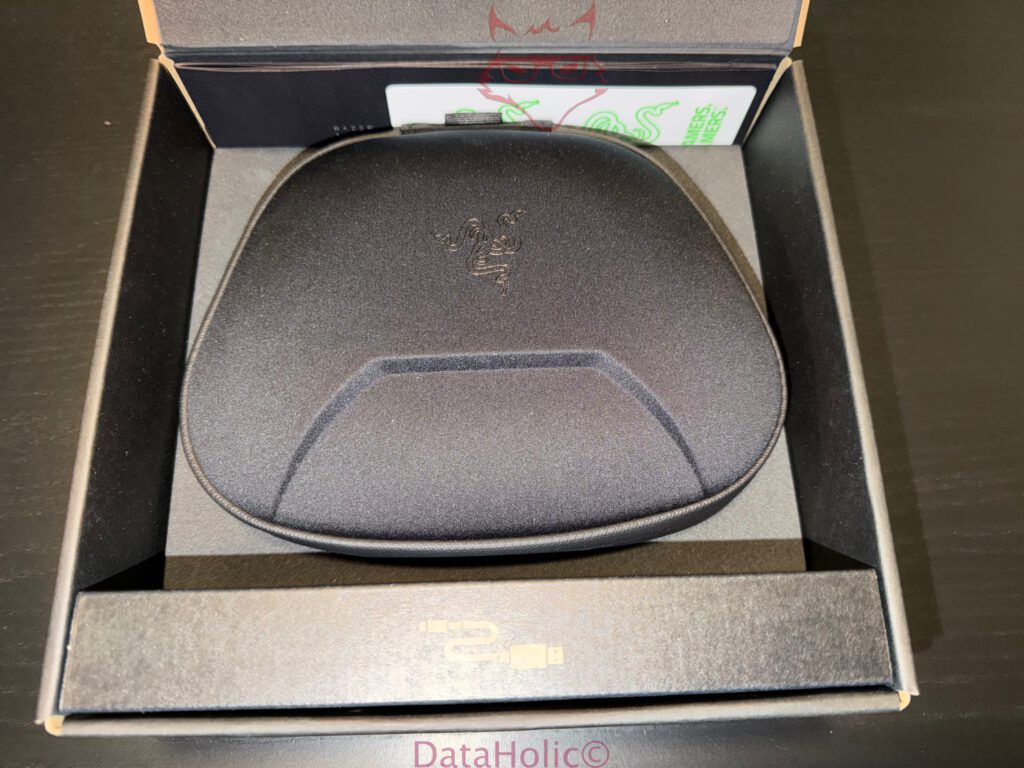
The actual opening of the packaging does not follow the loud “luxury explodes here” school, but rather the controlled version of it. The box opens, the accessories sit neatly inside, and nothing looks carelessly tossed in. What stands out is how strongly Razer emphasizes order. The carrying case is already visible right under the lid, placed front and center. That is psychologically clever. Instead of immediately presenting the controller naked, the first thing shown is the protective and transport element. Quietly, that anchors the message: this is not meant to be disposable hardware, but a companion for the desk, the setup, perhaps even the tournament bag.
Decisions like these reveal a lot about the target audience. A cheaper mass-market product would usually place the controller in foam or a plastic shell and stuff the accessories next to it. Here, the case comes first, almost like a second curtain before the actual stage. And it works. It creates anticipation while also conveying value. The first moment after opening does not scream “toy,” but “equipment.”
At the same time, the whole thing remains pleasantly grounded. No velvet, no exaggerated magnetic drama, no unnecessary pomp. Striking that balance is harder than it sounds. Premium packaging often fails at one of two extremes: either sterile sobriety that looks like warehouse stock, or pompous excess that ends up smelling like a PR presentation. The Wolverine V3 Pro 8K PC handles that middle path remarkably well.
The Hard Case as the First Star of the Interior
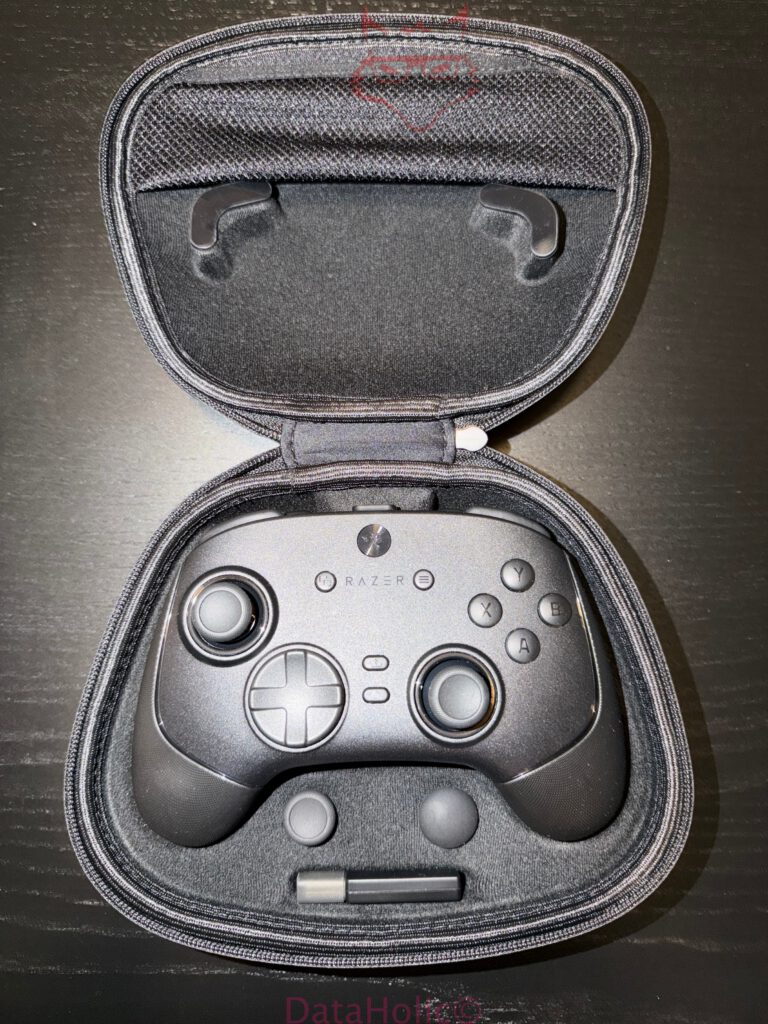
The included hard case is more than just a casual extra. It is one of the strongest signals in the entire unboxing. Visually, it already feels right: black, cleanly finished, with a subtle Razer logo, compact but not undersized. It fits perfectly into the product idea of a controller that is not simply meant to look good on a shelf, but to be understood as a performance tool. Officially, the Wolverine V3 Pro 8K PC includes a carrying case, as well as a 2-meter USB-C-to-USB-A cable. At this price point, neither of those is a pleasant surprise, but an obligation. The good news is that this obligation has not been handled carelessly here.
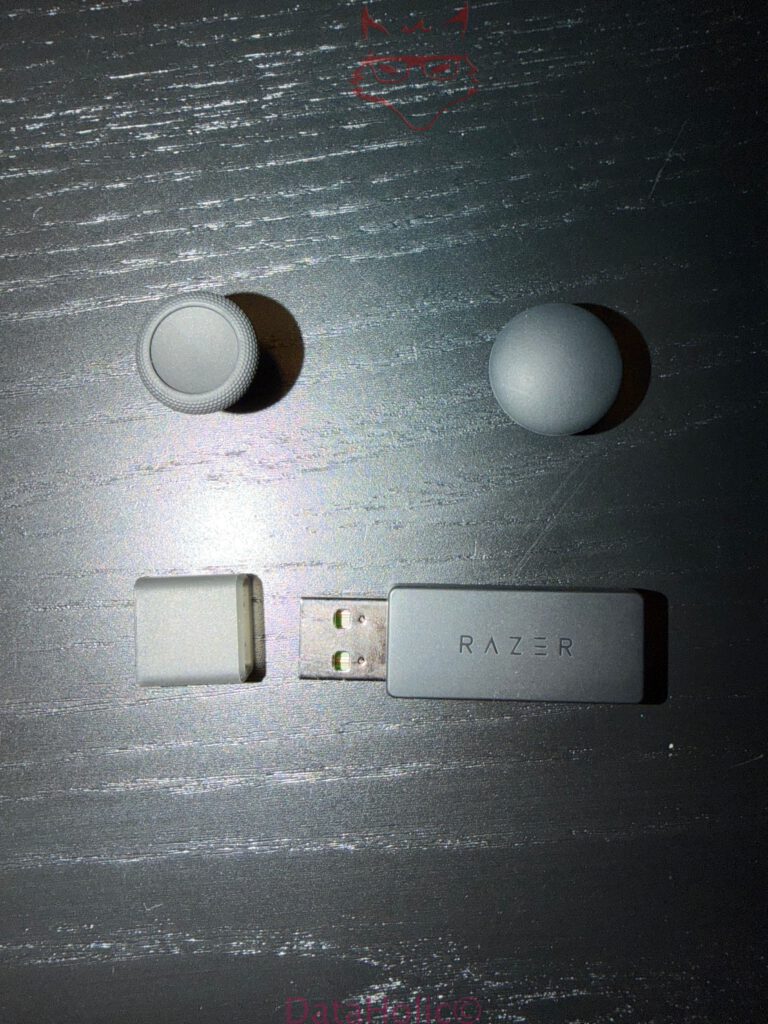
When opened, the case reveals a well-structured interior. The controller sits securely and snugly in place, while the extra stick caps and the dongle have their own spots without looking like afterthoughts. This is exactly the point where a good accessory becomes a very good one. It does not just protect, it organizes. And order is worth a surprising amount in everyday peripheral life. Otherwise, dongles end up in random drawers, and replacement caps vanish into that dark sphere where stray Allen keys and mysterious power adapters begin their second lives.
The case also communicates something important: Razer understands that accessories cannot look like throw-ins if the main attraction is supposed to feel premium. A cheap case would have dragged the entire experience down immediately. Instead, the line stays intact. That is a small but important compliment.
Accessories with Substance: Cable, Dongle, Stick Caps, Documentation, Stickers
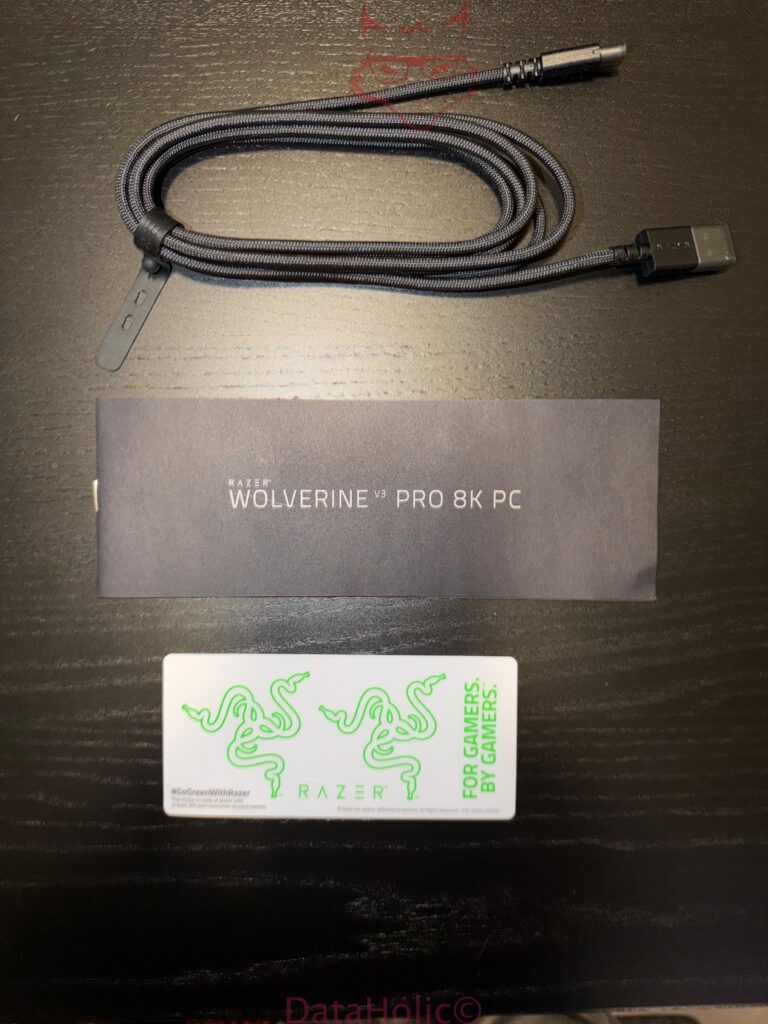
Included in the box, alongside the controller itself, are the previously mentioned hard case, a braided USB-C-to-USB-A cable, a USB dongle with cap, interchangeable stick caps, documentation, and the usual Razer stickers. Officially, Razer lists the 2-meter cable and the carrying case as part of the package contents, and the interchangeable stick caps are also promoted.
The cable deserves a brief moment of appreciation. Braided cables are no longer some exotic luxury feature, but they still make a difference in everyday use. A cheap cable in a premium package always feels like a quiet contradiction. Here, the overall picture fits. The cable feels robust enough, long enough for classic desk use, and visually consistent with the product line. No gimmicks, just solid execution. That is exactly how it should look.
The dongle also shows that Razer is serious about its PC focus. The Wolverine V3 Pro 8K PC connects wirelessly through a USB-A adapter and is explicitly intended as a wireless controller for PC. At the same time, that already hints at a later point of criticism, because several reviews point out that the model offers neither Bluetooth nor Xbox support, making it much more narrowly focused than the earlier Wolverine V3 Pro model for Xbox and PC. For a PC-focused esports device, that is understandable. For an all-round premium purchase, however, it is a genuine downside.
The interchangeable stick caps are another nice detail. Different variants are included in the case, reinforcing the sense that this is not a standard product. Caps like these are not revolutionary. But they do show that Razer lets the idea of customization begin right in the packaging. Not later, not as an extra purchase, but immediately. From the first opening onward, the user gets the feeling that this is a tool that can be fine-tuned. That is smart, and atmospherically important.
The stickers, meanwhile, are classic brand accessories. Opinions may differ there. Some people see them as a standard inclusion by now, while others put them aside like brochures from a local kitchen showroom. In the context of this box, they do not get in the way. They feel more like a small greeting from the marketing department, and at least not an intrusive one.
The First Look at the Controller: Less Show, More Seriousness
As soon as the case is opened, the actual star of the package lies visibly at the center. And this is exactly where the Wolverine V3 Pro 8K PC achieves something that an astonishing number of expensive controllers fail to manage: it immediately looks functional, not theatrical. The housing is dark, clean, and free from hectic visual overload. No glaring accents where none are needed. No attempt to replace quality with decoration. The finish feels restrained, almost cool, and that is exactly right for a product designed around speed and competition.
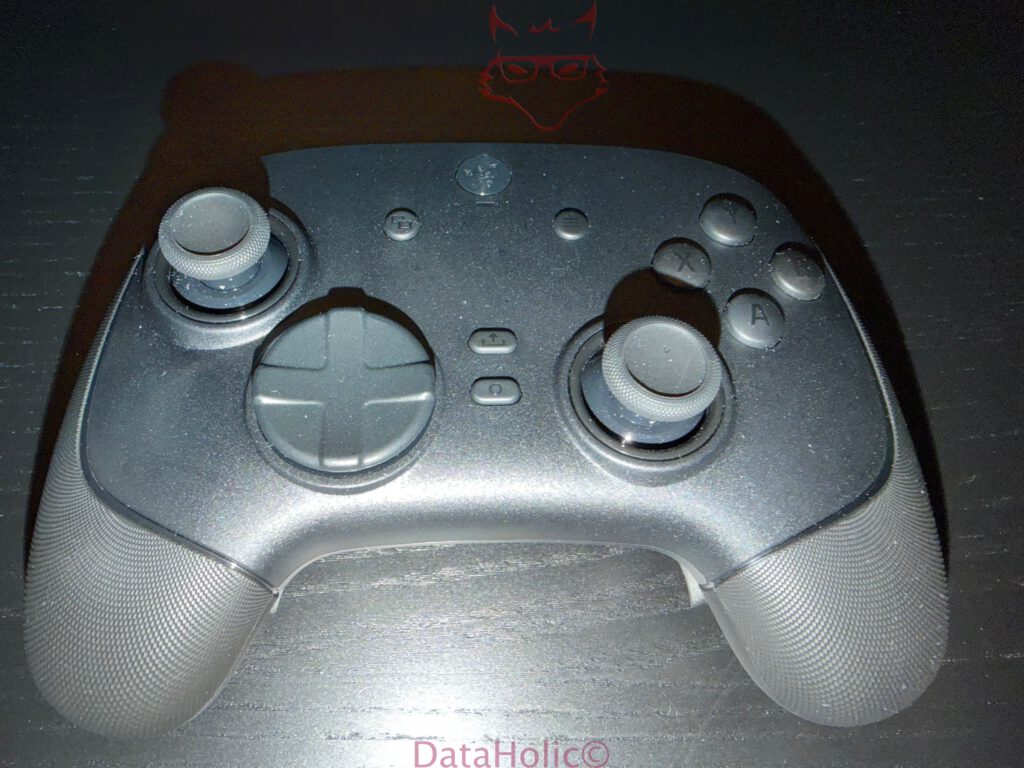
Even in photos, the front is clearly structured. The asymmetrical stick layout, the striking d-pad, the rather strict button arrangement, and the grippy surfaces on the handles create an appearance that remains familiar enough without ever feeling generic. According to Razer, the shape was developed with esports professionals in order to remain controlled and low-fatigue even during longer use. Claims like that are part of every manufacturer’s usual repertoire, but here weight and silhouette visibly help support them. Razer specifies around 220 grams, which is genuinely light in the premium wireless segment. PC Gamer describes that exact weight advantage as a noticeable improvement over the older Wolverine V3 Pro.
Lightness is a delicate subject with controllers. Too heavy, and the device feels burdensome. Too light, and it risks coming across like cheap hollow plastic. The Wolverine V3 Pro 8K PC moves very close to that line, both visually and conceptually, without crossing it. Because the surfaces do not look cheap and the shape remains compact, the low weight does not tip into insignificance. Instead, the impression is that of a deliberately stripped-down tool. Like a racing bike without unnecessary add-ons. Or, to stay within gaming imagery, more tournament shoe than hiking boot.
Haptics and Material Feel: Grippy, Sober, Clearly Built for Use
The textured grip surfaces are immediately visible during the unboxing and are among the first things to inspire confidence. Especially with a controller that is supposed to remain stable in the hands over long sessions, that is essential. Smooth premium surfaces often look fantastic in the store and later turn out to be sweat magnets with all the charm of a soap opera. Here, everything feels more geared toward sober reliability. Razer speaks of a light, ergonomic design for long sessions, and PC Gamer praises the successful material choice and structured feel.
Particularly interesting is the contrast between upper and lower surfaces. The top is dominated by a restrained matte design language, while the underside and the grips take over with texture. This is not self-indulgent design, but practical design. A controller in this class has to make one thing clear from the very first moment in hand: the fingers are not simply resting, they are being guided. And that is exactly what happens here.
At this point, a small everyday editorial anecdote almost forces its way in: the moment a new premium controller lands on the table, a spontaneous migration of fingers starts reliably across the room. One person presses the ABXY buttons, the next tests the shoulder buttons, somebody else mutters something like “the d-pad sounds interesting,” and there is always one person who has not even switched the controller on yet but is already announcing how “snappy” the rear buttons feel. That kind of curiosity is exactly what good hardware triggers. Bad hardware triggers, at best, the question of where the receipt is.
The Controls: Immediate Interest in the Details
An unboxing of a controller does not live on the overall impression alone, but on the smaller control elements. What shape is the d-pad? How tall are the sticks? How do the buttons feel? How cleanly are the extra inputs integrated? With the Wolverine V3 Pro 8K PC, it quickly becomes obvious that a lot of attention has gone into this front section. The d-pad looks distinct and dominant, the stick cutouts are pronounced, and the main buttons fit in without fuss. Nothing protrudes unnecessarily, but nothing feels incidental either.
According to the product information, Razer relies on TMR thumbsticks with interchangeable caps. TMR stands for Tunnel Magnetoresistance and is intended to improve precision, durability, and anti-drift characteristics. Several reports point to this exact stick solution as one of the model’s central advances. TechRadar and PC Gamer both specifically describe the TMR sticks as a core feature that clearly aligns the controller toward competitive play.
What makes this interesting already during the unpacking is that the technology is not just presented as an abstract technical term on the box, but becomes physically tangible through the included caps. Precision is not only claimed here. A piece of that promise is lying in the case. That transition from marketing term to physical object works extremely well.
Back Side and Shoulders: This Is Where the Actual Esports Character Lives
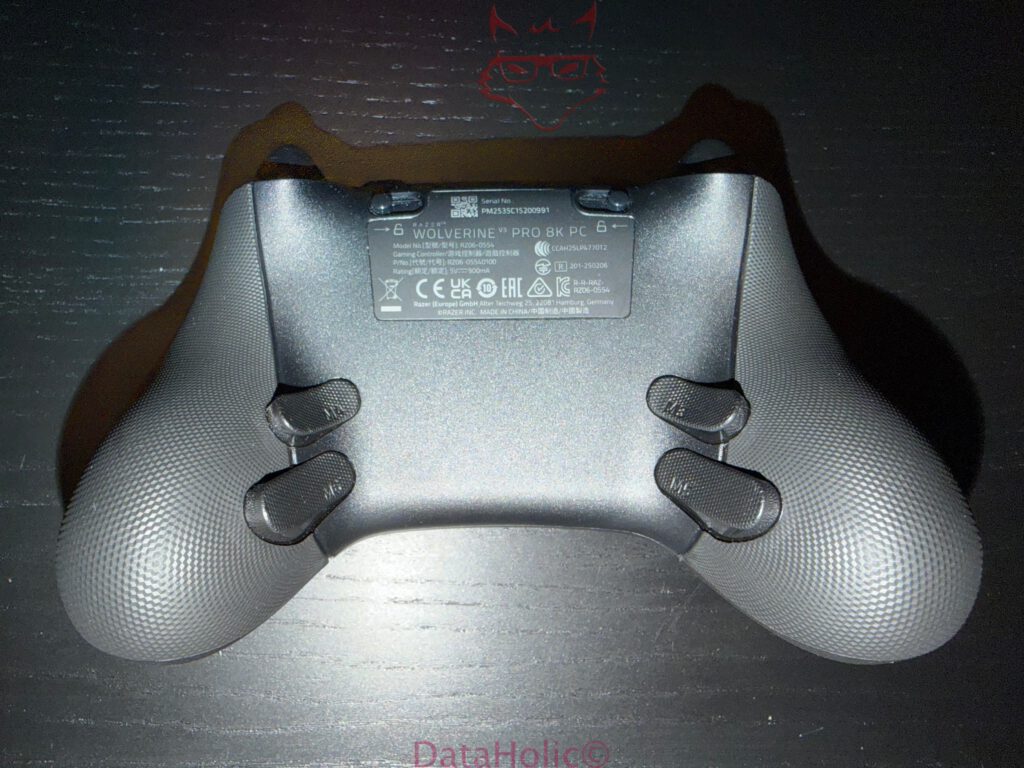
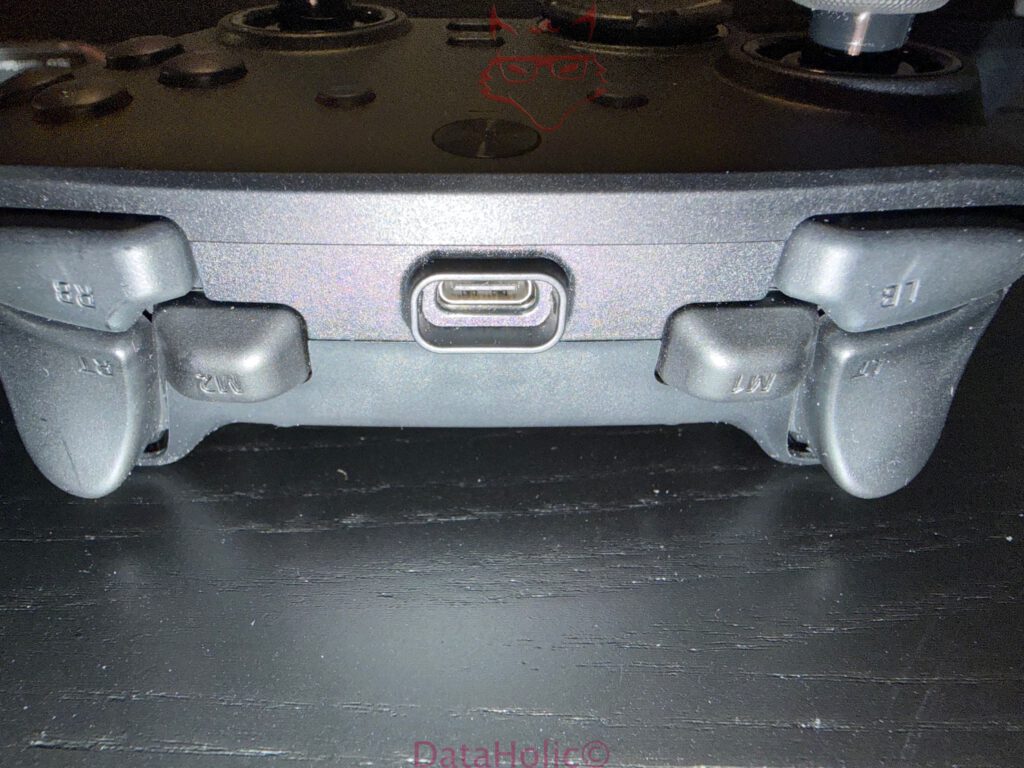
At the latest when turning the controller around, it becomes clear that Razer did not build this model for relaxed standard gaming. The back reveals four additional paddle-style buttons, while the top houses two extra so-called claw-grip bumpers. Together, that makes six additional input elements. Razer promotes this layout aggressively, and that is exactly where a large part of the Wolverine V3 Pro 8K PC’s identity lives.
Layouts like this are a promise to players who hate taking their thumbs off the sticks. In shooters and action titles, that is a real argument. Good additional buttons genuinely change operating logic in everyday use. Bad additional buttons, on the other hand, feel like a gym membership in January: impressive on paper, miserable in reality. At first glance, the placement here inspires more confidence than concern. The shape feels thought through, not simply added on. The smaller shoulder extras, in particular, clearly signal that aggressive grips were taken into account.
The triggers deserve attention as well. Officially, Razer uses Hall Effect analog triggers with mouse-click trigger stops. That means both analog input and short, defined trigger travel for quick reactions are supposed to be possible. This kind of duality has long since become a quality marker in the high-end segment. Anyone wanting to cover racing games, shooters, and action titles needs flexibility. Anyone focusing purely on esports FPS cares mostly about short travel and directness. The Wolverine V3 Pro 8K PC tries to offer both.
Portability and Order: A Product Clearly Intended to Move Around
An underrated aspect of any unboxing is the question of whether the product is meant only for the desk or also for movement. The hard case, the dongle solution, the accessory layout, and the compact presentation all point in the same direction here: this controller is clearly designed to travel. Some devices feel like furniture. The Wolverine V3 Pro 8K PC feels more like equipment.
That fits the official marketing. Razer describes the device as a competitive solution for PC players and emphasizes portability through the carrying case. At the same time, the technical key data show that wireless and wired use are both intentionally supported. That flexibility is valuable in everyday life, even when the device never actually leaves the home desk. Cable for charging and stable sessions, dongle for wireless freedom, everything neatly stored away: not spectacular, but very sensible. (Razer)
A small anecdote from everyday hardware life fits nicely here: many so-called premium products fail not on big things, but on trivial ones. There is no proper place for the adapter. The cable presses awkwardly against the zipper. Accessories sit so tightly in the packaging that the sense of order is already gone by the second time everything is packed back in. Those little everyday defeats are what people remember. The Wolverine case, by contrast, feels surprisingly well solved. Nothing about it is revolutionary. But that is exactly why it works so well. “Perfection is achieved, not when there is nothing more to add, but when there is nothing left to take away” — this well-known thought is attributed to Antoine de Saint-Exupéry. That principle shines through here more than once.
Conclusion: An Unboxing That Gets Almost Everything Right – and a Product That Has to Know Exactly What It Wants to Be in the Premium Segment
In the conclusion, it is worth separating the unboxing experience from the product positioning. The unboxing itself clearly belongs among the better examples in its class. Not because it is especially loud. But because it gets almost nothing wrong. The box has presence without being silly. The interior is organized without feeling sterile. The case makes sense, the accessories are coherent, and the controller is visually placed with precision. Rarely does a product feel this fully thought through at first contact.
This degree of maturity is exactly what sets the package apart from many competitors. Razer clearly understands that a high-end controller cannot wait until the first match to start feeling premium. The first minutes with the box, case, accessories, and haptics already have to justify the asking price. And to a large extent, that succeeds here.
The Advantages of the Overall Package
The biggest advantage lies in the consistency of the concept. The Wolverine V3 Pro 8K PC is not just covered in high-end buzzwords, but aligned around them in its entire presentation. The 8,000 Hz polling rate in both wired and wireless mode, the low weight of 220 grams, the TMR thumbsticks with interchangeable caps, the Hall Effect triggers with trigger stops, and the six additional control elements all add up to an unusually focused profile. That exact specialization is what makes the device attractive to competitive PC players.
Another plus point is the material and accessory policy. The hard case is not in the package as a token gesture, but as a genuine part of the usage concept. The braided 2-meter cable makes sense, the caps underline adaptability, and the dongle is integrated logically into the overall setup. In the premium space, that sounds banal, but it really is not. A lot of expensive products lose points at exactly this stage.
Then there is the controller’s convincing visual seriousness. The design avoids exaggeration and instead communicates professionalism. At a time when gaming hardware occasionally behaves like an energy drink with a USB connector, that is almost refreshingly grown-up.
The Actual Core of the Verdict
What ultimately sticks is one thing above all else: the Razer Wolverine V3 Pro 8K PC is not a premium controller trying to play as many roles as possible at the same time. What lies on the table here is not a device that wants to please everyone a little. What lies here is a controller sharpened with remarkable consistency toward a single idea: maximum responsiveness, clear inputs, low weight, and an overall presence that leaves no doubt about what it is meant to do. That is exactly why the overall package feels so cohesive. Packaging, accessories, and controller all pull in the same direction. Nothing about it feels accidental, nothing feels like a late idea from the marketing department. The accessories support the product’s orientation instead of merely making the box look fuller. Case, cable, dongle, and interchangeable stick caps are not decorative extras, but part of the same story: this is about speed, order, mobility, and adaptability.
The controller itself reinforces that impression with almost stoic clarity. The design language remains restrained, the material choices feel functional, and the grippy surfaces on the handles are built for hold, not show. Added to that is technical equipment that does not aim for cozy versatility, but for precision and fast input. The TMR thumbsticks stand as a symbol for the entire product concept: they are not supposed to merely sound modern, but to deliver durability, lower susceptibility to drift, and finer responsiveness. Add in the Hall Effect triggers with trigger stops, six extra input elements, and the strikingly lightweight construction, and the result is not a controller for a lazy afternoon on the sofa, but a working tool for people who tune inputs the way others tune engine setups. Anyone looking for that will immediately recognize the direction. Anyone expecting something more universal will notice just as quickly that the filtering here was very deliberate.
And that is the exact point where the verdict splits. As a universal premium controller, the package is simply too narrowly focused. Bluetooth is missing, the platform orientation is clearly tailored to PC, and the entire presentation signals desk, shooters, and fast reflexes rather than living room, console, and relaxed all-round use. That is not some hidden flaw, but a deliberate boundary. And because of that, the Wolverine V3 Pro 8K PC feels unusually stringent. While many high-end products today want to be everything at once and end up not feeling truly radical in any one discipline, this model visibly commits to one side. It sacrifices breadth in order to gain sharpness. That is bold, not always mass-compatible, but honest in itself.
The photos of the included contents reinforce that impression in a pleasantly down-to-earth way. No dead space, no cheap filler, no accessory included merely to make the list look longer. Instead, what emerges is a cleanly assembled ensemble that fits together functionally. The hard case signals portability and protection, the braided cable stands for reliable operation, the dongle underlines the PC focus, and the stick caps point to adaptation to personal preferences. All of it together communicates less luxury in the traditional sense and more readiness for action. The product does not look dressed up, but prepared. And that fits a controller that defines itself less through prestige and more through control.
Not every expensive piece of hardware feels exclusive. But exclusive hardware almost always feels determined. That is exactly the kind of determination lying on the table here. The Wolverine V3 Pro 8K PC is not looking for broad approval, but for the right target group. That leaves no room for softened compromises. The device does not want to be as much as possible, but to perform extremely well in one clearly defined area. That is precisely where its strength lies, and also where its limitation begins. Anyone expecting an all-rounder will quickly find too many restrictions here. Anyone looking for a no-compromise PC controller for competition-oriented gaming, on the other hand, gets a product that embodies that role not just technically, but in its entire appearance. Or, put even more directly: less living room, more competition zone.
“Note in accordance with EU transparency requirements:
The Razer Wolverine V3 Pro 8K PC presented in this review was provided to us by Razer as a non-binding loan for testing purposes. This is not paid advertising.
Razer had no influence whatsoever on the content, evaluation, or editorial independence of this article. All opinions expressed are based exclusively on our own hands-on experience.
We sincerely thank Razer for providing the controller and for the trust placed in dataholic.de.”