
Noctua NL-LC1-36 Unboxing – When an Air Cooling Specialist Rethinks the World of Liquid Cooling
- The Moment Many Noctua Fans Have Been Waiting for Over the Years
- The Box Already Tells a Technical Story
- Sustainability Begins with Engineering, Not Marketing
- Three Boxes, One Clear Structure
- The Fan Kit Immediately Reveals the Priorities
- Accessories That Go Far Beyond the Expected
- The Liquid Cooler Itself Is Surprisingly Restrained
- The Pump Assembly Takes an Unusual Approach
- Surprise Number Two: The NL-ACF1
- Attention to Detail Extends to the Very Last Box
The Moment Many Noctua Fans Have Been Waiting for Over the Years
There are products that surprise not because they exist, but because of when they arrive. The Noctua NL-LC1-36 falls precisely into that category. For decades, the Austrian manufacturer has been almost synonymous with uncompromising air cooling. While countless competitors gradually expanded their portfolios with all-in-one liquid coolers, Noctua remained remarkably faithful to its own philosophy. Products such as the NH-D15 became permanent fixtures in the high-end segment, the NF-A12x25 continues to be regarded as a benchmark among 120 mm fans, and even the company’s characteristic beige-and-brown color scheme evolved from a frequently mocked oddity into the unmistakable signature of a brand whose reputation is built on engineering rather than marketing promises.
For exactly that reason, the NL-LC1-36 carries special significance. It is not simply the company’s first liquid cooler—it marks the entry of a manufacturer into a market segment it deliberately avoided for many years. Expectations could hardly be higher. After all, the real question is not whether Noctua is capable of building an AiO cooler, but whether it can distinguish itself clearly from the countless solutions already available.
Even the surprisingly large shipping box makes it clear that this is not an ordinary OEM product fitted with a different logo and a redesigned package. Instead, the presentation unmistakably follows Noctua’s own design philosophy. The packaging is not intended solely to protect the hardware; it simultaneously serves as a form of technical documentation. Illustrations, cross-sectional diagrams, and detailed explanations accompany the first impression from the very beginning, creating the feeling of unpacking a precision laboratory instrument rather than a conventional PC component.
One thing becomes obvious almost immediately: nothing feels excessive. Noctua almost completely avoids oversized marketing slogans, exaggerated performance claims, or aggressive gaming aesthetics. Instead, the focus remains firmly on construction, engineering, and technically understandable explanations. This restrained approach is almost calming and stands in stark contrast to many modern packaging concepts that rely on as many buzzwords as possible to attract attention.
Albert Einstein once said, “Everything should be made as simple as possible, but not simpler.” Few quotations describe Noctua’s development philosophy more accurately. Behind the clean, understated exterior lies an enormous amount of technical complexity—not displayed for show, but explained carefully and methodically. That exact feeling accompanies the very first minutes with the NL-LC1-36, long before a single screw has been loosened or the cooler eventually finds its place inside a system.
The Box Already Tells a Technical Story
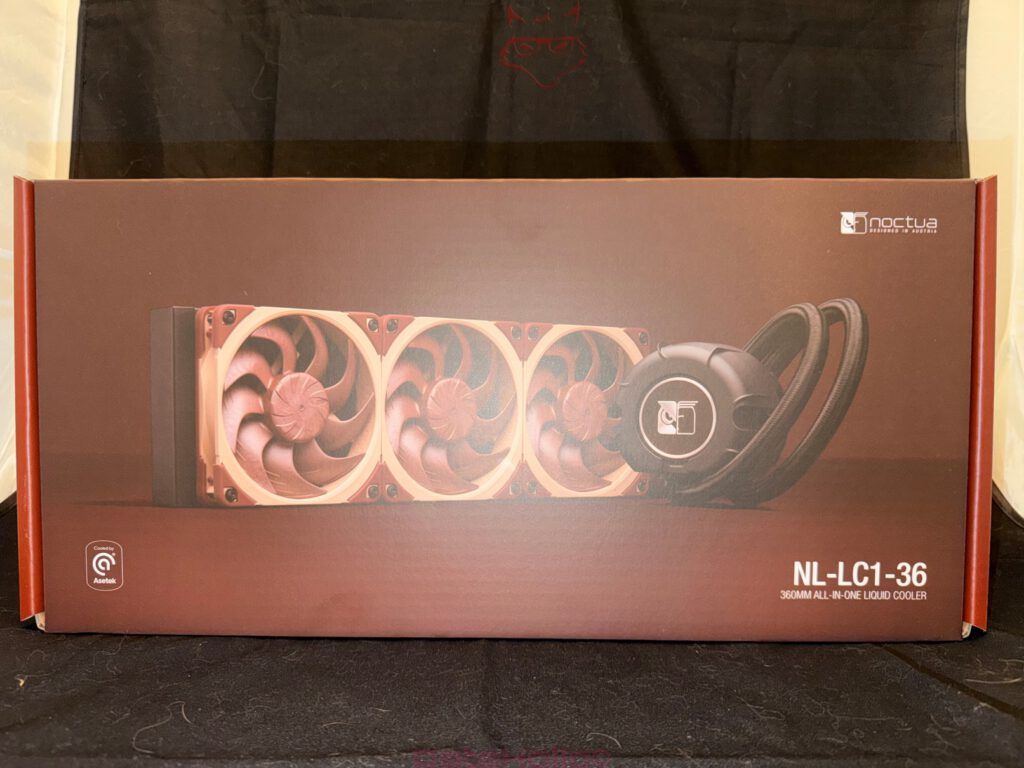
The front of the packaging immediately demonstrates that Noctua has remained true to its philosophy even with its very first all-in-one liquid cooler. Large RGB effects, spectacular rendered graphics, and eye-catching marketing statements are completely absent. Instead, the centerpiece is a high-quality image of the complete NL-LC1-36, featuring the 360 mm radiator, three NF-A12x25 G2 PWM fans, and the distinctive pump assembly. The overall presentation is intentionally understated and immediately conveys the impression of a technical product whose engineering matters far more than flashy packaging.
Almost inconspicuously positioned near the bottom is the Asetek logo. Yet this small marking carries far greater significance than it initially appears. The NL-LC1-36 is based on Asetek’s latest Emma V2 platform, a cooling architecture that has found its way into numerous premium liquid cooling solutions. However, Noctua does not simply adopt the existing reference platform unchanged. Instead, it serves as the foundation for a series of proprietary engineering refinements that address acoustics, vibration damping, and airflow around the CPU socket. Even the packaging makes it obvious that the emphasis is placed not on the origin of the platform itself, but on how comprehensively it has been refined.
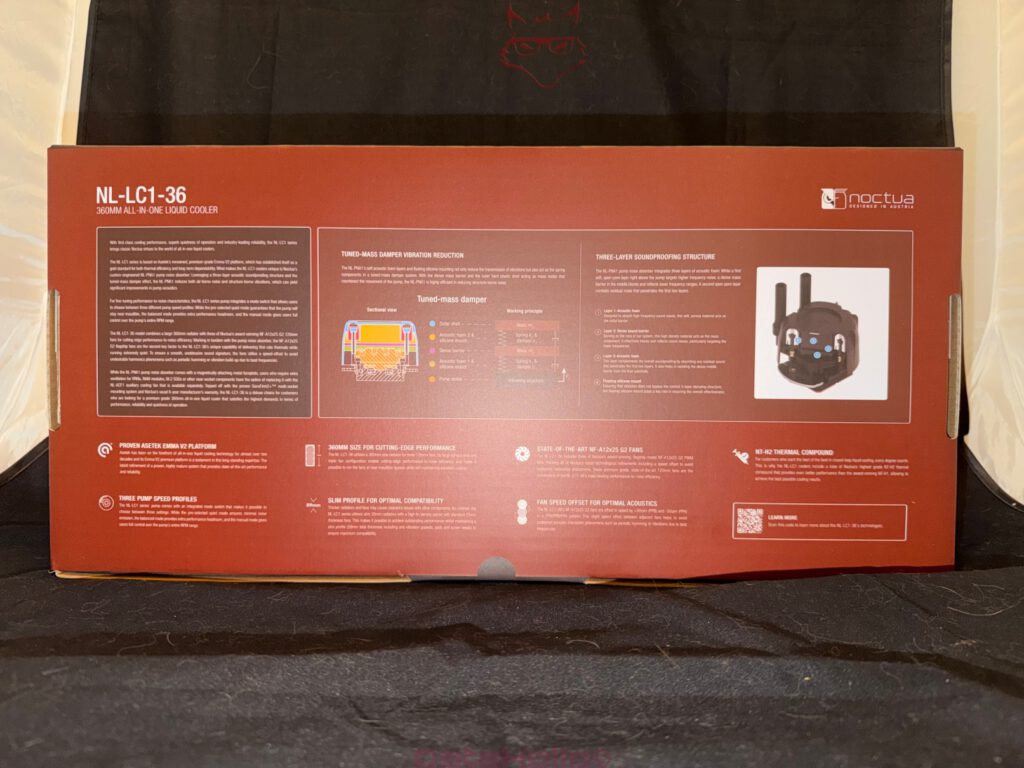
Instead of the usual collection of buzzwords and performance promises, it is dominated by technical illustrations, sectional drawings, and detailed explanations of the individual assemblies. The internal construction of the pump unit is explained alongside its multi-layer acoustic insulation, vibration isolation, and the engineering behind the NF-A12x25 G2 fans. Even the radiator itself is not simply mentioned but discussed in terms of its technical design and purpose.
The result is a rather unusual impression. The packaging resembles the condensed version of a technical white paper far more than conventional retail marketing. While many manufacturers treat the back of the box as advertising space, Noctua uses it as an information resource. Even the so-called Tuned Mass Damper is not presented merely as another marketing feature; instead, its physical operating principles are explained. It feels almost like an excerpt from a university lecture on mechanical engineering or vibration analysis, once again reinforcing the company’s development philosophy: technology should not impress because it sounds complicated—it should impress because its function can be understood. That philosophy already runs like a common thread throughout the packaging itself, making it clear that the NL-LC1-36 aims to be far more than simply Noctua’s first all-in-one liquid cooler.
Sustainability Begins with Engineering, Not Marketing
Lifting the lid immediately reinforces the impression already established by the exterior of the packaging. Noctua has almost completely eliminated plastic inserts and foam padding, opting instead for a precisely molded, multi-piece pulp construction. This solution serves not only to protect the contents during transport but also functions as a carefully designed organizational system.
The custom-shaped pulp inserts securely cradle every component without allowing any movement, reliably preventing the radiator, pump assembly, and accessories from making contact with one another during shipping. Even under heavier impacts, every individual component remains firmly in its designated position. At the same time, the very first look inside the box presents an exceptionally organized overall appearance. Rather than revealing a collection of plastic bags and loosely packed accessories, the NL-LC1-36 appears almost like a carefully assembled technical system, with every individual module logically separated from the next.
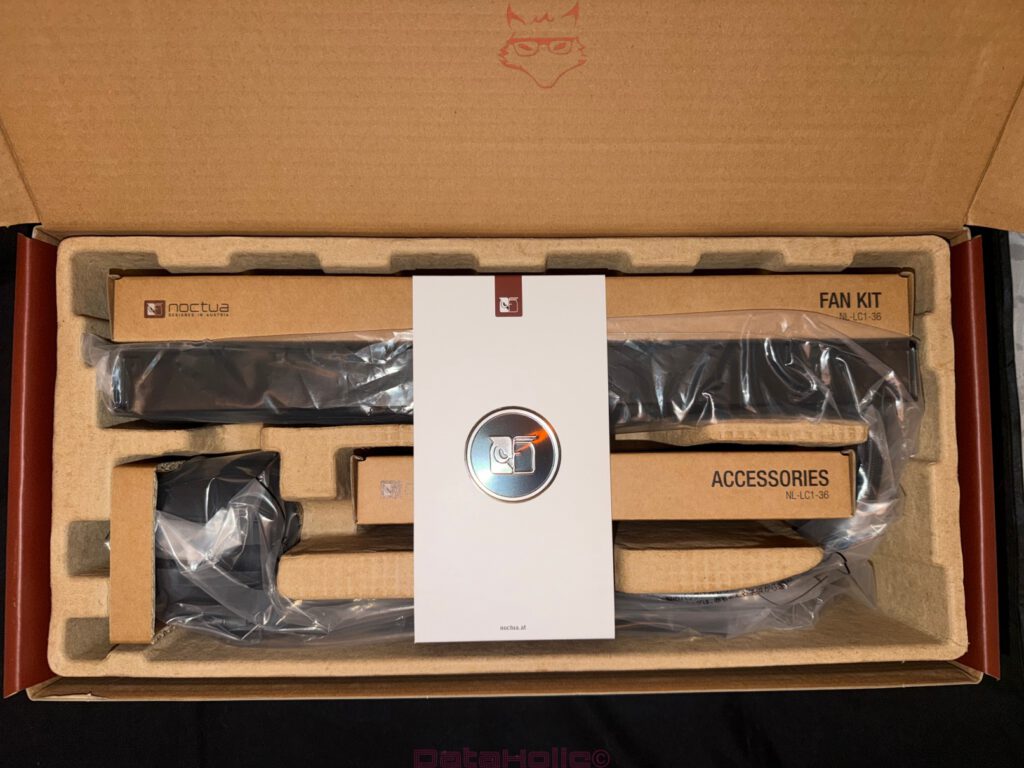
Particularly impressive is the way Noctua treats the packaging as an integral part of the overall product experience. The centrally positioned welcome booklet naturally draws the eye toward the components arranged beneath it. The radiator, fan kit, and accessory package are neatly separated without wasting unnecessary space. Every single item occupies its precisely defined location, making the entire unpacking process feel structured and deliberate. Precision, organization, and order clearly do not begin with the cooler itself—they begin with the packaging.
Three Boxes, One Clear Structure
Once the upper molded pulp insert has been removed, it immediately becomes apparent that Noctua leaves nothing to chance inside the box either. Every component is divided into three clearly separated sections, creating an intuitive layout at first glance. The upper compartment houses the fan kit with the three NF-A12x25 G2 PWM fans, the comprehensive accessory package occupies the adjacent section, while the liquid cooler itself, complete with radiator and pump assembly, fills the largest compartment.
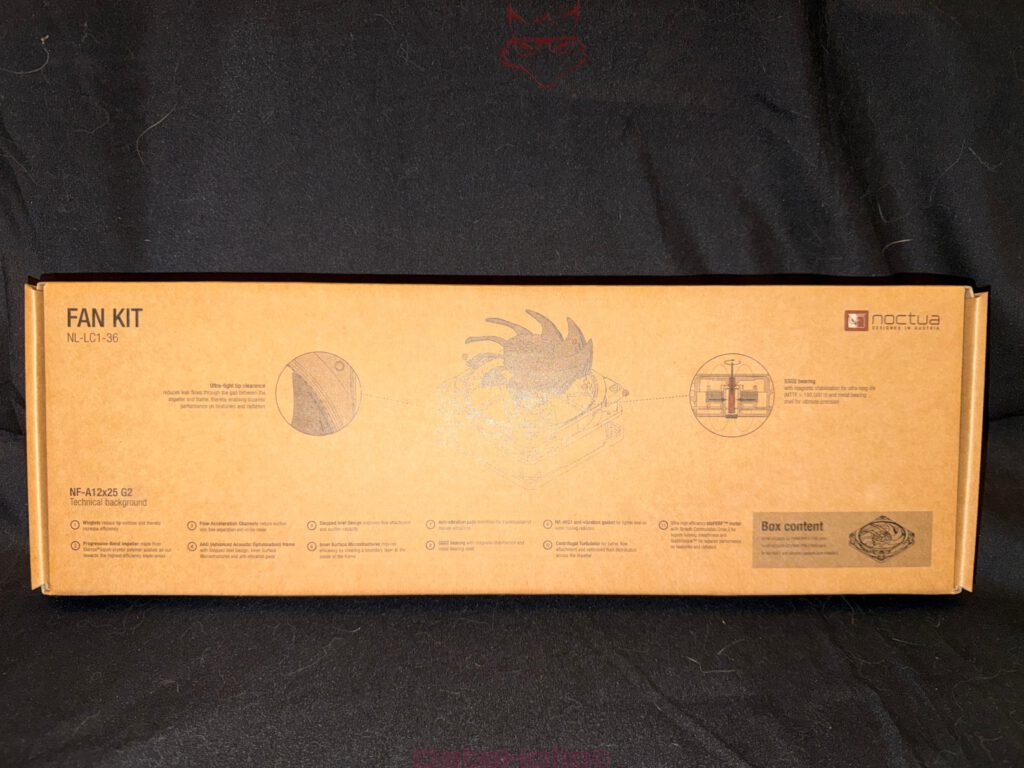
At first glance, this arrangement appears almost self-evident. However, it proves to be a significant practical advantage once installation begins. Instead of placing every screw, mounting bracket, spacer, and adapter into a single plastic bag, Noctua consistently separates every component according to its intended purpose. Each box contains only the parts associated with a specific stage of the installation process. As a result, orientation begins immediately after opening the package, long before the cooler is actually installed.
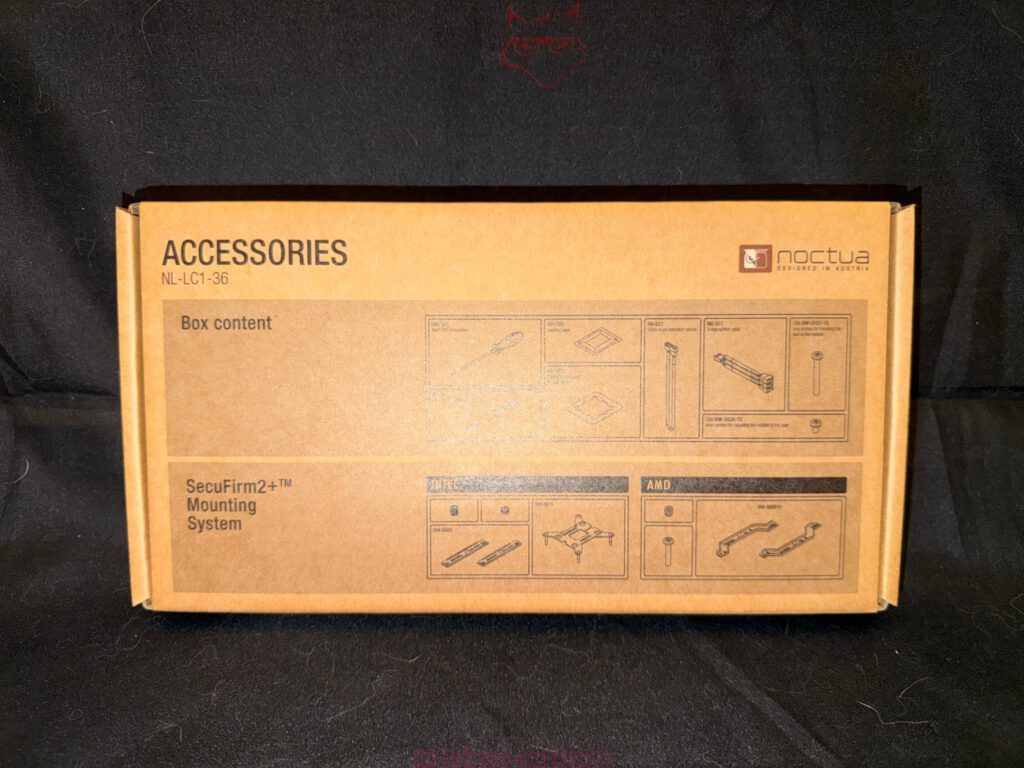
Modern all-in-one liquid coolers frequently support both current Intel and AMD platforms, meaning the accessory kit often consists of several dozen individual parts. Mounting screws, spacers, backplates, and brackets frequently differ by only a few millimeters. Choosing the wrong screw can easily interrupt the installation process—or, in the worst case, result in an incorrect mounting procedure altogether. Noctua addresses this issue with an almost documentation-like level of organization. Instead of requiring the installer to sort through a large collection of hardware, every component is clearly categorized from the very beginning. This structured presentation not only saves time but also significantly reduces the likelihood of mistakes—a seemingly minor detail that ultimately makes the entire installation process considerably more relaxed.
The Fan Kit Immediately Reveals the Priorities
Even before the radiator or the pump assembly receive closer attention, the eye is naturally drawn toward the fan kit. Rather than equipping the NL-LC1-36 with simplified fans developed exclusively for this AiO, Noctua includes three fully featured NF-A12x25 G2 PWM models. At first glance, this decision may seem obvious, yet it carries considerable technical significance. While many manufacturers rely on simplified OEM versions or slightly modified retail fans for their liquid coolers, Noctua includes the exact same premium models that are available individually and have established themselves among the finest 120 mm fans currently on the market.
The outstanding build quality becomes immediately apparent as soon as the fans are removed from their packaging. The frame and rotor appear almost as though they have been machined from a single piece, with no visible molding imperfections or manufacturing marks, even under close inspection. The rotor sits just approximately 0.5 millimeters away from the surrounding frame—an exceptionally small clearance for an axial fan. This minimal blade tip clearance dramatically reduces airflow leakage around the blade tips while simultaneously increasing static pressure, a characteristic that becomes particularly important when operating against the dense fin stack of a radiator. Achieving tolerances this tight, however, demands extraordinary precision in engineering, manufacturing, and material selection. Even the slightest deformation could potentially allow the rotor to contact the surrounding frame at higher rotational speeds.
This is precisely why Noctua once again relies on its proprietary Sterrox liquid-crystal polymer. The material combines exceptional rigidity with extremely low thermal expansion. Even as operating temperatures rise or rotational speeds increase, the fan blades maintain their precise geometry. Only these material properties make such an extremely small rotor clearance possible, ultimately forming one of the key foundations behind the fan’s impressive efficiency.
The minimal blade tip clearance, however, represents only one part of the overall engineering concept. The second generation of the NF-A12x25 incorporates numerous design refinements developed over many years of research and testing. The Flow Acceleration Channels accelerate airflow near the blade tips while reducing turbulence. The Progressive Bend Impeller gradually alters the curvature of each blade along its length, creating a more balanced distribution of airflow and pressure generation. Small winglets integrated into the blade tips, together with microstructured inner frame surfaces, further reduce flow separation while simultaneously improving acoustic performance. Powering the entire assembly is Noctua’s updated etaPERF motor, whose optimized electronics not only contribute to exceptionally smooth operation but also improve efficiency across the complete speed range.
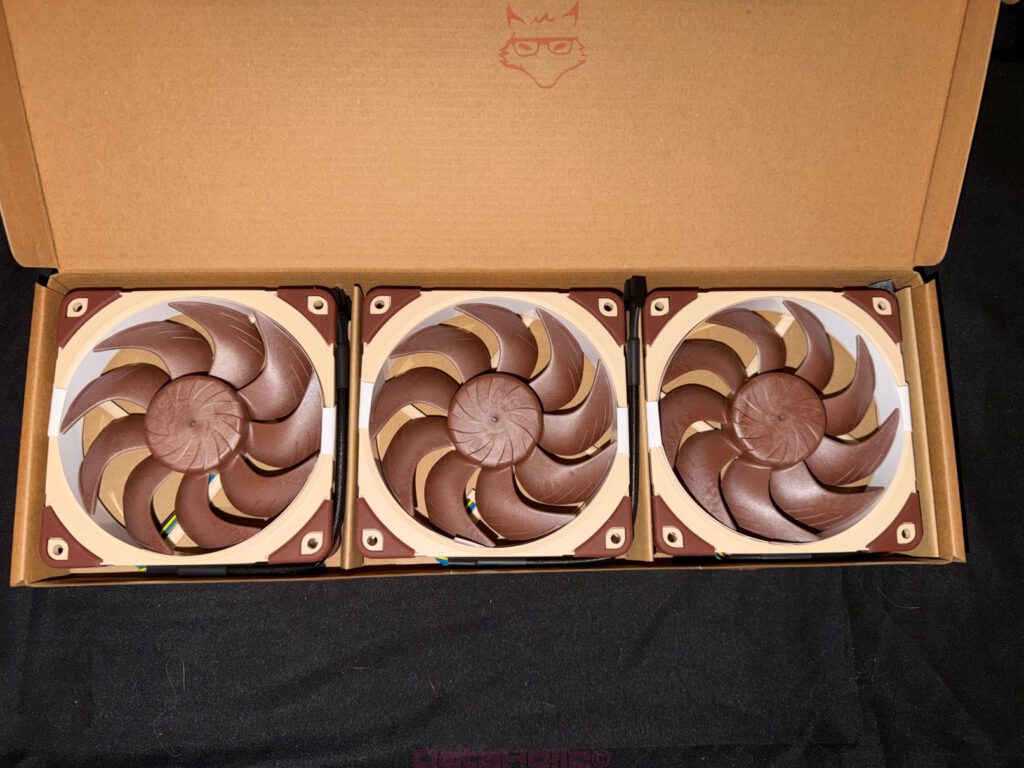
These engineering refinements become especially valuable when paired with a 360 mm radiator. Radiators require fans capable not merely of moving large volumes of air, but of maintaining sufficient static pressure to force that airflow through tightly packed cooling fins. The NF-A12x25 G2 was engineered precisely for this demanding application. Even during the very first encounter, it becomes easy to understand why these fans individually command prices comparable to complete entry-level liquid coolers from some competing manufacturers. They are not simply accessories included in the box—they represent one of the fundamental building blocks of the entire cooling system, developed with at least as much attention as the liquid cooler itself.
Accessories That Go Far Beyond the Expected
The second box is dedicated entirely to the accessory package and reinforces an impression that runs throughout the entire unboxing experience: Noctua does not view installation as a necessary inconvenience, but as an integral part of the product itself. Rather than presenting a single plastic bag filled with screws of different lengths, mounting brackets, and spacers, the contents are organized with remarkable clarity. Every individual component has its designated place, making it immediately obvious which parts belong together and which platform they are intended for.
At the center of the package is Noctua’s renowned SecuFirm2+ mounting system, which has earned a reputation over the years as one of the most reliable and straightforward CPU cooler mounting solutions available. Components for Intel and AMD platforms are consistently separated, while every spacer, mounting screw, and bracket occupies its own clearly defined position. As a result, there is no need to compare nearly identical screws or search through multiple plastic bags in an attempt to identify the correct hardware.
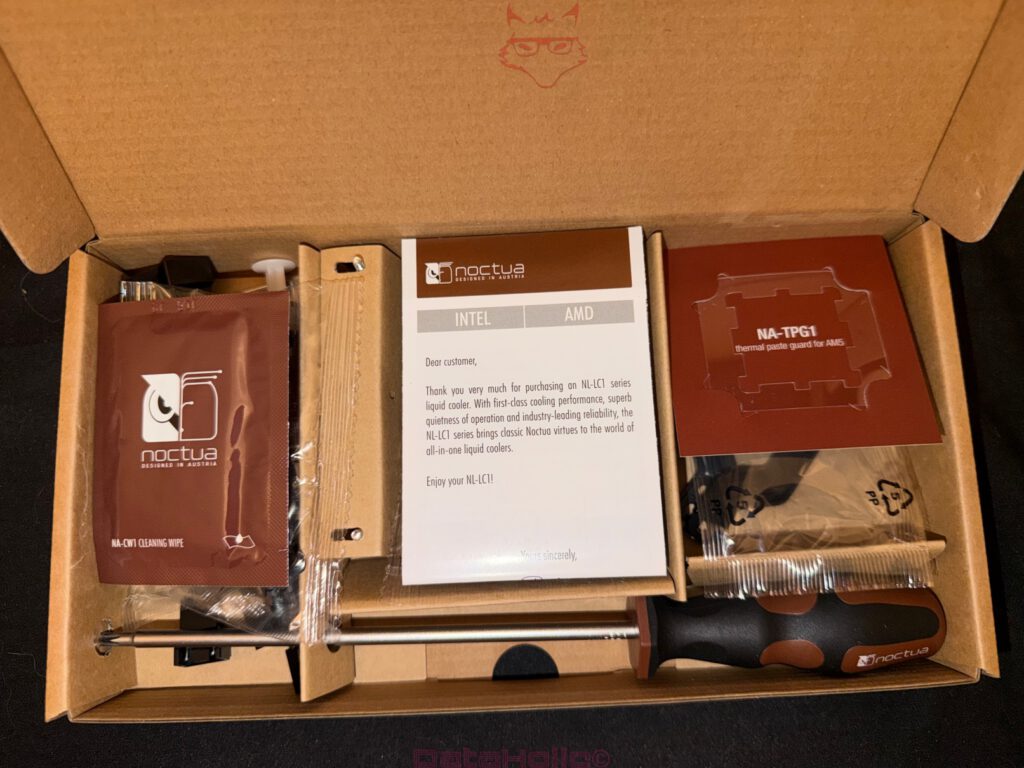
One particularly welcome inclusion is Noctua’s well-known screwdriver. Far from being a simple promotional item, it is a genuinely high-quality tool specifically designed for the installation of large CPU coolers. Its extended shaft comfortably reaches deeply recessed mounting screws located between the radiator, fans, and motherboard, while the ergonomically sized handle provides excellent leverage without sacrificing control. The magnetic tip securely holds screws in place, preventing them from disappearing into the depths of the chassis—a small convenience that quickly becomes invaluable when working inside compact systems. This screwdriver has accompanied numerous Noctua air coolers over the years, and it remains one of the highest-quality tools ever included with a CPU cooling solution.
The accessory package extends well beyond the mounting hardware itself. Cleaning wipes for preparing the CPU heat spreader are included alongside a tube of the proven NT-H2 thermal compound, multiple cable ties for clean cable management, PWM Y-splitters for fan control, and every spacer and mounting component required for current Intel and AMD platforms. The completeness of the package immediately creates the impression that virtually every detail was considered during development.
Particular attention should also be given to the included NA-TPG1. Behind this rather inconspicuous product name hides a small plastic application guard specifically designed for AMD’s current AM5 platform. Modern Ryzen processors feature multiple recessed cutouts surrounding the heat spreader, making it remarkably easy for excess thermal compound to collect in areas that are difficult to clean afterward. The NA-TPG1 is simply placed over the processor before applying thermal paste, shielding these openings completely. Once the paste has been spread across the contact surface, the frame is removed again, leaving thermal compound only where it is actually needed. The concept appears almost deceptively simple, yet in practice it saves time, reduces unnecessary mess, and significantly simplifies future maintenance. Small, thoughtful solutions like this have become part of Noctua’s identity over many years, making it hardly surprising that even such a specialized accessory has earned its place inside the box.
The Liquid Cooler Itself Is Surprisingly Restrained
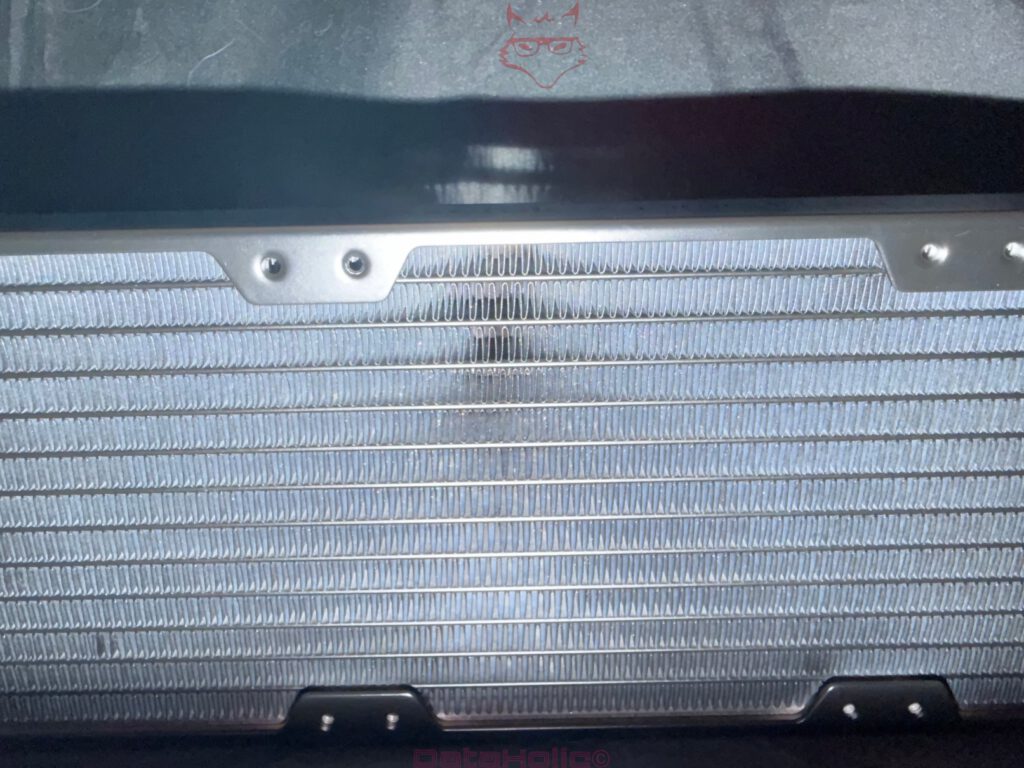
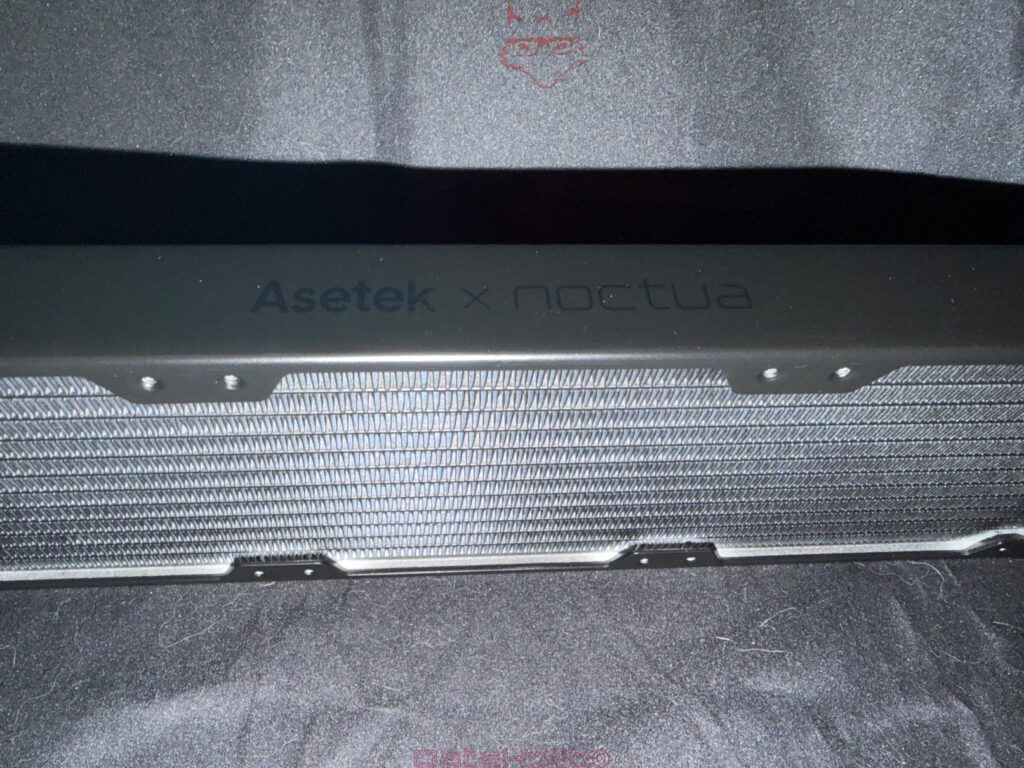
Only after removing the protective wrapping does the true centerpiece of the unboxing finally take center stage. The Noctua NL-LC1-36 presents itself with remarkable restraint, deliberately avoiding visual gimmicks or decorative flourishes. The 360 mm radiator features an entirely black finish, allowing the cooler to integrate effortlessly into virtually any system regardless of its design language. Large manufacturer logos, oversized branding elements, or decorative aluminum covers are almost entirely absent. Only a discreet “Asetek × Noctua” marking serves as a reminder that this cooler represents the collaboration between two companies that have each established themselves as leaders within their respective fields.
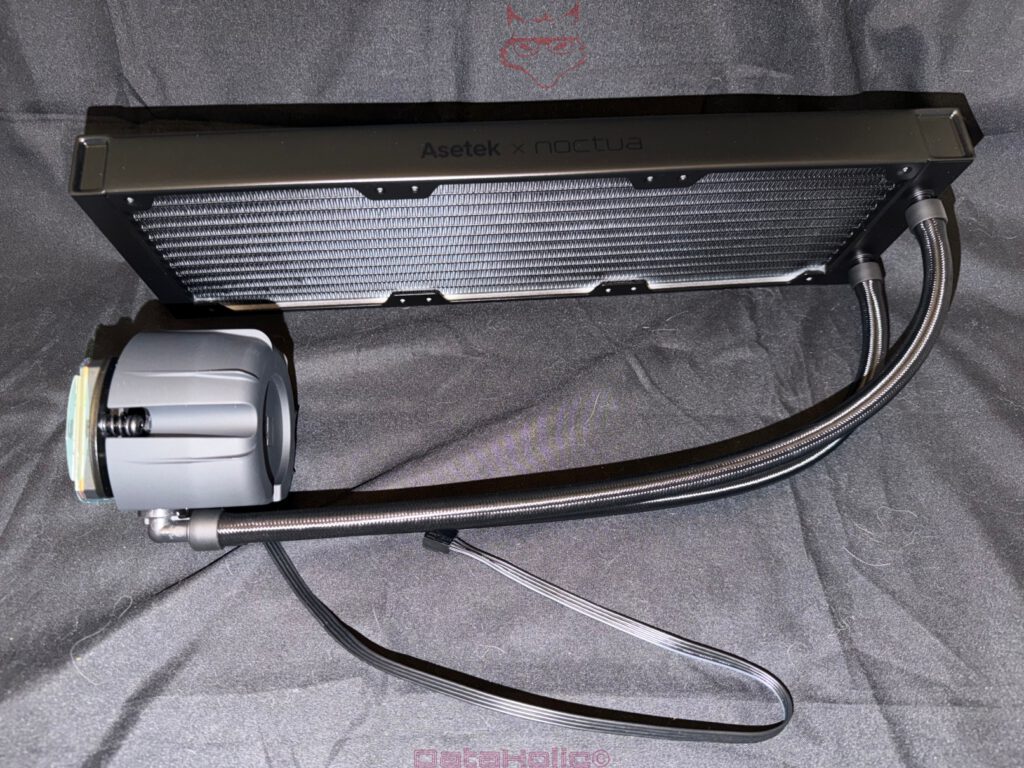
This understated appearance perfectly reflects Noctua’s overall philosophy. Rather than attracting attention through aggressive styling, the company clearly places its emphasis on engineering quality and construction. Even the first time the radiator is lifted from the box, its rigid construction immediately becomes noticeable. Nothing creaks, flexes, or feels unnecessarily lightweight. Instead, the radiator conveys the reassuring impression of a solidly built cooling assembly whose priorities lie firmly in durability and long-term reliability.
The coolant tubes leave an equally positive impression. Their high-quality braided sleeving not only provides effective protection against mechanical wear but also contributes to the premium feel of the entire assembly. Even more impressive, however, is their flexibility. Despite the robust braided exterior, both tubes bend surprisingly easily and comfortably accommodate tighter routing paths without resisting the desired position. This characteristic often proves decisive when determining how easily an all-in-one liquid cooler can actually be installed.
Modern chassis designs benefit particularly from this flexibility. Dual-chamber cases, motherboards featuring rear-mounted connectors, and compact mid-tower enclosures frequently require coolant tubes to follow unconventional routing paths where overly rigid tubing can quickly become problematic. Even during the unboxing process, the NL-LC1-36 gives the impression that Noctua paid careful attention to this aspect of the design. The tubes feel neither excessively soft nor frustratingly stiff, instead achieving a balance that makes clean cable routing and stress-free installation considerably easier. These are precisely the subtle engineering details whose true value often only becomes apparent during installation, yet their quality is already evident from the very first moment the hardware is handled.
The Pump Assembly Takes an Unusual Approach
The pump assembly deserves particular attention. While many modern all-in-one liquid coolers are designed to be as low-profile as possible—either to create a cleaner appearance or to maximize clearance for large memory modules—Noctua has deliberately chosen a different direction. The pump housing is noticeably larger than that of many competing products, but not for aesthetic reasons. The additional volume is used entirely to accommodate a considerably more sophisticated acoustic and vibration-damping system.
Beneath the understated housing lies a carefully engineered combination of several different noise-reduction measures. One of its key elements is a multi-layer acoustic absorber that reduces high-frequency pump noise before it can propagate into the surrounding system. This concept is complemented by a so-called Tuned Mass Damper—a specially calibrated vibration control element that does far more than simply soften mechanical vibrations. Instead, it actively counteracts specific resonance frequencies, preventing a significant portion of the resulting structure-borne noise from reaching the motherboard, chassis, or radiator.
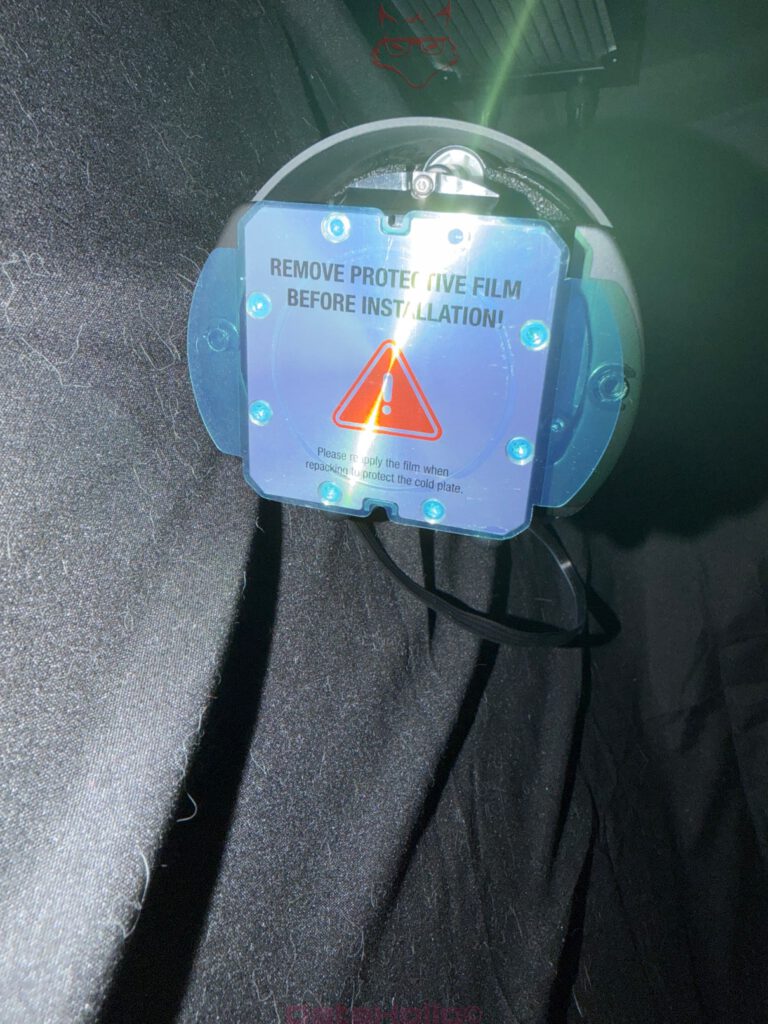
Particularly fascinating is the combination of different materials within the pump housing itself. Multiple layers with varying densities and elastic properties work together to form a sophisticated resonance barrier capable of absorbing vibrations across several frequency ranges. The concept strongly resembles the engine mounts used in modern automotive engineering or the vibration dampers found in industrial machinery. In both cases, vibrations are not reduced solely through soft materials but are instead controlled by carefully matching masses and material characteristics to target specific resonance frequencies as efficiently as possible.
This additional engineering effort ultimately explains the pump assembly’s larger dimensions. Rather than reducing the housing to the smallest possible footprint, Noctua utilizes the available internal space for acoustic optimization that is intended to deliver exceptionally quiet operation once installed. Even during the unboxing process, it becomes obvious that the engineers prioritized sound propagation, resonance behavior, and mechanical isolation long before considering RGB lighting or decorative design elements.
Equally noteworthy is the fact that Noctua does not present these engineering solutions merely as marketing terminology. The packaging itself explains the internal construction and operating principles of the various damping elements through technical diagrams and detailed illustrations. As a result, it quickly becomes clear why the pump housing intentionally differs from many competing designs—and that far more engineering effort is hidden beneath its understated exterior than its appearance initially suggests.
Surprise Number Two: The NL-ACF1
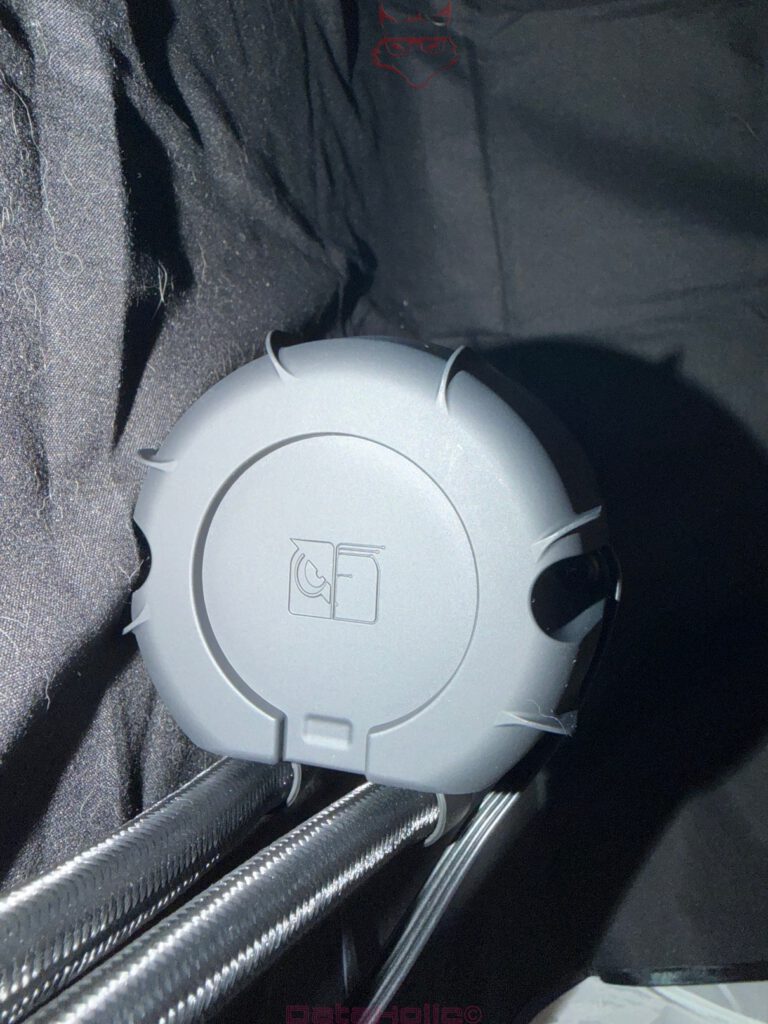
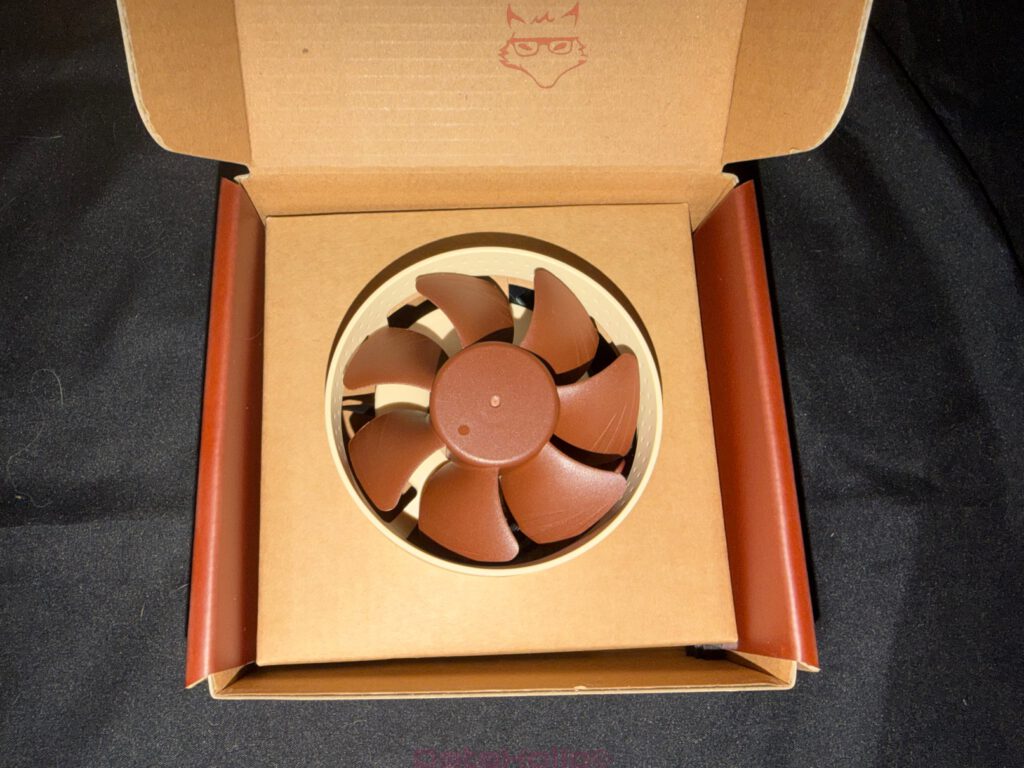
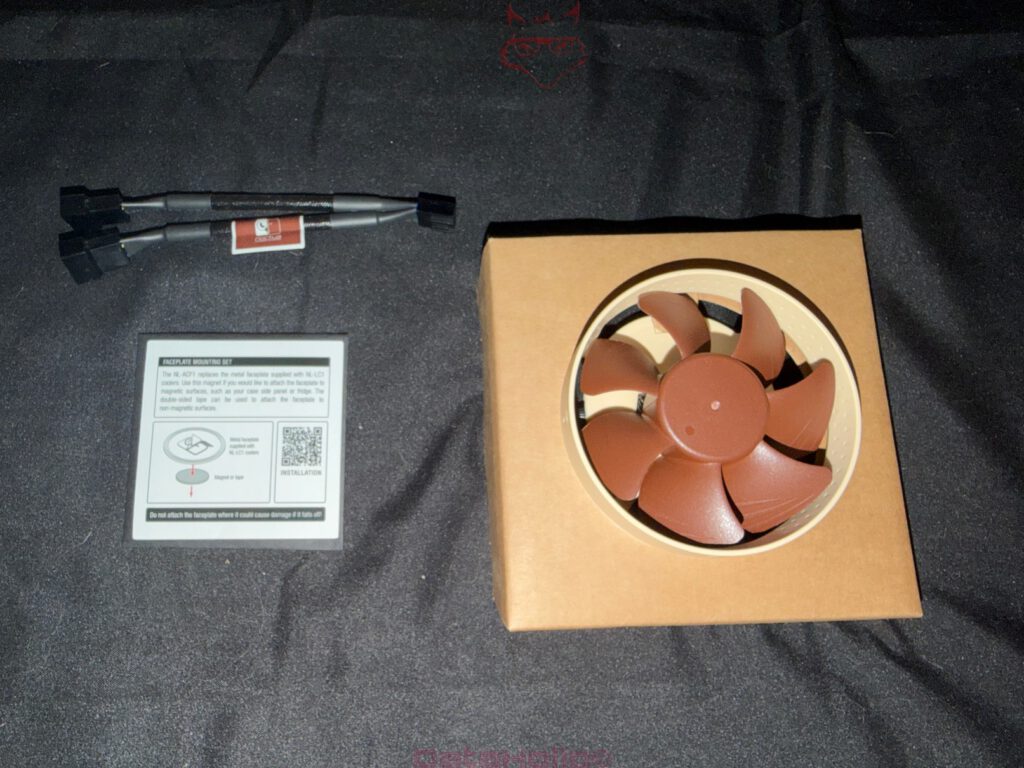
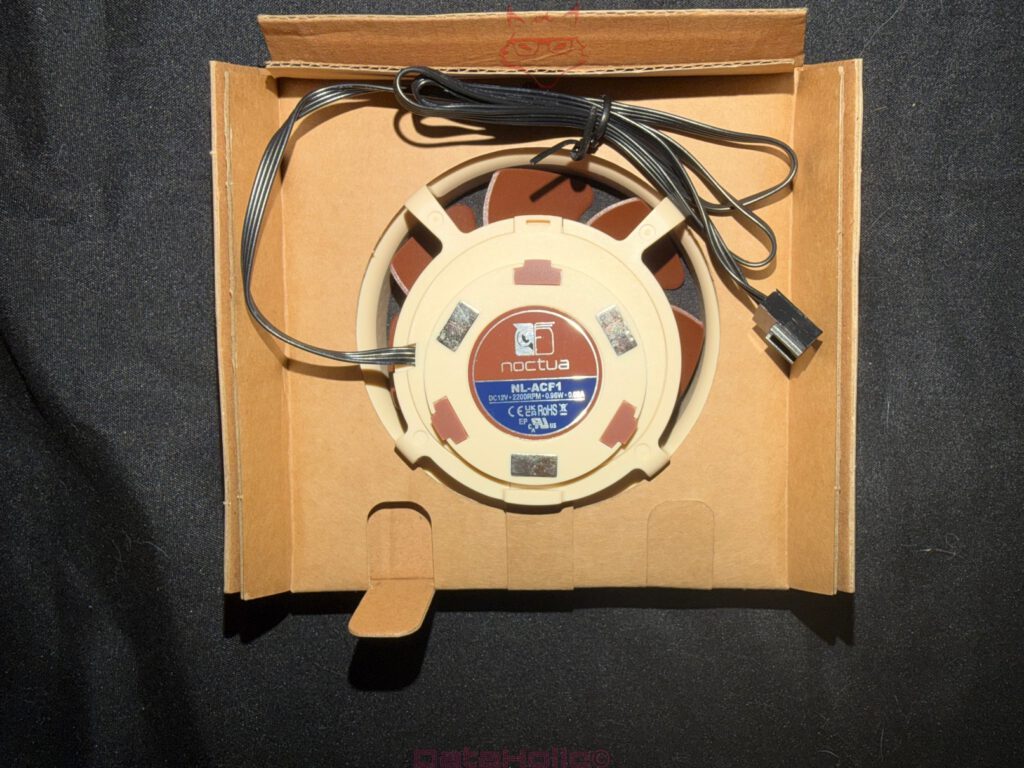
Tucked away among the larger packaging sections is another comparatively small box. At first glance, its contents appear somewhat unusual, as it contains the optional NL-ACF1—a dedicated fan attachment designed specifically for the pump assembly. When looking at a liquid cooler, the obvious question immediately arises: why would a liquid cooler require an additional fan mounted directly on top of the pump?
The answer lies in the evolution of modern motherboard design.
Large tower air coolers have always provided an inherent secondary benefit. As the fan pushes or pulls air through the heatsink, it simultaneously creates continuous airflow across the motherboard’s voltage regulation circuitry, memory modules, and M.2 heatsinks surrounding the CPU socket. This additional cooling occurs naturally and helps keep components beyond the processor itself operating at lower temperatures.
Traditional all-in-one liquid coolers lose this secondary airflow almost entirely. Their radiator is typically mounted at the front or top of the chassis, leaving only the compact pump assembly above the processor socket. As a result, voltage regulators, SSD heatsinks, and other nearby motherboard components receive very little direct airflow. With today’s increasingly power-hungry processors and ever more robust VRM designs, this has become a more significant consideration than ever before.
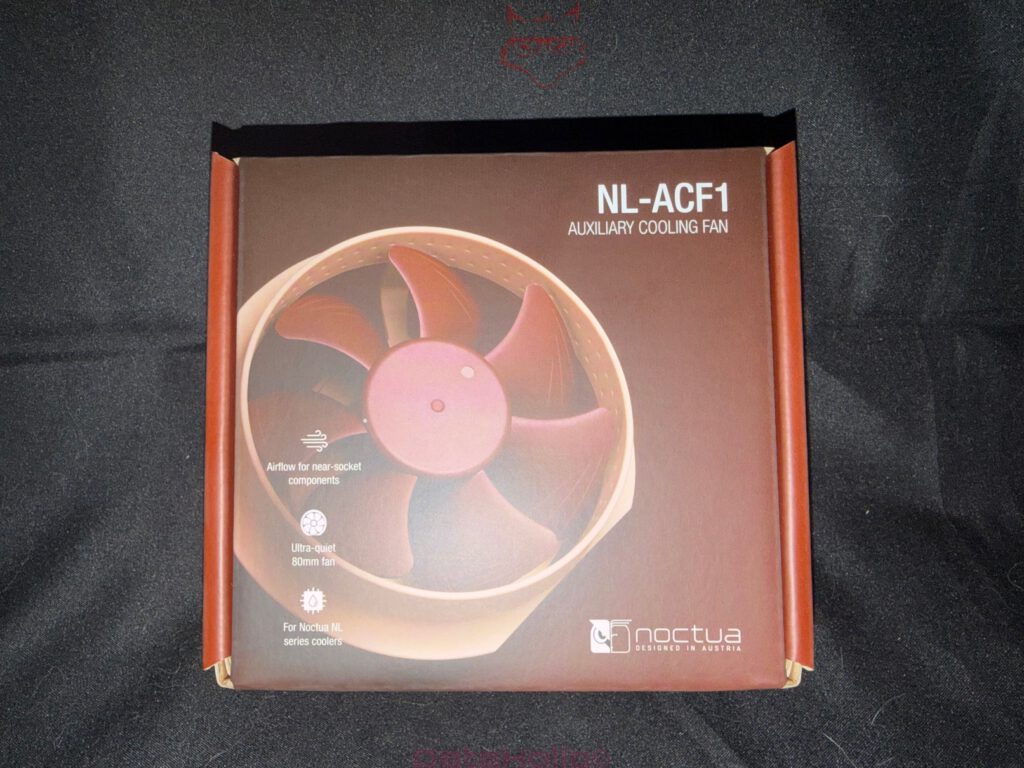
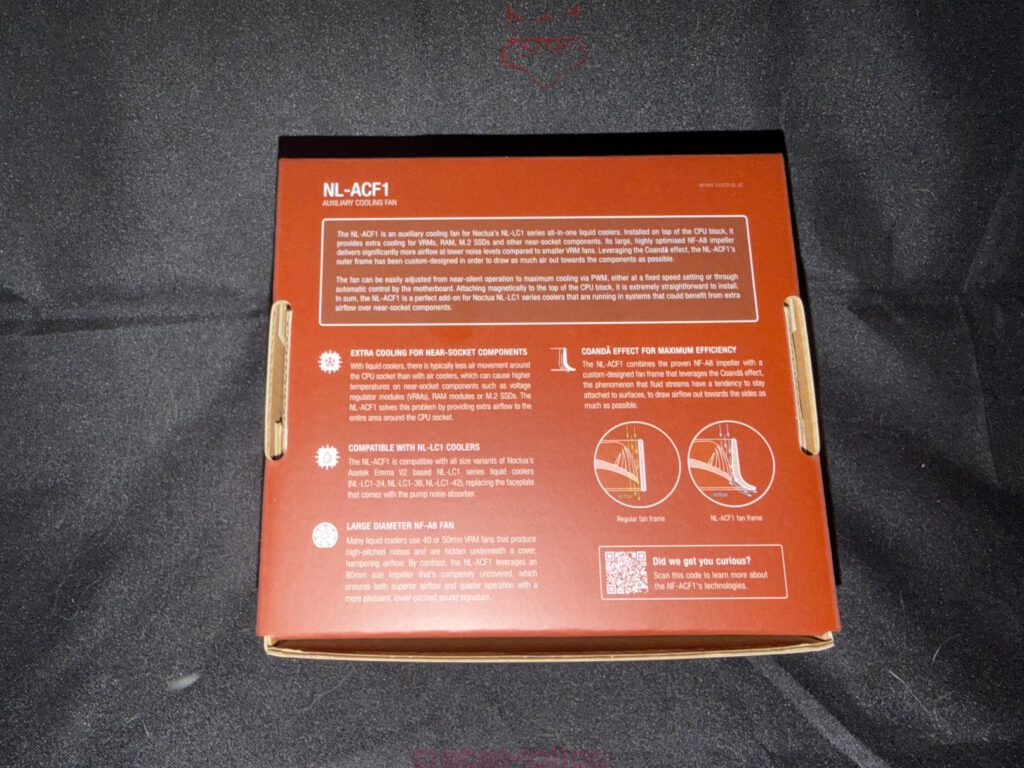
This is exactly where the NL-ACF1 comes into play. The compact 80 mm fan mounts directly onto the pump housing and operates at comparatively low rotational speeds. Its purpose is not to improve CPU cooling itself—that responsibility remains entirely with the radiator—but rather to restore airflow to the surrounding motherboard components. Fresh air is directed back into an area that conventional AiO coolers typically leave almost untouched.
The aerodynamic design of the attachment is particularly interesting. Noctua takes advantage of the Coandă effect, a physical phenomenon in which flowing air naturally tends to follow adjacent surfaces. Using a specially designed airflow guide, the generated airflow is not simply directed vertically toward the motherboard. Instead, it is guided outward around the pump housing, allowing it to cover a significantly larger area surrounding the CPU socket. As a result, airflow is distributed more evenly across the voltage regulators, memory modules, and M.2 heatsinks.
This approach perfectly illustrates Noctua’s overall engineering philosophy. Rather than pursuing additional cooling performance solely through larger radiators or higher fan speeds, the company focuses on secondary effects that are often overlooked in modern cooling solutions. At first glance, the NL-ACF1 may appear to be little more than an unusual accessory. In reality, however, it addresses one of the inherent compromises of traditional all-in-one liquid coolers with a technically well-founded solution. Even during the unboxing process, it becomes clear that this is not an accessory created for marketing purposes, but rather the result of careful engineering intended to solve a real-world problem.
Attention to Detail Extends to the Very Last Box
The further the unboxing progresses, the more apparent it becomes just how consistently Noctua has approached even the smallest details. Every individual box serves multiple purposes. It not only protects its contents during transport but also provides valuable background information about the component it contains. Technical drawings, cross-sectional illustrations, and concise explanations accompany nearly every package. Even the box containing the NF-A12x25 G2 fans doubles as a compact technical reference, explaining key engineering features such as the Sterrox liquid-crystal polymer rotor, the Flow Acceleration Channels, and the etaPERF motor.
Today, this approach feels almost unusual. At a time when product packaging is often reduced to oversized product renders, bold performance claims, and attention-grabbing marketing buzzwords, Noctua deliberately follows the opposite path. The packaging is not designed to impress—it is designed to explain. From the very beginning of the unboxing process, it creates the feeling of gradually becoming familiar with the engineering behind the product, long before the first screw is ever turned.
It is difficult not to be reminded of the philosophy embraced by many Japanese camera and precision instrument manufacturers during the 1980s. One frequently quoted saying from that era stated, “Quality is remembered long after price is forgotten.” That principle appears to have guided the development of the NL-LC1-36 as well. The emphasis is not on spectacular visual effects or capturing attention for a brief moment, but on delivering an engineering solution whose true value becomes increasingly apparent the closer it is examined.
This philosophy runs like a common thread throughout the entire unboxing experience. The initial impression is not defined by RGB lighting, glossy surfaces, or aggressive gaming aesthetics, but by an extraordinary level of attention to detail. Every engineering decision is accompanied by a technical explanation, every material choice serves a clearly defined purpose, and even the smallest accessories have a logical reason for being included. As a result, confidence in the product begins to develop long before installation ever starts—not because of marketing promises, but because the engineering behind the product is communicated openly and transparently.
Even before the NL-LC1-36 has been installed into a system or powered on for the very first time, it leaves an impression that relatively few modern all-in-one liquid coolers manage to achieve. It is immediately apparent that the development process extended far beyond the pursuit of cooling performance alone. An equally impressive amount of engineering effort has been invested in countless small details that may remain largely invisible during everyday operation, yet ultimately make the difference between an ordinary cooling solution and one that has been engineered with exceptional care and precision.
Transparency Notice in accordance with EU guidelines:
The Noctua NL-LC1-36 featured in this review was provided to us by Noctua as a non-binding loan sample for testing purposes. This article is not sponsored content or paid advertising.
Noctua had no influence whatsoever on the content, evaluation, or editorial independence of this review. All opinions expressed are based exclusively on our own hands-on experience and testing.
Our sincere thanks go to Noctua for providing the review sample and for the trust placed in dataholic.de.