
MSI MPG Infinite Series Unboxing: Packaging, Protection Concept, and Hardware Layout in Technical Detail
- Delivery and Outer Carton: Logistics as the First “Component”
- Carton Construction, Material Thickness, and the Protection Strategy
- Opening the Carton: Tape, Flaps, and the First Layer of Security
- Exterior of the Chassis: Top Design, Mesh, and the Functional I/O Area
- Side Panels: Steel, Airflow Zones, and Tempered Glass with Warning Labels
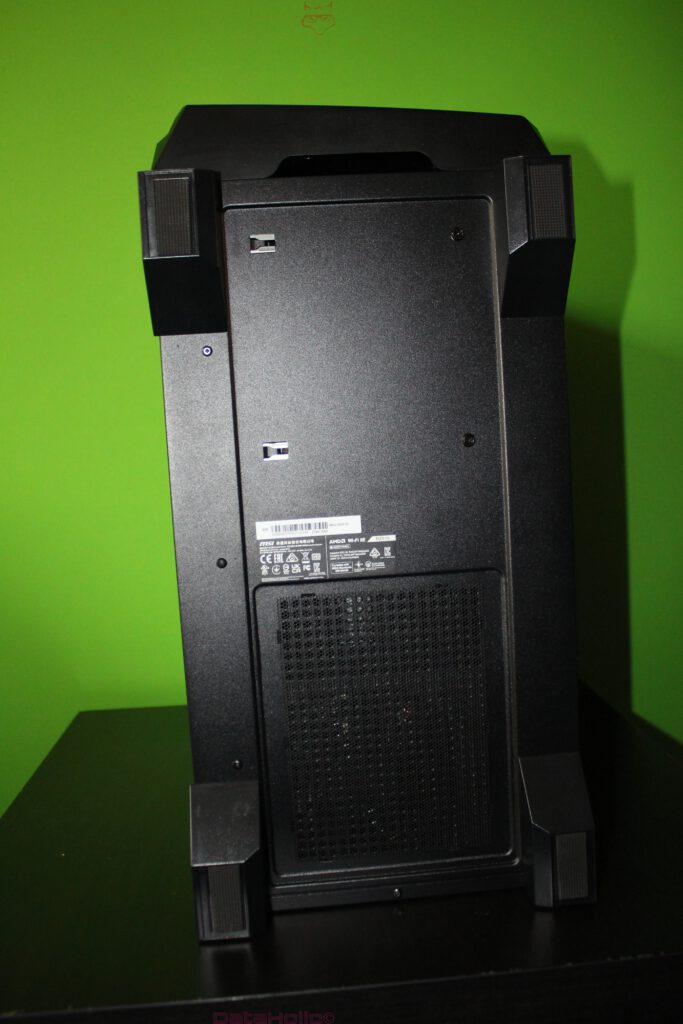
- Rear Panel: Motherboard I/O, GPU Outputs, Airflow, and Power Supply
- Accessories and Included Items: Practicality Over Presentation
- Opening the Tempered Glass Panel and Removing Internal Transport Protection
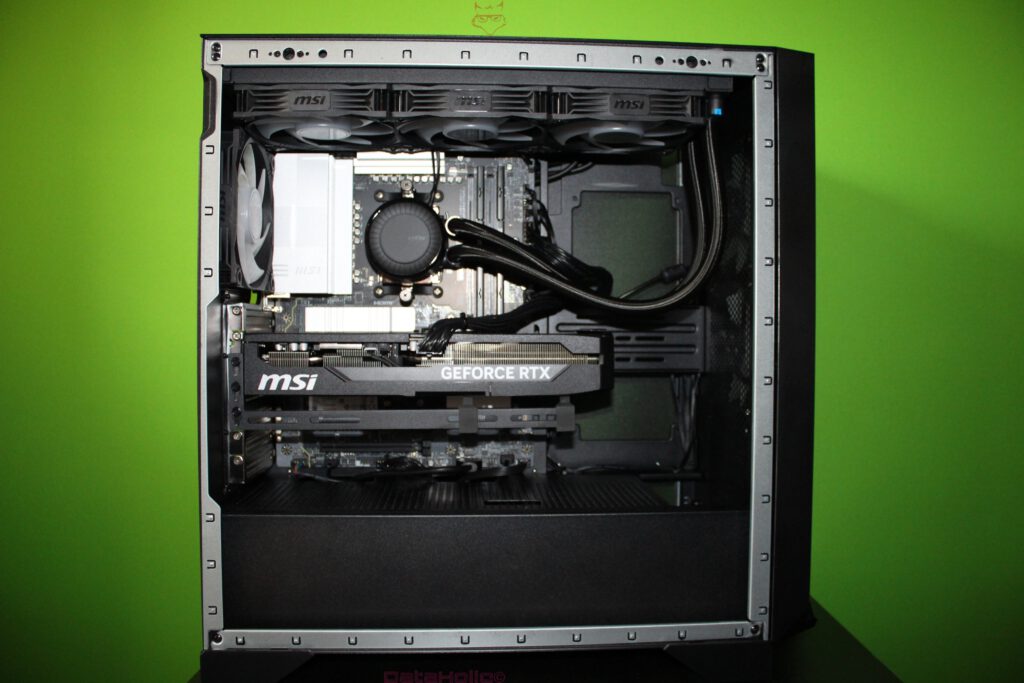
- Interior Layout: Cooling, Component Placement, and Build Quality
- Mechanical Checks Without Software
- Labels, Stickers, and the Reality of Mass Production
- Conclusion Without a Verdict: Where Unboxing Ends
Delivery and Outer Carton: Logistics as the First “Component”
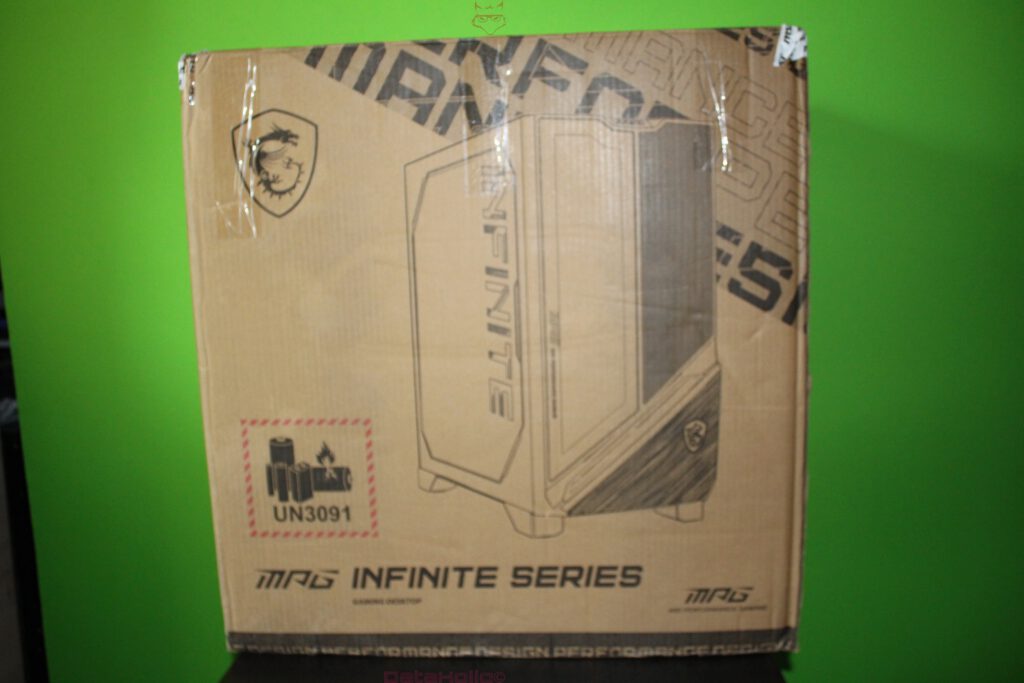
The first point of contact with a gaming desktop rarely involves clock speeds or shader counts, but rather corrugated cardboard, adhesive tape, and transport markings. With the MSI MPG Infinite Series, the shipping carton presents itself as deliberately utilitarian: large-format printing, clearly product-focused, featuring a schematic outline of the chassis and the familiar series branding. This is not showroom aesthetics, but a clear message to the logistics chain: heavy contents, sensitive contents, contents that should not be casually tossed across a sorting center.
Notable on the exterior is the UN3091 hazard label. UN3091 designates lithium metal batteries contained in equipment or packed with equipment. This is not decorative branding, but logistical reality. In desktop systems, this marking usually appears due to the CMOS/RTC coin-cell battery on the motherboard or other included components subject to transport regulations. Such labels are part of standardized shipping processes, ensuring correct classification and handling by freight services, air cargo, and distribution hubs.
Here, the unboxing process effectively begins before the first strip of tape is cut, as the carton already communicates how the manufacturer has accounted for transport risk, regulatory compliance, and traceability. Or, as Arthur C. Clarke famously put it: “Any sufficiently advanced technology is indistinguishable from magic.” In logistics, however, that magic comes with serial numbers and UN codes.
Carton Construction, Material Thickness, and the Protection Strategy
The carton is sized not only to accommodate the chassis itself, but also the complete protective architecture surrounding it: spacers, molded inserts, and internal restraints. The wall thickness falls into the typical range used by PC OEMs—rigid enough to resist puncture and localized impact, yet flexible enough to absorb energy through deformation rather than transmitting it directly to glass, GPU, or motherboard.
MSI’s positioning of the Infinite Series as a performance-oriented, upgrade-friendly system is reflected even here. The desktop is not treated as a minimalist sealed appliance, but as a device expected to survive shipping and arrive with its internal hardware mechanically uncompromised. Protection, in this context, does not mean soft padding alone, but rather controlled spacing. Distance is the primary shock absorber.
Opening the Carton: Tape, Flaps, and the First Layer of Security
Opening follows the standard pattern: adhesive tape across the main seam, beneath which lie the carton flaps. What matters technically is not the ritual itself, but how the system’s weight is managed during removal. Heavy prebuilts rely on either integrated grip zones or a “lift-the-carton-off-the-device” approach, minimizing tilting and sudden load shifts.
The first visible elements are typically molded foam supports that secure the chassis from above and below. Their purpose is not cushioning in the soft sense, but form-fitting immobilization. Any internal movement, even minimal, becomes amplified during conveyor transport.
Exterior of the Chassis: Top Design, Mesh, and the Functional I/O Area
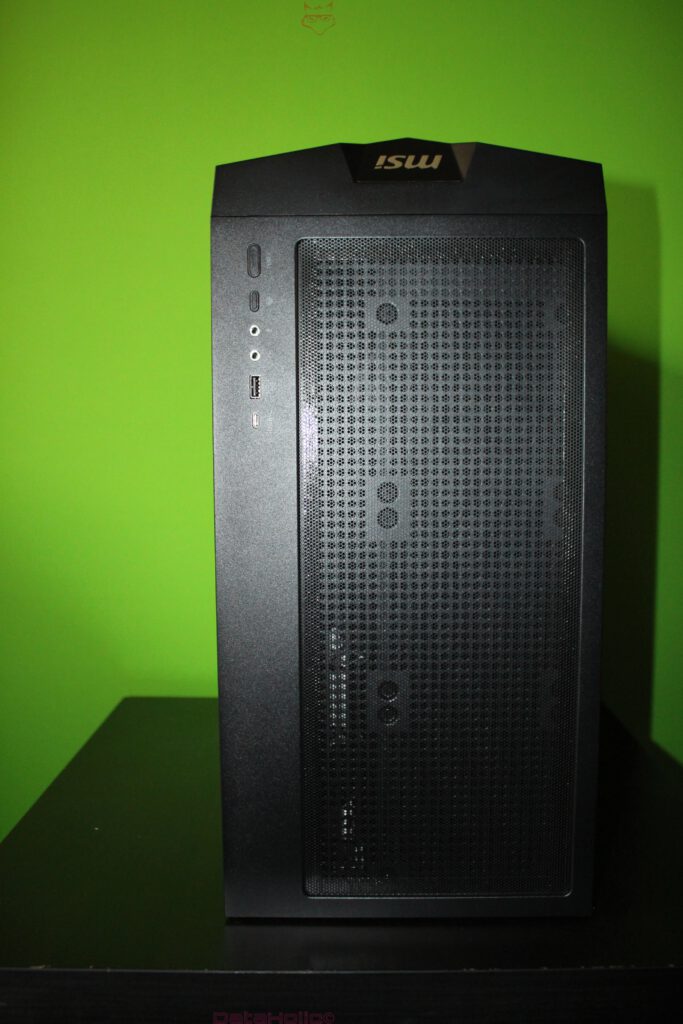
Once freed from its outer protection, the MPG Infinite Series chassis comes into full view: black, angular, unmistakably MSI. The front panel is dominated by a large mesh intake, prioritizing airflow over decorative solid surfaces. Mesh fronts have become standard in modern thermal design, as they reduce static pressure requirements and allow front fans to operate efficiently without obstruction.
Offset to top side is the front I/O strip, featuring:
- Power button and a secondary button (commonly reset or LED control, depending on configuration)
- 2 × 3.5 mm audio jacks (headphone and microphone)
- 1 × USB Type-A
- 1 × USB Type-C
The inclusion of top-facing USB-C is more than a convenience feature. With external SSDs, capture devices, and modern peripherals increasingly standardized on Type-C, its presence is a practical necessity. From a technical standpoint, this also implies an internal Type-E front-panel header and careful cable routing, as these connectors are mechanically more sensitive than legacy USB headers.
Side Panels: Steel, Airflow Zones, and Tempered Glass with Warning Labels
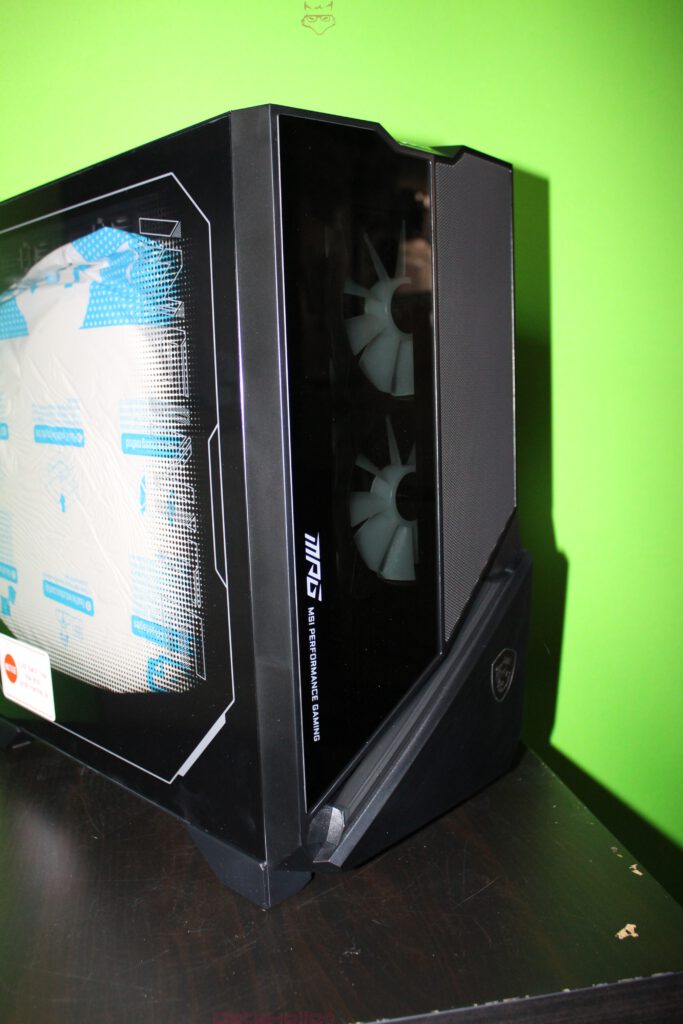
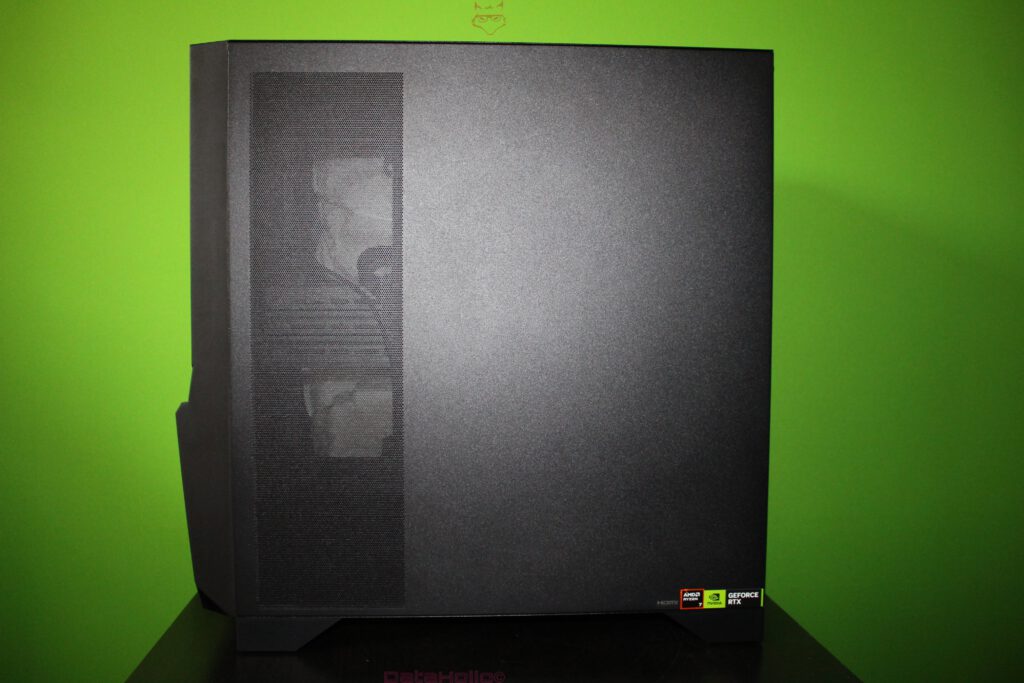
One side panel is a solid steel sheet with a vertically integrated ventilation section, designed to support airflow to specific internal zones without perforating the entire panel. This approach balances structural rigidity, acoustics, and thermal assistance.
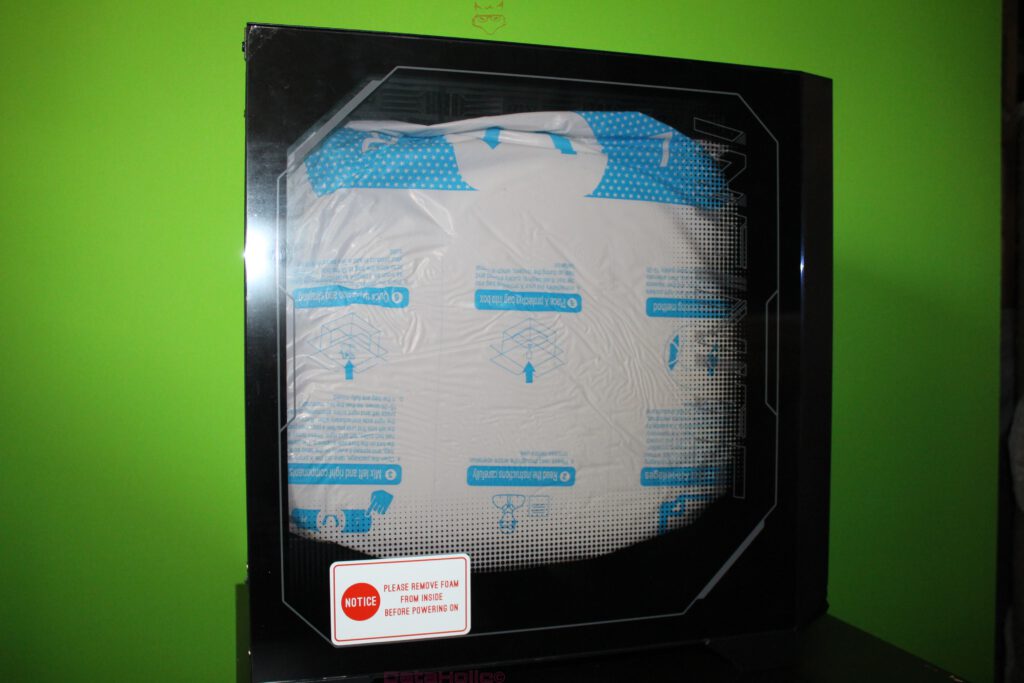
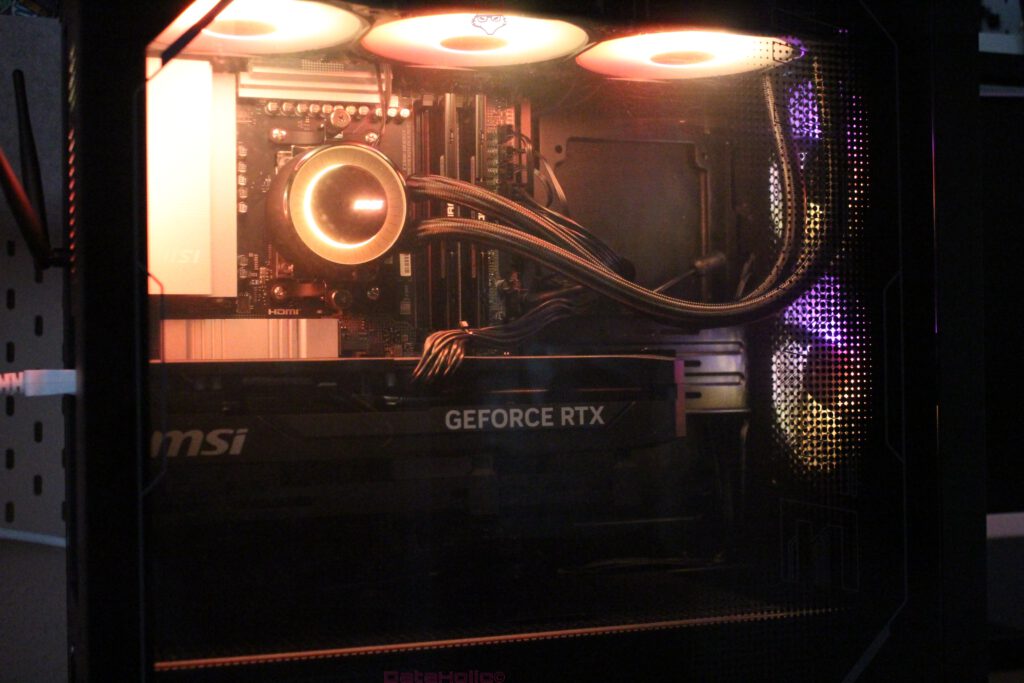
The opposite side serves as the visual centerpiece: a tempered-glass panel with printed geometric accents. Both inside and outside, protective films are applied, along with a prominent warning label advising the removal of internal foam before powering on the system.
This warning is neither cosmetic nor redundant. Internal transport inserts obstruct airflow and may interfere with moving components. Leaving them in place risks thermal imbalance at best and mechanical interference at worst. OEM manuals consistently emphasize the removal of such foam elements prior to first power-on.
Rear Panel: Motherboard I/O, GPU Outputs, Airflow, and Power Supply
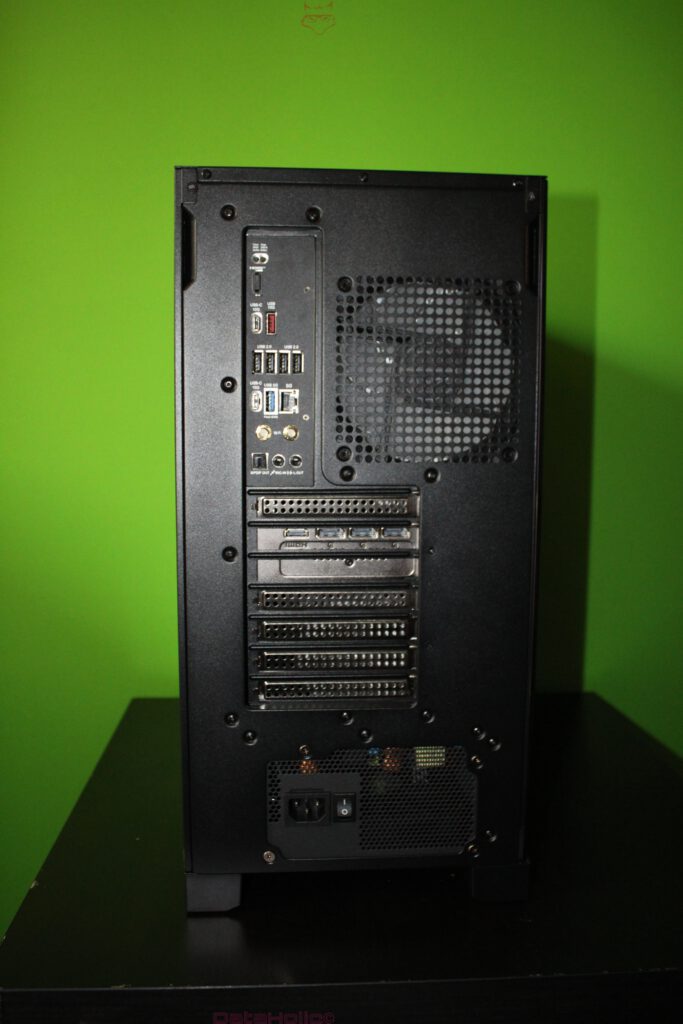
The rear of the chassis reveals the system’s functional core.
Motherboard I/O
The I/O cluster includes a broad selection of ports:
- USB Type-C
- Multiple USB Type-A ports of varying speeds
- RJ45 Ethernet, marked for high-speed networking
- Dual Wi-Fi antenna connectors
- Full audio stack, often including optical S/PDIF
This configuration reflects MSI’s intent to support a wide range of peripherals without adapters or hubs, aligning with the Infinite Series’ positioning as a versatile performance desktop.
Graphics Card Outputs
Below the motherboard I/O sit the GPU display outputs—typically HDMI and DisplayPort. Their placement clearly distinguishes the dedicated graphics path from the integrated motherboard output.
Rear Exhaust and PSU Area
A rear exhaust fan establishes the primary airflow exit, while the bottom-mounted power supply features an external power switch and IEC connector. The PSU draws air independently, isolated from the main thermal chamber by an internal shroud.
Accessories and Included Items: Practicality Over Presentation
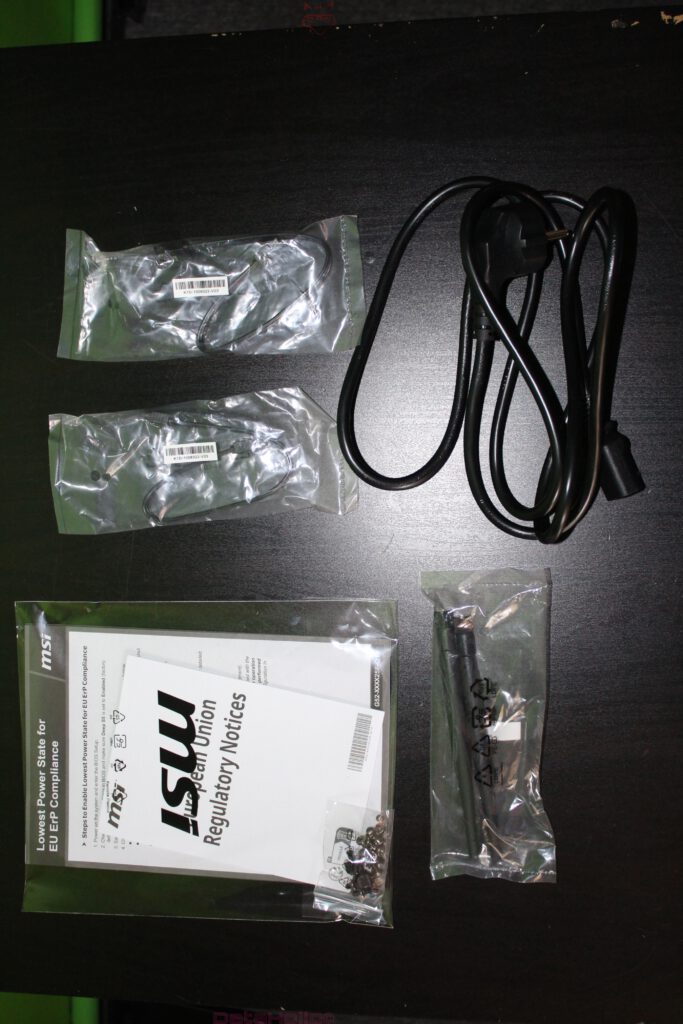
The accessory bundle is packaged separately and includes:
- Power cable (EU Schuko/IEC)
- Two Wi-Fi antennas, each individually packaged
- Screws and small hardware for potential expansion
- Documentation, including EU regulatory notices and safety information
The inclusion of external antennas is particularly relevant for Wi-Fi performance, especially with modern standards that benefit from adjustable antenna positioning.
Opening the Tempered Glass Panel and Removing Internal Transport Protection
With the exterior inspection complete, the unboxing process reaches its most critical stage: accessing the interior.
Panel Mechanism
The tempered-glass panel is secured using captive or thumb screws, allowing tool-free removal. While tempered glass is robust, edge impacts remain a risk, making careful handling essential.
Internal Foam Insert
Inside, a large foam insert fills the space between graphics card, cooler, and side panel. Its purpose is to prevent component movement during transport, particularly the heavy GPU acting as a lever on the PCIe slot.
Removal should be performed gently and without force. Resistance typically indicates a cable or structural feature catching on the foam. Inspection, not pulling, resolves such situations.
Interior Layout: Cooling, Component Placement, and Build Quality
With transport protection removed, the internal layout becomes visible.
CPU Cooling
A liquid cooling solution occupies the top of the chassis, with radiator and multiple fans forming a controlled exhaust path. The tubing is routed cleanly, with no sharp bends or undue tension.
Graphics Card and Support Bracket
The MSI GeForce RTX graphics card is supported not only by its slot but also by an additional mechanical brace, reducing long-term strain and transport-related stress.
Motherboard and Memory Area
Memory slots and motherboard zones are unobstructed, with cables routed along edges and behind structural elements. This indicates deliberate assembly rather than purely automated placement.
Power Supply Shroud
The PSU shroud conceals cabling and separates the power compartment from the main airflow zone, contributing to both aesthetics and thermal stability.
Mechanical Checks Without Software
Even without powering on the system, several technical checks are meaningful during unboxing:
- Removal of all protective films
- Verification of firmly seated expansion cards
- Inspection of cable routing near fans
- Attachment of Wi-Fi antennas
- Confirmation that no foam or packaging remains inside
As Alan Turing once observed: “We can only see a short distance ahead.” In unboxing, that short distance is defined by what can be physically verified.
Labels, Stickers, and the Reality of Mass Production
Compliance labels, serial numbers, and regulatory markings populate the rear and underside of the chassis. While visually mundane, they are essential for warranty, support, and legal conformity within the EU.
The accompanying documentation reinforces this regulatory framework, covering electrical standards, wireless compliance, and disposal guidelines.
Conclusion Without a Verdict: Where Unboxing Ends
This unboxing process concludes at a clear boundary: once all transport safeguards are removed, the exterior and interior inspected, and all accessories accounted for, the system transitions from shipping artifact to operational hardware. No benchmarks, no software, no judgments—only the physical journey from carton to ready state.
Notice in accordance with EU transparency regulations:
The MSI MPG Infinite Series Gaming Desktop presented in this test report was provided to us by MSI as a non-binding loan for testing purposes. This is not paid advertising.
MSI had no influence on the content, evaluation, or editorial independence of this article. All opinions expressed are based solely on independent practical assessment.
We sincerely thank MSI for providing the test system and for the trust placed in dataholic.de.